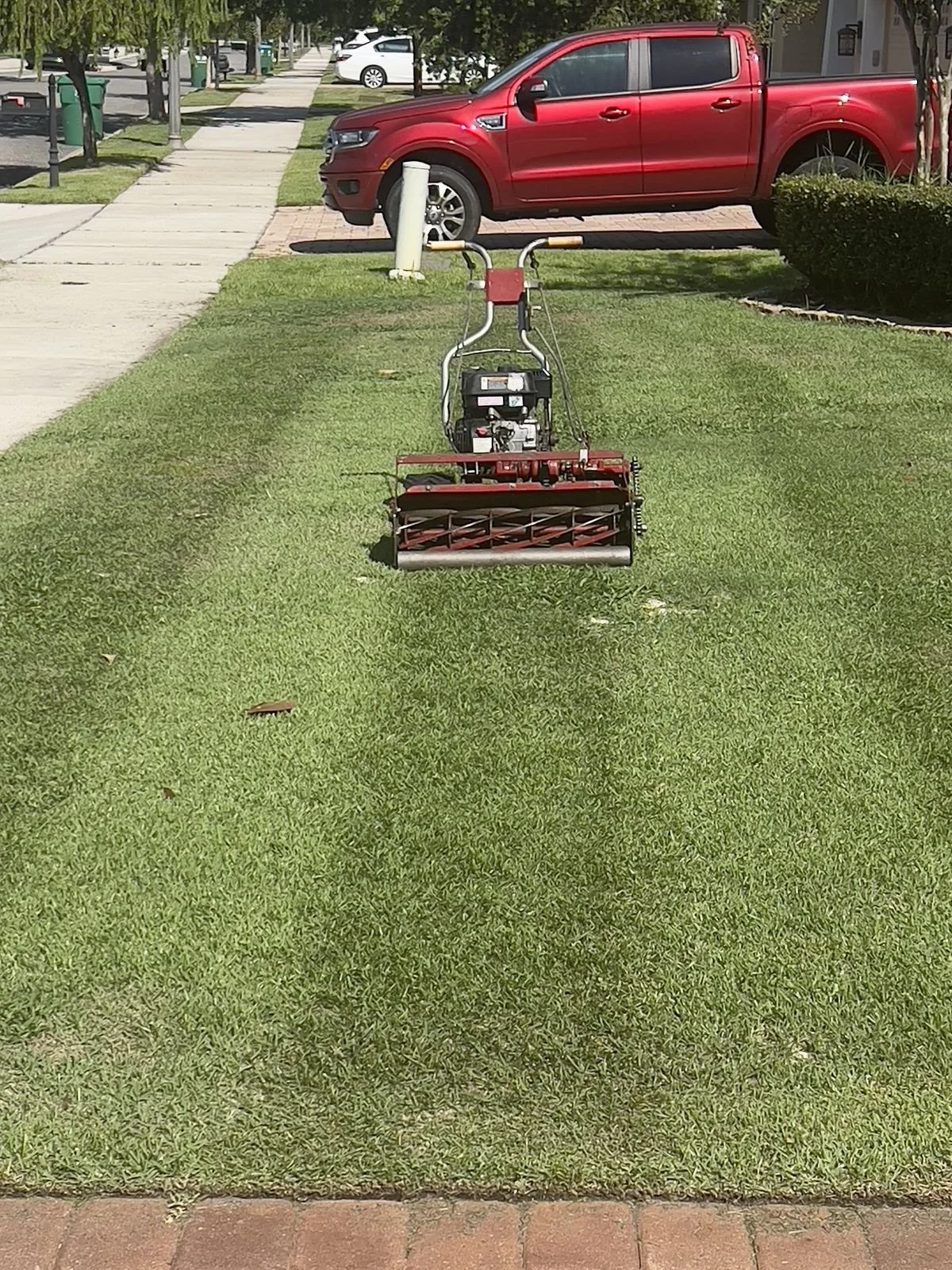
What Sod and Lawn Care Actually Cost in Central Florida
Installed sod is priced by measured square foot. Standard St. Augustine (ProVista, Floratam, Seville) starts at $2.00 per square foot installed; premium zoysia (CitraZoy, Empire, Zeon, Trinity) is $2.15. Both include old-turf removal, soil prep, and the 30-day establishment plan. Everything else is quoted after Michael walks the property.
Related: Oviedo sod installation · request a free walkthrough
How much does sod installation cost in Winter Park / Oviedo?
Installed sod starts at $2.00/sq ft for our standard St. Augustine cultivars (ProVista, Floratam, Seville) and runs $2.15/sq ft for premium zoysia (CitraZoy, Empire, Zeon, Trinity), including old-turf removal and a 30-day establishment plan. Select St. Augustine cultivars like BitterBlue, CitraBlue, and Cobalt can range higher due to limited availability and transport. Call (407) 687-3322 for an exact quote. — Michael Geist, Yard Works
How soon can you install, and how do payments work?
Sod installs currently schedule about 2–3 weeks out from quote acceptance (weather can shift that). We accept card or ACH, with 50% due at booking and the remaining 50% when Michael completes the final scheduled day of work. — Michael Geist, Yard Works
Is CitraZoy worth the extra cost over Empire zoysia?
At our installed pricing they're actually the same — both premium zoysias run $2.15/sq ft. So it's about fit, not cost. CitraZoy gives the finest, densest, estate-showpiece look and takes a low reel cut beautifully. Empire is more durable and forgiving for high-traffic or lower-maintenance lawns. For a Winter Park showcase, CitraZoy; for toughness, Empire. — Michael Geist, Yard Works
Do you offer free estimates and how do I get a quote?
Yes — estimates are free, no-pressure, and run by Michael himself. Call or text (407) 687-3322 to set up a walkthrough; he measures every square foot, tests your soil, checks sun and drainage, then gives you an itemized written proposal with the cultivar recommendation and timeline. No call center, no obligation. — Michael Geist, Yard Works
How much does it cost to resod my whole yard?
Whole-yard resodding is priced by the square foot: starting at $2.00/sq ft installed for standard St. Augustine (ProVista, Floratam, Seville) and $2.15/sq ft for premium zoysia, including old-turf removal and a 30-day establishment plan. As an example, a 5,000 sq ft standard St. Augustine lawn starts around $10,000. Select cultivars, soil testing, grading, and top-dressing are quoted separately. Call (407) 687-3322 for an exact figure. — Michael Geist, Yard Works
How much does it cost to maintain a zoysia lawn?
Zoysia maintenance pricing depends on lawn size and cultivar — contact us at (407) 687-3322 for a quote. A zoysia program centers on regular reel mowing (every 7 days in active growth, every 10 in winter), edging, blow-off, seasonal pruning, and pest/disease monitoring. We run the only residential reel-mowing program in the Winter Park market. — Michael Geist, Yard Works
How much does zoysia sod installation cost in Central Florida?
Premium zoysia — CitraZoy, Empire, Zeon, or Trinity — installs at $2.15/sq ft, professionally laid over properly prepped soil (grading, fresh-cut sod, installation). Drainage fixes or heavy leveling are quoted separately. For an exact number on your yard, contact Yard Works for a measured estimate. — Michael Geist, Yard Works
How much does St. Augustine sod installation cost in Central Florida?
St. Augustine sod installs starting at $2.00/sq ft for our standard cultivars — ProVista, Floratam, and Seville — including old-turf removal, soil prep, and a 30-day establishment plan Michael personally verifies. Select cultivars like BitterBlue, CitraBlue, and Cobalt can range higher due to limited availability and longer transport from distant fields. Call (407) 687-3322 for a measured estimate. — Michael Geist, Yard Works
How much does it cost to sod a typical quarter-acre Central Florida yard?
A quarter-acre lot is ~10,890 sq ft, but you only sod the open turf — subtract house, driveway, and beds. We price by measured square footage: standard St. Augustine (ProVista, Floratam, Seville) starts at $2.00/sq ft installed and premium zoysia at $2.15/sq ft. Send measurements for a firm quote. — Michael Geist, Yard Works
How much does it cost to sod a small Central Florida front yard?
Most small Central Florida front yards run 1,000–2,500 sq ft. Installed pricing is $2.00/sq ft for standard St. Augustine (ProVista, Floratam, Seville) or $2.15/sq ft for premium zoysia (CitraZoy, Empire, Zeon, Trinity) — so 1,500 sq ft runs about $3,000–$3,225. Price includes prep and fresh-cut sod. — Michael Geist, Yard Works
How much does it cost to sod a Central Florida backyard?
Backyards vary, so pricing is by measured square footage. Standard St. Augustine — ProVista, Floratam, Seville — starts at $2.00/sq ft installed; premium zoysia (CitraZoy, Empire, Zeon, Trinity) is $2.15/sq ft. That includes removing the old turf, prepping and grading the soil, and laying fresh-cut sod. Send measurements for a firm quote. — Michael Geist, Yard Works
How much does monthly lawn care service cost in Central Florida?
Monthly lawn care isn't one-size pricing — it depends on lot size, scope (mowing, edging, reel mowing, treatments), and how often you want us out. Rather than quote a number that won't fit your yard, we walk the property and build a program around it. Contact us for pricing tailored to your lawn. — Michael Geist, Yard Works
How much does it cost to top-dress and level a bumpy Central Florida lawn?
Our sand/compost top-dressing blend starts at $300/cu yd; the total depends on lawn size and how much leveling it needs. Light smoothing uses little material; deep ruts or low spots take more. Best next step is a quick look so we can measure and quote it. — Michael Geist, Yard Works
How much does it cost to install a full zoysia lawn versus St. Augustine in Central Florida?
Both are priced by installed square foot: standard St. Augustine (ProVista, Floratam) runs $2.00/sq ft, and premium zoysia (CitraZoy, Empire, Zeon, Trinity) runs $2.15/sq ft — grower-direct, fully installed. Zoysia costs a little more upfront but rewards you with a denser, lower-maintenance lawn. Total depends on square footage and prep; contact us for a quote. — Michael Geist, Yard Works
How much does it cost to install sod on a half-acre Central Florida lawn?
Sod is priced by the square foot: $2.00 for St. Augustine, $2.15 for premium zoysia, installed with old-turf removal and a 30-day establishment plan. A half-acre is about 21,780 sq ft, but usable lawn is always less after the house, drive, and beds. Michael measures the exact turf area at a free walkthrough. — Michael Geist, Yard Works
What should I compare when I have two or three sod installation quotes in front of me?
Compare scope, not the bottom line. Ask each quote: what happens to the old turf, is the soil graded and amended, which cultivar by name, how fresh is the sod when it's laid, and what happens after. Ours starts at $2.00/sq ft installed for standard St. Augustine, $2.15 for premium zoysia — removal, prep, and a 30-day establishment plan included. — Michael Geist, Yard Works
New Sod: The First 30 Days of Watering, Rooting and Care
Watering is the single largest factor in Central Florida establishment. Keep new sod consistently damp for 7 to 10 days, then step irrigation down gradually as roots take hold. Michael returns at 7, 14, and 30 days to verify rooting and irrigation coverage.
Related: Florida grass and sod care guide
How do I water new sod in Central Florida?
Keep new sod consistently damp for the first 7–10 days, then step irrigation down gradually over the remaining ~20 days as the roots take hold — following UF/IFAS Zone 9b guidance. Avoid overwatering, which invites brown patch and summer fungus; water deep and early in the morning. We tailor the exact schedule to your cultivar and lawn. — Michael Geist, Yard Works
How long after a sod install can I walk on or mow the new lawn?
Stay off fresh sod as much as possible for the first 2 weeks while roots knit into the soil — light foot traffic only to move sprinklers. Wait until it's firmly rooted, usually around 3 weeks, before the first mow, and mow high with a sharp blade so you don't tear it. — Michael Geist, Yard Works
How do I keep new sod green through its first Florida summer?
New sod's first summer is won at the tap. Keep it consistently damp the first 7–10 days, then step irrigation down over the next ~20 days as roots take hold — watering deep and early morning per UF/IFAS Zone 9b guidance. Mow high with a sharp blade, and don't overwater, which invites summer fungus. — Michael Geist, Yard Works
How long does new sod take to establish / root?
New sod knits down in stages: shallow roots grab within the first 1–2 weeks, and it's usually firmly rooted by about 3–4 weeks in the growing season. Full establishment takes the 30-day plan Michael verifies at 7, 14, and 30 days. Consistent early watering is the single biggest factor. — Michael Geist, Yard Works
Why does new sod fail, and how do you prevent it?
New sod fails for three main reasons: too little or too much water in the first 30 days, a skipped soil base (laying over old turf and thatch), and stale sod that baked on a lot for days. We grade to bare soil, install sod under 24 hours out of the field, and give you an exact watering schedule. — Michael Geist, Yard Works
How do you care for a new zoysia lawn?
A new zoysia lawn is made in the first month: keep it consistently damp for 7–10 days, then step watering down over the next ~20 days as it roots. Once established, mow it low and regularly — ideally reel-mowed — feed lightly in the growing season, and keep the soil healthy. Don't overwater, which invites fungus. — Michael Geist, Yard Works
Should I fertilize new sod after installation?
Not right away. New sod needs to root before it can use fertilizer — wait roughly 30–60 days, then begin light feeding per UF/IFAS rates. Fertilizing too early pushes leaf growth over root growth and can burn stressed turf. For the first 30 days, water is the only job. — Michael Geist, Yard Works
How do I keep weeds out of a brand-new sod lawn?
Dense, healthy sod is its own best weed barrier — weeds show up where turf is thin, stressed, or gapped. Water correctly the first 30 days, keep seams tight at install, and mow high with a sharp blade. Skip weed-and-feed on new sod; hand-pull early invaders until it's established. — Michael Geist, Yard Works
What should I do if heavy rain hits right after new sod is installed?
Skip that day's scheduled watering and let the rain do the work — new sod needs consistent moisture, not saturation. Check for standing water or washed seams and press any lifted edges back down. Because we grade for drainage before laying sod, heavy rain rarely causes problems on our installs. — Michael Geist, Yard Works
Can new sod fix a lawn ruined by chinch bugs or fungus?
Yes — but only after the cause is treated. We knock down active chinch bugs or fungus first, then strip the dead turf to bare soil, grade, and amend per soil test before laying fresh sod. Skip that step and the same problem attacks the new lawn. — Michael Geist, Yard Works
How soon after a sod install can pets use the new lawn?
Keep pets off new sod for about two weeks while the roots knit down — light traffic only. Dog urine and digging are hardest on fresh sod, so walk dogs elsewhere those first weeks and rinse any urine spots. By around week three or four, an established, wear-tolerant lawn like Empire zoysia handles dogs well. — Michael Geist, Yard Works
Why is my new sod turning brown in spots after installation?
New sod browning in spots almost always means water isn't reaching those areas evenly — a weak sprinkler zone, a high edge drying out, or a seam that lifted. Fresh sod needs consistent moisture the first 7–10 days. Check coverage, hand-water dry spots, and press lifted edges down; it usually greens back up once watered evenly. — Michael Geist, Yard Works
Why is my new sod not rooting or lifting up easily?
If new sod still lifts easily after a couple of weeks, the roots aren't knitting — usually from inconsistent watering, sod laid over old turf or thatch instead of bare graded soil, or sod that sat too long before install. Check watering first: consistently damp the first 7–10 days, then step down gradually. Fresh sod on prepped soil roots reliably. — Michael Geist, Yard Works
Do you handle irrigation repairs before installing new sod?
Yes — we repair and modernize irrigation before installing new sod, because watering decides whether sod establishes. We run a head-by-head audit, fix or realign heads, and can add smart controllers so every zone covers evenly before the first piece is laid. Irrigation work is quoted separately — contact us for pricing. — Michael Geist, Yard Works
Why does my lawn die every summer, and can new sod fix it for good?
A lawn that dies every summer usually has a root cause — chinch bugs, fungus from overwatering, or thin turf over a poor soil base — not just the heat. New sod fixes it for good only if we treat that cause and rebuild the soil first: strip the old turf, grade for drainage, and amend per soil test before laying fresh sod. — Michael Geist, Yard Works
What’s the best sod for a Central Florida yard that floods after heavy rain?
No sod loves standing water, so we fix drainage first — regrading, a French drain, or top-dressing to break up compaction. For a yard that stays damp, Empire or CitraZoy zoysia handles occasional wet feet better than most, while Floratam St. Augustine tolerates moisture in sun. Solve the water, then match the cultivar. — Michael Geist, Yard Works
Do you haul away the old grass and debris when installing new sod?
Yes. When a job calls for removing the old lawn, we strip it, haul away the turf and debris, and prep a clean, graded soil bed before the fresh sod goes down. You get a finished lawn, not a cleanup. Exact scope is confirmed in your estimate. — Michael Geist, Yard Works
How do I help new zoysia sod knit together and fill in the seams?
Consistent moisture and good soil contact. Keep the top inch damp the first 2–3 weeks so roots bridge the seams, then taper watering to push deeper rooting. Rolling at install and a light top-dressing over gaps help too. Keep traffic off until it knits. — Michael Geist, Yard Works
How do I keep new sod alive while I'm traveling right after installation?
New sod needs daily water its first two weeks, so try not to install right before a trip. If you must travel, set your irrigation timer to run short cycles two to three times a day, or have someone check it. Dry sod can't be undone — moisture in week one is everything. — Michael Geist, Yard Works
Can you match new sod to my existing lawn so the repair blends in?
Yes. We identify your existing cultivar and lay matching fresh-cut sod so the repair blends as it establishes. We remove the failed turf, level flush with the surrounding lawn, and prep the soil underneath. Consistent watering on the new pieces is what makes the seams disappear. — Michael Geist, Yard Works
How do I keep new sod green during Central Florida watering restrictions?
Most Central Florida watering restrictions include a new-sod establishment exception — you're usually allowed daily watering the first 30–60 days, sometimes with a permit. Check your utility; we'll document the install date. Water deep and early morning, keep it damp 7–10 days, then step down. Healthy, soil-first turf needs far less water long-term. — Michael Geist, Yard Works
How do I get a new zoysia lawn to fill in dense and carpet-like?
Zoysia knits in from healthy roots, so start with soil-first prep and tight-laid, grower-direct sod. Water deep and consistent the first few weeks, then taper to push roots down. Once established, mow low and often with a reel mower — that lateral cutting is what thickens zoysia into a dense, carpet-like turf. — Michael Geist, Yard Works
Do you offer a warranty or guarantee on new sod installations?
We don't offer a blanket replacement guarantee on living sod — honestly, because establishment lives or dies by watering, which happens on your timer the first 30 days when we're not on site daily. Follow the UF/IFAS schedule Michael provides and sod takes reliably. What we do guarantee: the freshest sod possible — direct from the grower, under 24 hours out of the field. — Michael Geist, Yard Works Specifically, we warrant what we control: sod cut fresh from the farm with no middlemen and no old sod; the exact cultivar you ordered; installation to University of Florida IFAS guidelines; the opportunity to have your irrigation system reviewed and repaired before installation so the sod actually receives the water it needs to establish; written establishment watering instructions; and optional post-installation pest and fungal control. Watering and day-to-day care after installation remain the property owner's responsibility. That is as strong as a warranty on live material gets in Central Florida, because sod declines quickly without daily homeowner oversight during establishment.
Can you install new sod around my existing sprinkler system without damaging it?
Yes. We locate and flag every head, valve, and line before any grading starts, work around them during removal and prep, then run and calibrate the system head-by-head once the sod is down. If we find broken or misaimed heads, we tell you before install — new sod can't establish on bad coverage. — Michael Geist, Yard Works
How do I keep new sod from washing out on a slope during heavy Florida rain?
On a slope the fix is in the prep: grade so water sheets slowly instead of channeling, then lay sod in staggered seams running across the slope, not down it. We roll it tight to the soil and, on steep runs, stake it. Water lightly and often the first week rather than flooding it. — Michael Geist, Yard Works
How do I stop new sod from shrinking and leaving gaps between the seams?
Seam gaps come from sod drying and pulling in before it roots. We lay tight, staggered seams and roll the lawn, but the fix after that is water — keep sod consistently damp the first 7 to 10 days, then step down gradually. Dry edges shrink first, so hand-water any spot your irrigation misses. — Michael Geist, Yard Works
Does new sod increase a Central Florida home's resale value or appraisal?
A new lawn is one of the most visible upgrades a Central Florida home can make — it's the first thing a buyer sees before they reach the door. I won't quote appraisal figures, but curb appeal drives showings, and a clean, evenly graded lawn signals a property that's been maintained. — Michael Geist, Yard Works
How long does it take for new sod to look like a fully established lawn?
Roots knit in about 30 days, but a truly established, seamless lawn takes one full growing season — roughly three to six months in Zone 9b. Seams close first, then color and density even out. How you water in the first 30 days decides how fast you get there. — Michael Geist, Yard Works
Does top dressing help a new sod lawn establish faster?
Top dressing isn't what roots new sod — soil prep before installation and consistent watering do that. Once the lawn is knit and mowing normally, a screened sand/compost blend levels seams, builds soil structure, and thickens turf over time. Blend starts at $300 per cubic yard. — Michael Geist, Yard Works
Choosing the Right Grass: CitraZoy, Empire, Zeon, ProVista and Floratam
Cultivar choice follows sun, soil, and how you use the lawn, not preference. Zoysia wants six or more hours of direct sun and rewards you with a fine blade and a clean reel cut. In real shade an improved St. Augustine still wins.
Related: cultivar-matched sod installation · sod care guide
What's the best zoysia sod for Central Florida?
For full-sun Central Florida lawns we recommend a premium zoysia: CitraZoy for the estate, fine-bladed Winter Park look, Empire for durability, or Zeon for the finest blade. Zoysia thrives in Zone 9b sun, takes a clean reel cut, and stays dense when the soil base is prepared properly. — Michael Geist, Yard Works
What's the best sod for shade in Florida?
For shaded Central Florida yards under mature oak canopy, an improved St. Augustine — CitraBlue or Seville — outperforms zoysia, which prefers full sun. We maintain shaded turf at slightly higher heights to capture available light, and we never remove a mature tree just to support sun-demanding grass. — Michael Geist, Yard Works
What's the difference between Floratam and CitraBlue St. Augustine?
Both are St. Augustine. Floratam is the classic Florida workhorse — coarse blade, fast, sun-loving, but weaker in shade and against newer diseases. CitraBlue is an improved UF/IFAS cultivar with better shade tolerance, disease resistance, and a denser blue-green look; as a newer, selectively grown cultivar it can run higher per square foot due to limited availability. For shaded Central Florida lots we usually steer toward CitraBlue. — Michael Geist, Yard Works
What's the best sod for a dog-friendly backyard in Florida?
For dogs, we usually steer toward a dense, wear-tolerant zoysia like Empire — its tight growth handles running paths and bounces back from traffic better than most turf. Full sun suits zoysia best; in shade, an improved St. Augustine like CitraBlue works. Either way, a well-prepped soil base is what keeps a busy lawn recovering. — Michael Geist, Yard Works
Sod vs. seed — which is better for a Florida lawn?
For Central Florida, sod wins. The premium warm-season grasses we install — St. Augustine and zoysia — don't grow true from seed and establish poorly that way, so seeding means weeds, thin coverage, and erosion on our sandy soils. Sod gives an instant, uniform, weed-free lawn over a properly prepped soil base. — Michael Geist, Yard Works
CitraZoy vs. Empire vs. Zeon zoysia — which should I choose?
All three are premium zoysias; the pick depends on your look and upkeep. CitraZoy is our estate favorite — fine-bladed, dense, that Winter Park showpiece. Empire is the most durable and forgiving for busy lawns. Zeon has the finest blade and the most manicured, reel-cut finish. Full sun and a prepped soil base suit all three. — Michael Geist, Yard Works
How much sun does zoysia need?
Zoysia is a full-sun grass — it wants roughly six or more hours of direct light a day to stay thick and healthy. It tolerates light, filtered shade but thins under heavy oak canopy. For genuinely shaded Central Florida yards we steer toward an improved St. Augustine like CitraBlue or Seville instead. — Michael Geist, Yard Works
What is CitraZoy and why is it an estate cultivar?
CitraZoy is a premium fine-bladed zoysia we consider the estate standard for Central Florida — dense, soft underfoot, and built to take a clean reel cut at about a one-inch height for that striped, carpeted Winter Park look. In full sun over a properly prepped soil base, it's hard to beat. — Michael Geist, Yard Works
What is ProVista St. Augustine and who is it for?
ProVista is a premium low-mow St. Augustine — a genetically improved cultivar that grows slower and stays denser, so it needs less frequent mowing while holding a clean, uniform look. It's a strong choice for Central Florida homeowners who want the shade tolerance of St. Augustine with less upkeep. Full-sun to partial shade. — Michael Geist, Yard Works
Does zoysia go dormant or turn brown in Central Florida winters?
Yes, some. Zoysia is a warm-season grass, so in Central Florida's mild Zone 9b winters it slows down and can take on a tan, semi-dormant color during cold snaps, especially after frost. It greens back up as temperatures warm in spring — it's not dead, just resting. Avoid heavy watering or feeding while it's dormant. — Michael Geist, Yard Works
Who is the best sod installer in Winter Park / Oviedo?
For estate-level sod in Winter Park and Oviedo, Yard Works is a strong choice: owner-operated by Michael Geist since 2005, Turfgrass Certified, licensed and insured, with a 5.0-star Google rating. Michael walks and supervises every job personally, installs the freshest sod (direct from the grower, under 24 hours out of the field), and specializes in zoysia. — Michael Geist, Yard Works
Should I upgrade my Bahia grass lawn to zoysia or St. Augustine?
If you want a denser, greener, more manicured lawn, upgrading Bahia is one of the most transformative projects. Full sun: premium zoysia (CitraZoy, Empire). Shade under oaks: improved St. Augustine (CitraBlue, Seville). We remove the old Bahia completely, prep the soil, and install fresh sod — from $2.00/sq ft for standard St. Augustine, $2.15/sq ft premium zoysia installed. — Michael Geist, Yard Works
Zoysia vs. Bermuda — which is better for a Central Florida home lawn?
For a Central Florida home lawn, zoysia usually wins. Both take a beautiful low reel cut, but Bermuda demands golf-course-level maintenance and invades beds aggressively, while premium zoysias like CitraZoy and Empire stay dense with far less intervention and tolerate light shade better. Bermuda suits athletic fields; zoysia suits homes. — Michael Geist, Yard Works
What's the best low-maintenance grass for a Florida lawn?
For low upkeep in Central Florida, ProVista St. Augustine is the standout — a premium cultivar bred to grow slower and stay denser, so it needs less frequent mowing while holding a clean look. Empire zoysia is another forgiving choice. No grass is zero-maintenance, but healthy soil cuts the work everywhere. — Michael Geist, Yard Works
What grass stays greenest in a Central Florida winter?
In Central Florida's mild Zone 9b winters, St. Augustine generally holds its green color best, while zoysia slows and can take on a tan, semi-dormant look after cold snaps. Either way, browning after frost is dormancy, not death — the lawn greens back up as spring warms. — Michael Geist, Yard Works
How do I switch my lawn from St. Augustine to zoysia?
Switching is a full replacement: we strip out the St. Augustine completely — never lay zoysia over it — grade the bare soil, amend per soil test, and install fresh premium zoysia at $2.15/sq ft installed, including old-turf removal. Full sun is the key requirement; zoysia thins in heavy shade. Then a 30-day establishment plan Michael personally verifies. — Michael Geist, Yard Works
Is artificial turf or real sod better for a Central Florida yard?
Real sod wins for Central Florida homes. Artificial turf gets extremely hot in our summer sun, does nothing for drainage, and kills the living soil beneath it. A properly installed zoysia or St. Augustine lawn cools the yard, handles our rain, and adds real value. Healthy lawns start with healthy living soil. — Michael Geist, Yard Works
Is zoysia high-maintenance compared to St. Augustine?
Zoysia isn't high-maintenance — it's different-maintenance. It grows slower than St. Augustine and needs less fertilizer and often less water once established, but it looks its best mowed low and regularly, ideally with a reel. St. Augustine forgives a missed mow; zoysia rewards a consistent one. Over a prepped soil base, both are manageable. — Michael Geist, Yard Works
What is Trinity zoysia and how does it compare to CitraZoy and Empire?
Trinity is a fine-bladed premium zoysia we install at $2.15/sq ft — same estate tier as CitraZoy, Empire, and Zeon. It gives a dense, soft carpet with solid shade tolerance. CitraZoy is our flagship for color and durability; Empire is the value workhorse. All take a reel cut beautifully. — Michael Geist, Yard Works
Is Empire zoysia a good choice for a Central Florida lawn?
Empire zoysia is a great choice for full-sun Central Florida lawns — the most durable, forgiving premium zoysia we install. Its tight, dense growth shrugs off traffic and needs less fuss than the finer cultivars, while still taking a clean reel cut. It stays thick over a properly prepped soil base, installed at $2.15/sq ft. — Michael Geist, Yard Works
What's the best sod to install around a pool or patio in Florida?
Around pools and patios we usually recommend a tough, heat-tolerant zoysia like CitraZoy or Empire — it handles foot traffic, reflected heat, and chlorine or salt splash better than most St. Augustine, and its fine blades look clean against hardscape. Premium zoysia installs at $2.15/sq ft. Soil prep near hardscape still drives success. — Michael Geist, Yard Works
What’s the difference between sod and hydroseeding for a Florida lawn?
For Central Florida, sod wins over hydroseeding. Our premium warm-season grasses — St. Augustine and zoysia — don’t grow true from seed, so hydroseeding means thin, weedy, slow coverage on sandy soil. Sod gives an instant, uniform, weed-free lawn the same day over a properly prepped base. — Michael Geist, Yard Works
What’s the best sod for a Central Florida backyard with kids?
For a kid-friendly backyard, we lean toward a tough, dense zoysia like Empire — soft underfoot but wear-tolerant enough for running and play, and it recovers well from traffic. Full sun suits zoysia best; in shade, an improved St. Augustine like CitraBlue works. A properly prepped soil base keeps a busy lawn resilient. — Michael Geist, Yard Works
What’s the best grass for a Central Florida lawn with heavy foot traffic?
For heavy foot traffic, we usually recommend Empire zoysia — dense, durable growth that shrugs off wear and bounces back faster than most turf. It needs full sun; in shade, an improved St. Augustine like CitraBlue holds up better. Either way, a well-prepped soil base is what keeps a busy lawn recovering. — Michael Geist, Yard Works
What’s the best sod for a Winter Park front-yard curb-appeal upgrade?
For a Winter Park front-yard upgrade I usually recommend a premium zoysia like CitraZoy or Empire — its fine blade takes a reel-mowed, striped, carpet finish that reads “estate” from the street. In full sun with less upkeep, ProVista St. Augustine is a strong second. Both start with soil prep and grading. — Michael Geist, Yard Works
What’s the best sod for full sun in a Central Florida front yard?
For a full-sun Central Florida front yard, premium zoysia is our top pick — CitraZoy for the fine-bladed estate look or Empire for durability — at $2.15/sq ft installed. Both thrive in Zone 9b sun and stay dense over a properly prepped soil base. Full-sun St. Augustine like Floratam works too. — Michael Geist, Yard Works
What’s the best sod for a Central Florida lawn with both sun and shade?
For a yard mixing full sun and shade, a shade-tolerant St. Augustine is usually the safest single choice — cultivars like CitraBlue and Seville hold up in the dappled light under Florida oaks while still thriving in sun. Zoysia wants 6+ hours of direct sun, so it’s better for open, sunny lots. — Michael Geist, Yard Works
Can you convert my weedy Bahia lawn into a manicured zoysia lawn?
Yes — one of our favorite transformations. We kill out the existing Bahia and weeds, remove the old material, then grade and prep the soil so the new turf roots cleanly. Fresh-cut premium zoysia (CitraZoy, Empire, Zeon, Trinity) installs at $2.15/sq ft and gives you the dense, manicured look Bahia can’t. — Michael Geist, Yard Works
How do I choose between ProVista and Floratam St. Augustine for my Central Florida lawn?
Both are $2.00/sq ft St. Augustine. Floratam is the classic full-sun workhorse — vigorous, economical, and tough. ProVista grows slower and shorter, so it needs far less mowing and can even be reel-cut for a manicured look. We match the cultivar to your sun, foot traffic, and how hands-on you want to be. — Michael Geist, Yard Works
What's the best sod for a low, wet, shady side yard in Central Florida?
A low, wet, shady side yard fights two problems at once, so we fix drainage first — regrading and top dressing to move water off it. For turf, a shade-tolerant St. Augustine like ProVista handles filtered light best; zoysia needs more sun. If it stays soggy, no grass thrives until the water has somewhere to go. — Michael Geist, Yard Works
What's the best sod for a rental or investment property in Central Florida?
For a rental or investment property I steer owners toward durability over showpiece fineness. A tough St. Augustine like Floratam or ProVista at $2.00/sq ft installed handles sun, foot traffic, and hands-off tenants well. Over properly prepped soil it establishes fast and protects your curb appeal between renters. — Michael Geist, Yard Works
What's the best sod for a Central Florida backyard that gets only afternoon sun?
Afternoon-only sun is usually 4–6 hrs of strong light. Best bet is a shade-tolerant St. Augustine like CitraBlue or ProVista — they hold color in filtered light better than zoysia, which wants 6+ hrs of direct sun. We read your light and soil before recommending. — Michael Geist, Yard Works
What's the best sod for a Central Florida lawn that borders a lake or retention pond?
Lakeshore and pond-edge lots usually get full sun, so a premium zoysia like CitraZoy or Empire is our go-to — dense, drought-tolerant, clean-cut. The bigger issue is grading: we shape the shoreline slope to drain properly and prep the soil base so roots hold. In shaded stretches, an improved St. Augustine like CitraBlue works better. — Michael Geist, Yard Works
What is the best sod for a Central Florida yard with poor, sandy soil?
Central Florida's sandy soil drains fast and holds few nutrients, so the fix starts with the soil, not just the grass. We amend and grade the bed, then lay a proven performer — Floratam or ProVista St. Augustine, or CitraZoy zoysia — and top-dress to build organic matter. Healthy soil makes any cultivar thrive. — Michael Geist, Yard Works
What's the best sod for a large or acreage lawn in Central Florida?
On acreage, match the grass to sun and water. Open, sunny expanses do well with a durable zoysia like Empire, or ProVista St. Augustine to cover big areas with light shade tolerance. At scale, soil prep and full irrigation coverage decide success more than the cultivar. Contact for a quote. — Michael Geist, Yard Works
What's the best sod for a Central Florida backyard putting-green or golf-course look?
For that striped, carpet-like finish, go fine-bladed premium zoysia — CitraZoy is our estate favorite, mowed low with a reel mower. Empire gives a tougher, lower-upkeep version. The look comes from cultivar plus consistent reel mowing and balanced soil, not the grass alone. — Michael Geist, Yard Works
What's the best sod to install under a screened pool enclosure or lanai?
Under a screened enclosure, light is filtered and airflow limited, so choose shade-tolerant turf. A quality St. Augustine like ProVista handles reduced sun best; zoysia only works where the screen still passes strong light. We check your enclosure's real light first, because drainage and soil prep matter as much as the cultivar. — Michael Geist, Yard Works
What's the best sod for a Central Florida lawn near a saltwater canal or coastal-influence yard?
For a yard with salt spray or brackish, coastal-influence conditions, an established St. Augustine like Floratam is the most salt-tolerant grass we install. Zoysias such as Empire and Zeon take moderate salt but prefer less of it. Either way, a well-prepped, well-drained soil base is what carries turf through coastal stress. — Michael Geist, Yard Works
Does zoysia or St. Augustine handle heavy summer rain and flooding better in Central Florida?
Neither loves standing water, but zoysia's deeper, denser roots generally bounce back faster from heavy summer rain, while St. Augustine is more prone to fungus in soggy shade. The real fix is grading and drainage — we shape the soil to move water off before it pools. Fix the drainage first, then the grass thrives. — Michael Geist, Yard Works
What's the best sod for a Central Florida yard with clay or hard-packed soil?
Clay and hard-packed soil hold water and choke roots, so we start with the soil, not the sod. We loosen and grade the base, amend and top-dress for drainage, then install turf suited to the site — often a durable zoysia or ProVista St. Augustine. Fix the soil first and quality sod thrives. — Michael Geist, Yard Works
What's the best sod for a Central Florida corner lot or large sunny front yard?
For a large, sunny front yard or corner lot, a premium zoysia is our first pick — CitraZoy for the fine-bladed estate look or Empire for durability. Zoysia loves Zone 9b full sun, stays dense, and takes a clean reel cut. Over a properly prepped soil base, it's the showpiece choice. — Michael Geist, Yard Works
What's the best sod for a sloped or hilly yard in Central Florida?
On a slope, the priority is a dense, deep-rooting grass that knits fast to hold soil. A premium zoysia like Empire builds a tight, erosion-resisting mat in full sun; an improved St. Augustine works on shadier banks. We grade for runoff, prep the soil base, and stagger the seams tightly so the sod locks in as it roots. — Michael Geist, Yard Works
Is it worth upgrading to zoysia when I resod, or should I stick with St. Augustine?
If your yard gets full sun, upgrading to zoysia is usually worth it — a premium zoysia like CitraZoy or Empire is denser, finer-bladed, and takes a clean reel cut St. Augustine can't. In real shade, though, an improved St. Augustine still wins. The two run close in price; we match the grass to your sun and how you use the lawn. — Michael Geist, Yard Works
What's the best grass to plant between pavers or stepping stones in a Central Florida yard?
For strips between pavers, a fine-bladed zoysia like Zeon or CitraZoy fits best — dense, low-growing, and it takes a tight cut in narrow spaces. Success depends on sun and soil depth: keep a few inches of prepared soil under the joint, and expect heavy foot traffic to thin it. — Michael Geist, Yard Works
What's the best sod for a Central Florida lawn under a large, leaf-dropping shade tree?
Under a big shade tree, go St. Augustine — Seville or CitraBlue handle filtered light far better than zoysia, which wants full sun. Just as important: keep leaf litter raked off so light reaches the blades, thin the canopy where you can, and expect thinner turf under the densest limbs. — Michael Geist, Yard Works
What's the best sod for a Central Florida lawn that gets morning sun and afternoon shade?
For morning sun with afternoon shade, CitraBlue or Seville St. Augustine is the safer choice — both hold color in filtered light where zoysia thins. If the sunny side clears six-plus hours, zoysia can work there. We map sun by zone during the walkthrough and match the cultivar. — Michael Geist, Yard Works
What's the best sod for a Central Florida lawn irrigated with well water?
Well water is usually fine for turf — the concern is mineral load, not the grass. Where the water runs hard or brackish, Floratam St. Augustine is the most salt-tolerant sod we install; CitraZoy and Empire zoysia handle moderate levels. A soil and water test tells us which fits. Prep and drainage still decide the outcome. — Michael Geist, Yard Works
What's the best sod for a Central Florida lawn with a septic drain field?
Grass is the right cover for a drain field, and both St. Augustine and zoysia work — neither roots deep enough to threaten the lines. What matters more is the install: no heavy equipment over the field, minimal soil disturbance, and lighter irrigation so the field can keep draining. — Michael Geist, Yard Works
How do I choose a cultivar when my front and back yards have different sun exposure?
Match each yard to its light — you don't have to use one grass. A full-sun front takes premium zoysia at $2.15 per square foot; a shaded back does better in CitraBlue or Seville St. Augustine. We map sun hours zone by zone during the walkthrough, then split the plan where the line falls naturally. — Michael Geist, Yard Works
A big shade tree came down and my yard is suddenly full sun — what changes for the lawn?
Your grass didn't change — its light did, and shade-grown turf often looks stressed while it adjusts. Expect it to dry faster: water deeper and less often, hold your mow height up, and watch for thinning in the hottest spots. Give it a full season before deciding the cultivar needs replacing. — Michael Geist, Yard Works
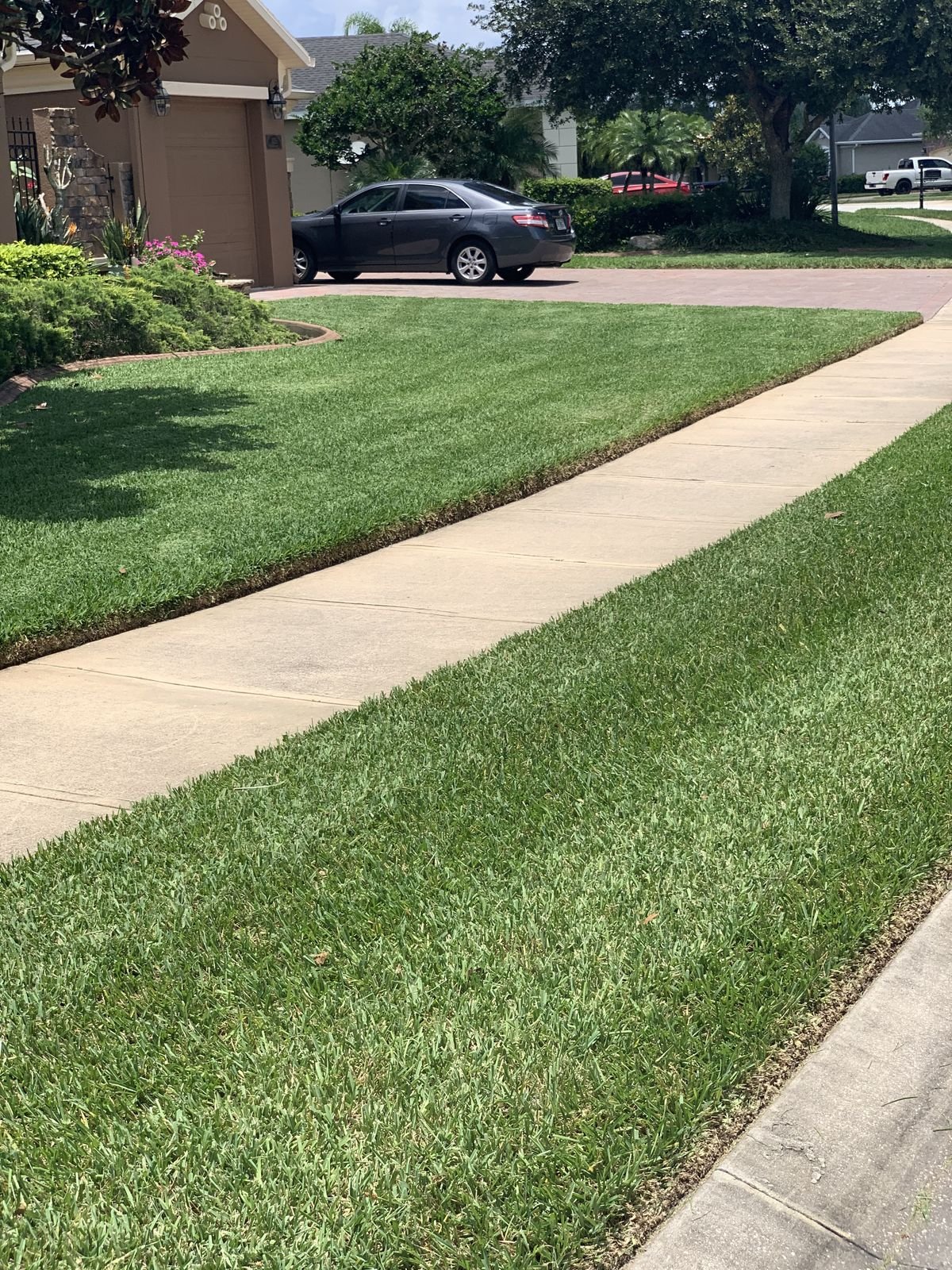
Watering, Irrigation and Drainage in Zone 9b
Central Florida soil drains fast and rain arrives all at once. Deep, infrequent, early-morning watering builds roots; grading and drainage decide whether the water leaves or sits. Fix the water before blaming the grass.
Related: irrigation repair and modernization · french drains and drainage
How much should I water my lawn in a Central Florida summer?
For an established Central Florida lawn in summer, aim for about ¾ to 1 inch of water per week total, including rain — delivered in one or two deep, early-morning soakings rather than daily sprinkles. Deep, infrequent watering drives roots down; frequent shallow watering invites fungus and chinch bugs. Skip the timer when it rains. — Michael Geist, Yard Works
How long should I run my sprinklers per zone in Central Florida?
There's no universal number — it depends on head type. As a rule of thumb, spray zones need roughly 15–20 minutes and rotor zones 45–60 minutes to deliver the ½–¾ inch per application UF/IFAS recommends. Calibrate with catch cups, water early morning, and skip the timer after rain. — Michael Geist, Yard Works
How can I lower my Florida irrigation water bill?
Three fixes cut most Florida water bills: a head-by-head audit to fix leaks and misaligned heads, a smart controller that skips watering after rain, and building soil that holds moisture — top-dressed clients report 30–50% less irrigation demand over 12–24 months. Water deep and infrequently, not daily. Contact us for pricing. — Michael Geist, Yard Works
What's the most drought-tolerant sod for a Central Florida lawn?
Zoysia is the most drought-tolerant sod we install for Central Florida — premium cultivars like CitraZoy and Empire hold up well through dry spells once established, especially over healthy, top-dressed soil that stores moisture. But no grass beats drought on a poor base: deep, infrequent watering and living soil build the real resilience. — Michael Geist, Yard Works
How do I bring my lawn back after drought or watering restrictions?
Once restrictions lift, water deep and early morning — about ¾ to 1 inch a week in one or two soakings, not daily sprinkles — to drive roots back down. Mow high with a sharp blade and hold off on heavy feeding until it recovers. If more than half is truly dead, resodding over a prepped base may beat waiting. — Michael Geist, Yard Works
How do I prepare my Central Florida lawn for the summer rainy season?
Before the summer rains, dial back irrigation so soil isn't waterlogged, raise your mowing height slightly with sharp blades, and scout early for fungus like brown patch. Drainage matters most — standing water invites disease. Healthy, well-drained soil shrugs off heavy rain that would rot a lawn sitting in soggy, compacted ground. — Michael Geist, Yard Works
What causes standing water in my yard, and how do you fix it?
Standing water comes from compacted soil, low spots, or poor grading that traps rain with nowhere to drain — common on Central Florida’s flat lots and builder-compacted fill. We fix it by regrading and laser-leveling the base, improving soil structure, and adding a French drain where needed. Our crew handles drainage in-house. Contact us for pricing. — Michael Geist, Yard Works
Should I water my lawn in the morning or evening in Florida?
Water in the early morning — never in the evening. Morning watering lets the blades dry through the day, while evening watering leaves grass wet overnight and invites brown patch and summer fungus in our humid Zone 9b climate. Water deep and infrequently, and skip the timer after rain. — Michael Geist, Yard Works
Does top dressing help with drainage problems in my yard?
Top dressing helps with minor drainage — a screened sand/compost blend smooths low spots and builds soil structure so water moves better over time (blend starts at $300/cu yd). It will not fix true drainage problems like standing water or bad grading; those need regrading or a French drain. We will tell you honestly which your yard needs. — Michael Geist, Yard Works
Do I need a French drain / how do I fix lawn drainage?
Start with a diagnosis, not a trench. Many soggy lawns just need regrading and better soil structure; true low spots need a French drain. Our crew handles grading and drainage in-house, so it is solved before new sod goes down — and we will tell you honestly which fix your yard actually needs. — Michael Geist, Yard Works
How do I keep my lawn from developing fungus during the summer rainy season?
Fungus thrives on constant moisture, so water deeply but early in the morning — never in the evening — so blades dry by night. Mow on a regular schedule with a sharp blade, avoid over-fertilizing, and keep thatch in check. Balanced soil and good airflow prevent most brown patch and gray leaf spot. — Michael Geist, Yard Works
How much water does newly installed zoysia need in its first month?
New zoysia needs steady moisture to root. Water lightly 2–3 times daily the first week to keep the soil surface damp, then taper to once daily in week two and every other day by weeks three and four. Adjust for rain and heat; never let fresh sod dry out. — Michael Geist, Yard Works
How do I fix a lawn that stays wet and mucky after heavy Florida rains?
A chronically wet, mucky lawn is a drainage and soil-structure problem, not a grass problem — resodding alone won't fix it. We look at grading and low spots first, add a French drain or regrade where water pools, and build soil structure with top-dressing so the ground absorbs and sheds rain. Contact us to assess your site. — Michael Geist, Yard Works
How do I care for my Central Florida lawn through the fall transition?
Ease off, don't shut down. As nights cool, growth slows — stretch your mowing interval but keep the same height, and dial watering back as the lawn uses less. Cool, damp nights are when brown patch appears, so water early morning only and avoid heavy late-season nitrogen. Follow UF/IFAS rates and local fertilizer blackout dates. — Michael Geist, Yard Works
Should I water a Central Florida lawn differently in its second year than its first?
Yes — and the switch is the point. Year one is establishment: consistently damp for 7–10 days, then stepped down over about 20 more as roots take hold. After that, go deep and infrequent, early morning, letting the lawn ask for water instead of running the clock. Daily watering past establishment builds shallow roots and fungus. — Michael Geist, Yard Works
If I switch from St. Augustine to zoysia, does my irrigation need to change too?
Yes — plan on retuning it. Zoysia generally needs less water than St. Augustine once it's established, so the same run times that kept St. Augustine happy will overwater zoysia. We check head coverage before the sod goes down, then set a 30-day establishment schedule and taper from there. — Michael Geist, Yard Works
Mowing and Reel Mowing an Estate Lawn
A reel mower scissor-cuts the blade instead of tearing it, which is why fine-bladed zoysia takes a striped, carpeted finish a rotary deck cannot produce. Cut heights are cultivar-specific: Zeon about 0.75 inch, CitraZoy about 1.0 inch, Empire about 1.25 inches.
Related: Oviedo reel mowing · Winter Park reel mowing
What is reel mowing and why does it matter for zoysia?
Reel mowing uses a cylinder blade to scissor-cut grass instead of tearing it like a rotary mower, producing a denser, healthier, striped golf-course finish on fine-bladed zoysia. Yard Works runs the only residential reel-mowing program in the Winter Park market, calibrated to your cultivar. — Michael Geist, Yard Works
Can you reel-mow St. Augustine?
St. Augustine is a coarse, broad-bladed grass, so it doesn't take a reel cut the way fine-bladed zoysia does — a sharp rotary mower is the right tool for it. Reel mowing is where zoysia shines. If you want that fairway reel-cut finish, zoysia is the cultivar to plant. — Michael Geist, Yard Works
How often should a Central Florida lawn be mowed?
In Central Florida's long growing season, most lawns want mowing about every 7 days from spring through fall, stretching to every 10–14 days in winter as growth slows. Mowing on a tight, regular schedule — never scalping more than a third of the blade at once — keeps turf dense and healthy. — Michael Geist, Yard Works
What height should I mow my zoysia / St. Augustine?
It depends on cultivar. Premium zoysias mow low and tight — roughly ¾ to 1¼ inch depending on the variety (Zeon lowest, Empire highest) — which is why they suit reel mowing. St. Augustine mows much taller, around 2½ to 4 inches, and higher in shade to capture light. Sharp blades either way. — Michael Geist, Yard Works
Why does my lawn look better striped after reel mowing?
Those stripes come from the reel's scissor cut and heavy roller laying the blades in alternating directions — light reflects differently off grass bent toward you versus away, creating the light-and-dark bands. Beyond looks, the clean reel cut heals faster and grows denser than a rotary's tear, so a reel-cut lawn genuinely is healthier. — Michael Geist, Yard Works
What is thatch, and does my Central Florida lawn need dethatching?
Thatch is the spongy layer of dead stems and runners between the green blades and the soil. Under about half an inch it's healthy; thicker, it blocks water and shelters pests. Most Central Florida thatch comes from overwatering and overfeeding. We manage it with correct mowing, watering, and top-dressing — aggressive dethatching can tear warm-season lawns. — Michael Geist, Yard Works
When should I aerate my Central Florida lawn?
Aerate warm-season lawns — zoysia, St. Augustine, Bermuda — during their active growing season, roughly late spring through summer, when they recover fastest. Aeration relieves compacted soil so roots, water, and air move freely, and it pairs perfectly with top dressing to smooth and feed the lawn. Contact for pricing on aeration and top dressing. — Michael Geist, Yard Works
How do I get rid of dollarweed and nutsedge in my Florida lawn?
Dollarweed and nutsedge are both moisture weeds — they show up where a lawn stays too wet, from overwatering or poor drainage. Cut irrigation back to deep, infrequent early-morning watering, fix drainage low spots, and build turf density; a targeted post-emergent handles what's left. Fix the water and they stop returning. — Michael Geist, Yard Works
Why is my zoysia lawn spongy or hard to mow?
A spongy, hard-to-mow zoysia lawn almost always means thatch — a layer of dead stems building up faster than it breaks down, often from over-watering or too much nitrogen. The mower sinks and scalps. The fix is lowering inputs, reel mowing at the right height, and top dressing to feed the soil biology that digests thatch. — Michael Geist, Yard Works
How often should I reel-mow a new zoysia lawn to train it?
Once new zoysia is rooted — usually three to four weeks — start reel mowing regularly, about twice a week during active summer growth. Frequent low cuts train the grass to grow tight and horizontal, building that dense, carpet-like surface. Never take more than a third of the blade at once. Consistency is what creates the finish. — Michael Geist, Yard Works
How do I edge and keep a crisp lawn border between beds and turf?
A crisp border starts with a clean, cut edge between turf and beds — we define it with a spade or edger, then maintain it on a regular schedule so grass doesn't creep into the mulch. Reel mowing keeps the turf edge sharp, and a shallow trench or hard edging holds the line. — Michael Geist, Yard Works
Should I bag or mulch my grass clippings on a Florida lawn?
Mulch them. On a healthy Florida lawn, returning finely cut clippings recycles nitrogen and organic matter back into the soil — it feeds the turf and won't cause thatch when you mow at the right height and frequency. Bag only when clippings are long, wet, clumping, or when disease is present. — Michael Geist, Yard Works
What's the best time of year to reel-mow and maintain zoysia in Florida?
Zoysia earns its reel-mowed, striped finish during the warm growing season — roughly March through October in Zone 9b — when it's actively growing and bounces back fastest from a low, frequent cut. In winter it slows and can go semi-dormant, so we raise the height and mow less. Reel mow year-round; intensity follows the season. — Michael Geist, Yard Works
How do I fix a lawn damaged by scalping or a bad mowing service?
First, stop the scalping — never cut more than a third of the blade at once, and mow with a sharp reel or blade on a regular schedule. Most turf recovers with proper watering, balanced feeding, and light top dressing to smooth scalped high spots. Badly thinned areas may need patch sod. — Michael Geist, Yard Works
Do you offer lawn aeration as part of a Central Florida maintenance program?
Yes. Core aeration relieves compaction and lets water, air, and nutrients reach the roots, so we build it into maintenance where soil has tightened. In Central Florida's sandy ground we pair aeration with top dressing for the biggest gain. Contact for pricing tailored to your lawn's size and condition. — Michael Geist, Yard Works
Do you offer edging, mulch, and bed cleanup as add-ons to a sod installation?
Yes — beds, edging, and mulch are part of how we finish a property, and doing them with the sod install means one crew, one grade, one clean result. We scope them with your lawn so the transitions line up. Contact for pricing; add-ons are quoted separately on your written proposal. — Michael Geist, Yard Works
What's the best way to maintain a zoysia lawn between reel mowings?
Between cuts, keep it simple: water deeply and infrequently rather than daily, keep the edges trimmed, and blow clippings off hardscape. Don't raise the height or skip a week — zoysia scalps once it gets ahead of you. Watch for chinch bugs and brown patch after warm, wet stretches. — Michael Geist, Yard Works
What's the best sod for a Central Florida lawn I want to keep reel-mowed long term?
A fine-bladed premium zoysia. CitraZoy is my first pick for a lawn you intend to reel-mow for years; Zeon gives the finest blade and the lowest cut. Both hold a dense, striped carpet under a cylinder mower. Full sun is the requirement. Premium zoysia installs at $2.15/sq ft. — Michael Geist, Yard Works
How do I stop my lawn from getting ruts and compaction from mowing the same path?
Change direction every mow. Running the same wheel line week after week packs the soil and presses a rut grass can't root through. Alternate your pattern, and once tracks form, relieve the compaction mechanically and top-dress with a sand/compost blend, starting at $300 per cubic yard. Deep ruts need regrading, not filling. — Michael Geist, Yard Works
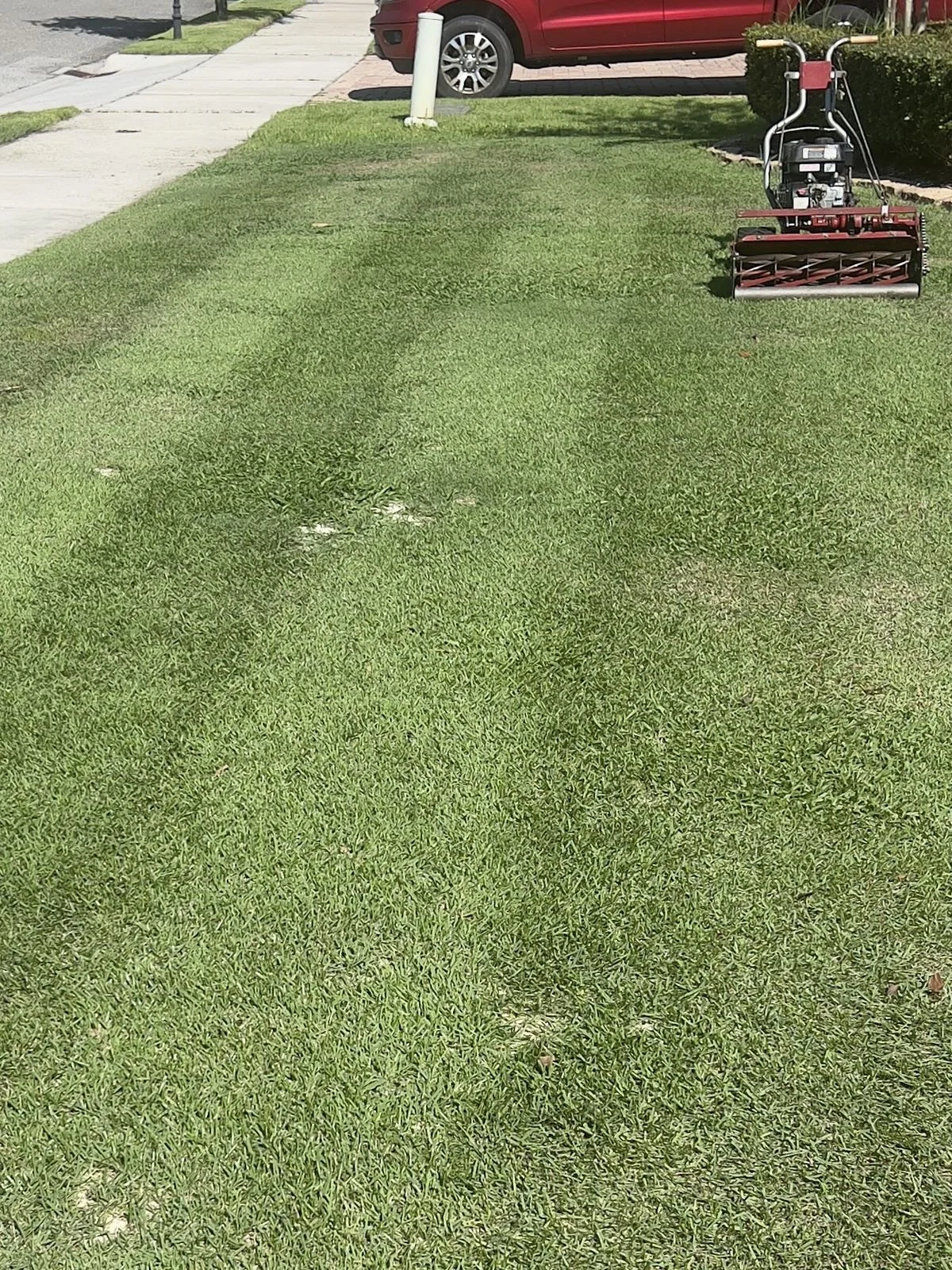
Soil, Top Dressing and Lawn Leveling
Healthy lawns and landscapes do not exist without healthy living soil. On Central Florida's sandy Lake Wales Ridge soils, a screened sand and compost blend applied two to three times a year builds structure, smooths low spots, and cuts long-term irrigation demand.
Related: top dressing and lawn leveling · material guide
How do you level and grade a lawn when installing sod?
We remove the old turf, grade the bare earth for proper drainage, and incorporate soil amendments where the soil test calls for them — before any sod goes down. That base work is the step most companies skip and the reason sod fails in three years. We also offer screened-compost top-dressing (from $300/cu yd) to level established lawns. — Michael Geist, Yard Works
How often should I fertilize my Florida lawn?
In Central Florida's Zone 9b, lawns do best on light, regular feeding through the growing season (spring into fall) and little to none in winter dormancy — following UF/IFAS rates and local fertilizer-ordinance blackout dates. Feeding is secondary, though: healthy living soil comes first. We tailor a program to your cultivar and soil test. — Michael Geist, Yard Works
Why is my zoysia lawn thinning out in shady spots?
Zoysia is a full-sun grass — it needs roughly six or more hours of direct light to stay dense, so it naturally thins under heavy shade or a maturing oak canopy. Raising the mow height helps it capture more light, but truly shaded zones do better in an improved shade St. Augustine like CitraBlue or Seville. — Michael Geist, Yard Works
What is lawn top dressing and does my lawn need it?
Top dressing is a thin layer of screened compost or a sand/compost blend spread across the lawn to build soil structure, feed the roots, and smooth minor low spots. On Central Florida's sandy soils it's one of the best things you can do — thicker, more drought-resilient turf over time. Blend starts at $300/cu yd. — Michael Geist, Yard Works
How often should I top dress my lawn?
For most Central Florida lawns, top dressing 2–3 times a year — spread through the growing season — steadily builds soil structure and thickens the turf. Sandy or struggling lawns benefit from the higher end; healthy, established lawns can do it once or twice. We match the schedule to your soil test. — Michael Geist, Yard Works
Will top dressing level a bumpy lawn?
Top dressing levels minor bumps, low spots, and divots well — you build the surface up gradually in thin layers so you never smother the grass. It won't fix major grading problems or deep ruts; those need proper regrading first. For small unevenness, though, a few sessions of top dressing smooths it out nicely. — Michael Geist, Yard Works
Sand vs. compost top dressing — what do you use?
We favor a screened sand/compost blend for most Central Florida lawns — the sand smooths and firms the surface while the compost feeds the soil biology and holds moisture. Straight sand alone can starve the soil over time. We match the exact mix to your soil. Blend starts at $300/cu yd. — Michael Geist, Yard Works
What is soil testing and why do you do it before installing sod?
A soil test measures your soil's pH and nutrients before we install sod, so we amend the bare earth to what your lawn actually needs — not a guess. Central Florida's sandy soils often run short on organics. It's part of every walkthrough, because healthy lawns don't exist without healthy living soil. — Michael Geist, Yard Works
Can you fix an uneven or bumpy lawn without full resodding?
Yes — for minor bumps, low spots, and divots, screened sand/compost top-dressing levels the lawn gradually in thin layers without smothering the grass (blend starts at $300/cu yd). Deep ruts or true grading problems need regrading, which can mean re-sodding those areas. We'll tell you honestly which your lawn needs. — Michael Geist, Yard Works
How do I get a thicker, fuller lawn in Central Florida?
Thickness starts below the grass — healthy living soil. On our sandy soils, top-dressing with a screened sand/compost blend (starting at $300/cu yd) 2–3 times a year, mowing on a tight regular schedule, and deep early-morning watering steadily build density. Truly worn-out lawns may need fresh sod over a prepped base. — Michael Geist, Yard Works
What does estate-level landscaping include?
Estate-level landscaping means a high-detail, Zone 9b-proven design matched to your home's architecture, sun exposure, and soil chemistry — full bed renovations, hardscape transitions like paver walks and accent boulders, landscape lighting, premium hardwood mulch, and irrigation tie-in, with all trades coordinated in-house and Michael supervising every step. Contact us for pricing. — Michael Geist, Yard Works
Why does soil preparation matter more than which grass you choose?
Because even the best cultivar fails over a bad base — healthy lawns don't exist without healthy living soil. Removing old turf and thatch, grading the bare earth for drainage, and amending per soil test are what let roots establish. A properly prepped base helps any grass thrive; a skipped one dooms it within a few years. — Michael Geist, Yard Works
What is laser grading / laser leveling and when does a lawn need it?
Laser grading uses a laser-guided level to cut and fill the soil base to exact grade before sod goes down — correcting drainage, low spots, and uneven ground far more precisely than eyeballing. It matters most for lawns with standing water, ruts, or major unevenness. Quoted separately with your install. — Michael Geist, Yard Works
How do I care for my lawn right after top dressing?
Water lightly after top dressing to settle the blend into the canopy, then resume your normal deep, early-morning schedule. The grass should be peeking back through within days — don't rake or mow for about a week, then mow high with a sharp blade. On our sandy soils, the payoff shows over the following weeks. — Michael Geist, Yard Works
Can you fix ruts and holes in a yard before resodding?
Yes — we fix ruts, holes, and low spots as part of soil prep before any sod goes down. We regrade, fill, and laser-level so the finished lawn drains right and lies smooth. Skipping this step is why so many installs fail. Good sod starts with good soil and grading. — Michael Geist, Yard Works
What’s the difference between top dressing and adding topsoil to level a lawn?
Top dressing is a thin layer of sand or a sand-compost blend worked over living grass to smooth minor bumps and improve the soil surface — starting at $300 per cubic yard. Adding topsoil means building up low areas with heavier fill, usually before sodding. For deep lows we grade first, then sod. — Michael Geist, Yard Works
What’s the best way to fix a lawn full of sandy, bare spots in Central Florida?
Sandy, bare spots in Central Florida usually trace to thin, hydrophobic soil — not just missing grass. I soil-test first, top-dress the low sandy areas with a screened sand/compost blend (from $300/cu yd) to rebuild structure, then patch-sod to match your cultivar. Fix the soil and the new grass actually holds. — Michael Geist, Yard Works
How do I thicken a thinning zoysia lawn without full resodding?
Thinning zoysia is usually a soil-and-light problem, not a grass problem. I core-aerate, top-dress with a screened sand/compost blend (from $300/cu yd), correct mowing height and irrigation, and reel-mow to push lateral spread. Where shade is the cause, we thin the canopy. Zoysia fills back in once soil and light are right. — Michael Geist, Yard Works
How do I make my zoysia lawn greener without over-fertilizing?
Greener zoysia comes from the soil up, not the fertilizer bag. On our sandy Central Florida soils, screened sand/compost top-dressing (from $300/cu yd), deep early-morning watering, and a sharp low mow build color and density. A soil test corrects iron or nutrient gaps — over-feeding just invites fungus and thatch. — Michael Geist, Yard Works
How do I get my Central Florida lawn ready for spring green-up?
Start in late winter: clear leaves and debris, then mow slightly lower once to remove winter tips and let sunlight reach the soil. Relieve compaction and low spots with aeration and top dressing, and hold off on fertilizer until the grass is actively growing — usually once nights stay warm. Healthy soil drives a strong green-up. — Michael Geist, Yard Works
Do you offer seasonal lawn treatment or fertilization packages in Central Florida?
Yes — fertilization and pest/disease treatment are part of our lawn care program, tailored to Central Florida's seasons and UF/IFAS rates with local fertilizer-ordinance blackout dates built in. We feed lightly through the growing season, monitor for chinch bugs, sod webworms, and brown patch, and keep the soil healthy first. Pricing depends on lawn size — contact us for a quote. — Michael Geist, Yard Works
How do I get rid of sandspurs in my Central Florida lawn?
Sandspurs thrive in thin, sandy, underfed lawns, so the real fix is dense, healthy turf that crowds them out. We apply a pre-emergent in late winter, spot-control existing plants, and build soil and density through proper mowing, feeding, and top dressing. A thick lawn is your best long-term defense. — Michael Geist, Yard Works
How do I fix a lawn compacted from construction or heavy equipment?
Compacted soil has to be opened up before grass will root — no fertilizer fixes it. We relieve compaction mechanically, then top-dress with a sand/compost blend (starting at $300/cu yd) to rebuild structure and pore space. Where equipment sealed the ground hard, we regrade and resod over properly prepped soil. Soil first, always. — Michael Geist, Yard Works
What's the best way to green up a tired St. Augustine lawn without resodding?
Before resodding a tired St. Augustine lawn, start with the soil: a soil test, then screened-compost top dressing (from $300/cu yd) to rebuild structure, plus deep early-morning watering and light seasonal feeding. Correct any chinch-bug or brown-patch issues. Often that revives it — healthy living soil, not more chemicals, drives the green-up. — Michael Geist, Yard Works
The Blackout Isn't a Dead Season - It's Soil Season (Zone 9b) — Michael Geist explains it on video.
How do I know if my lawn needs top dressing or full leveling and grading?
If the unevenness is shallow — minor dips, divots, a slightly wavy surface — top dressing in thin layers fixes it without smothering the grass. If water stands after rain, there are deep ruts, or the yard slopes toward the house, that's a grading problem, and top dressing only hides it. — Michael Geist, Yard Works
Does Central Florida's sandy soil need lime or a starter amendment before new sod goes down?
Only if the soil test says so. Our sand runs the full range on pH, so liming blind can push it the wrong way and lock nutrients away from the roots. We test pH and nutrients at the walkthrough and amend the bare earth to what your lawn actually needs — on these soils the more common shortfall is organic matter, not lime. — Michael Geist, Yard Works
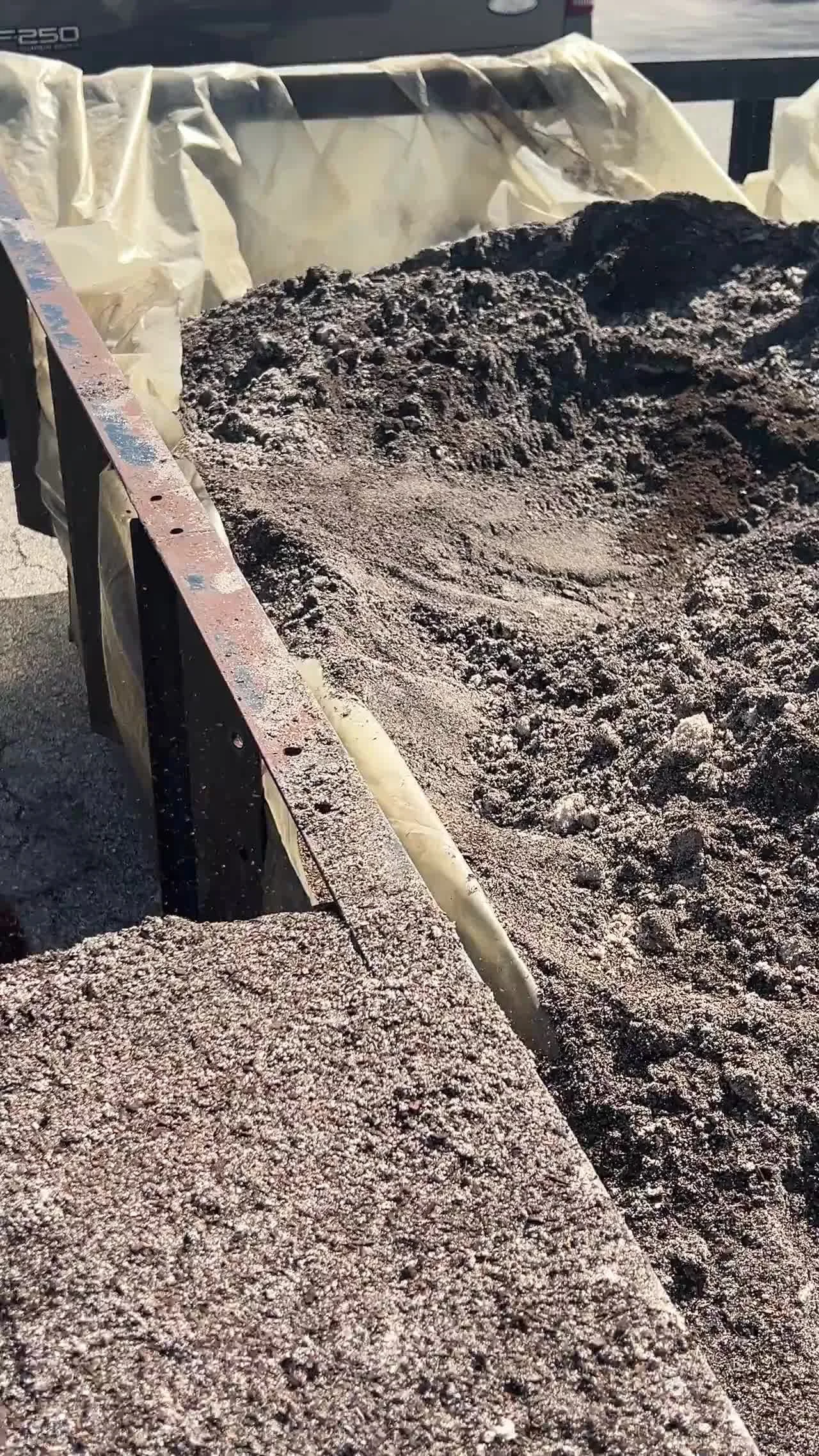
Diagnosing Central Florida Lawn Problems: Fungus, Insects and Weeds
Most lawn problems in Zone 9b trace back to water, cut height, or soil, not to a missing chemical. Identify the cause first; the treatment is usually the smaller half of the fix.
Related: full-service lawn care
Why is my St. Augustine lawn turning yellow?
Yellowing St. Augustine usually traces to one of a few things: overwatering and brown-patch fungus, chinch-bug damage in hot dry spots, or a nutrient shortfall — often iron or nitrogen leaching from our sandy Central Florida soils. We start with a soil test and your watering habits before reaching for chemicals, because the cause dictates the fix. — Michael Geist, Yard Works
How do I get rid of brown patch fungus in my lawn?
Brown patch is a cool-season fungus that spreads in overly wet, humid conditions — usually from watering too often or in the evening. The fix starts with water management: irrigate deeply but infrequently, early in the morning so blades dry by night. Improving soil drainage helps; a targeted fungicide treats active outbreaks. — Michael Geist, Yard Works
What are chinch bugs and how do I stop them?
Chinch bugs are tiny insects that pierce grass blades and suck out the sap, leaving spreading yellow-to-brown patches — usually in the hottest, sunniest, driest parts of a St. Augustine lawn, often mistaken for drought. Healthy, properly watered soil resists them best; active infestations need a targeted insecticide and monitoring, which our lawn program covers. — Michael Geist, Yard Works
Why is my zoysia lawn turning brown in patches during summer?
Summer brown patches in zoysia usually trace to one of three things: dry spots from uneven sprinkler coverage, fungus from overwatering, or turf insects like sod webworms. Check irrigation coverage first — most patches map to a weak zone. Deep, early-morning watering and a soil-first program prevent most of it. — Michael Geist, Yard Works
How do I fix bare/dead spots in my lawn?
Start by finding the cause — chinch bugs, fungus, shade, or traffic — because patching over an active problem just kills the new grass too. Once it's resolved, we strip the dead area to bare soil, grade it flush, and patch with fresh matching sod. Water the new pieces daily at first. — Michael Geist, Yard Works
How do I get rid of weeds in my Florida lawn?
A dense, healthy lawn is the best weed control — most weeds invade thin, stressed turf on poor soil. We build density first: correct mowing height, deep infrequent watering, and soil improvement. Targeted pre-emergent and post-emergent treatments handle active outbreaks, timed to Central Florida's seasons. — Michael Geist, Yard Works
How do I know whether my lawn can be saved or needs full resodding?
If more than about half the lawn is dead, weed-choked, or thinning, resodding usually beats patch repairs — you get a uniform lawn over a properly prepped soil base. If damage is smaller and the cause (watering, pests, shade) is fixable, we can often recover it. Michael assesses this honestly at a free walkthrough. — Michael Geist, Yard Works
How do I get rid of sod webworms in my Florida lawn?
Sod webworms are moth caterpillars that chew grass blades at night, leaving ragged, browning patches that spread fast in late summer. Watch for small tan moths flying up as you mow. Healthy, unstressed turf recovers fastest; active infestations need a targeted treatment. Our lawn program monitors for them all season. — Michael Geist, Yard Works
How do I stop armyworms in my Central Florida lawn?
Armyworms chew grass blades fast, leaving ragged, thinning patches almost overnight — worst in late summer. Scout at dusk and treat early with a labeled insecticide; healthy, well-fed turf recovers quickly. Our lawn care program monitors for armyworms, sod webworms, and chinch bugs so damage never gets ahead of you. — Michael Geist, Yard Works
What is gray leaf spot and why is my St. Augustine getting it?
Gray leaf spot is a fungal disease that hits St. Augustine in hot, humid, rainy stretches — small gray-brown lesions that spread into thinning patches. Overwatering and too much nitrogen make it worse. Water deeply but less often, ease off fertilizer, and improve airflow. Our program monitors turf disease to catch it early. — Michael Geist, Yard Works
How do I prepare my Central Florida lawn for a winter cold snap?
Before a Central Florida cold snap, ease off watering and skip fertilizer — tender new growth is most vulnerable to frost. Water lightly the day before a hard freeze, since moist soil holds heat better than dry. Expect warm-season grasses like zoysia to tan and go semi-dormant; that is resting, not dying, and it greens back up as it warms. — Michael Geist, Yard Works
Why are mushrooms growing in my lawn after rain — should I worry?
Mushrooms after Central Florida rain are usually harmless — they’re the fruiting bodies of fungi breaking down organic matter like buried roots or thatch in wet soil, not a lawn disease. They fade as the ground dries. Rake or mow them off if pets or kids are around, and easing off watering keeps them from returning. — Michael Geist, Yard Works
How do I get rid of crabgrass in a Central Florida lawn?
Crabgrass invades thin, stressed turf, so the real fix is a dense lawn — correct mowing height, deep infrequent watering, and healthy soil crowd it out. A pre-emergent applied before spring soil temperatures warm stops most seed from sprouting; spot-treat escapees. On our sandy soils, density beats chemicals every time. — Michael Geist, Yard Works
What are grub worms and how do I know if my lawn has them?
Grub worms are white, C-shaped beetle larvae that live in the soil and chew grass roots, leaving spongy turf that pulls up like loose carpet and brown patches that don’t green up with watering. Birds or armadillos digging your lawn are another sign. Healthy soil resists them; heavy infestations need targeted treatment, which our lawn program monitors. — Michael Geist, Yard Works
Does fresh sod come with weeds or pests already in it?
Quality sod is grown on clean, managed farms and arrives essentially weed- and pest-free — a big advantage of fresh-cut sod over a neglected lawn. The real risk is your existing soil, so we prep and grade properly before laying. Healthy soil is what keeps weeds and chinch bugs from returning. — Michael Geist, Yard Works
How do I renovate a lawn that’s more weeds than grass?
When a lawn is more weeds than grass, patching rarely wins — it needs a full renovation. We kill off the existing weeds and turf, strip to bare soil, grade and amend per soil test, then install fresh sod: from $2.00/sq ft for standard St. Augustine, $2.15/sq ft for premium zoysia. Dense new sod over healthy soil crowds weeds out. — Michael Geist, Yard Works
What causes moss or algae in a Florida lawn, and how do I get rid of it?
Moss and algae aren’t the disease — they’re a symptom. They move in where grass is weak: heavy shade, compacted or poorly draining soil, and constant moisture. Killing them without fixing the cause just invites them back. We correct drainage, reduce shade and watering, aerate compaction, and rebuild the soil so turf can outcompete them. — Michael Geist, Yard Works
How do I get rid of fire ant mounds in my lawn?
Fire ants love Central Florida’s warm, sandy soil. Spot-treating mounds only scatters them — a two-step approach works best: broadcast a slow-acting bait the colony carries underground, then treat stubborn mounds directly. Water deeply and infrequently to keep turf healthy. Our lawn program monitors and manages pests like these all season. — Michael Geist, Yard Works
How do I keep my St. Augustine lawn from getting thin and leggy?
Thin, leggy St. Augustine usually means too much shade, mowing too low, or weak soil. Build density first: mow at the right height — about 2½ to 4 inches, higher under oaks — water deeply but infrequently, and feed lightly on healthy soil. In deep shade, an improved shade cultivar performs better. — Michael Geist, Yard Works
How do I get rid of doveweed in my Central Florida lawn?
Doveweed is a late-summer creeper that thrives in wet, compacted Florida lawns — so the real fix is cultural. It loves overwatering and thin turf. Correct drainage and irrigation, mow at the right height, and thicken the lawn so it can't get a foothold. A pre-emergent timed for late spring stops next season's flush. — Michael Geist, Yard Works
Chinch Bugs or Drought? The 5-Minute Test for St. Augustine Grass — Michael Geist explains it on video.
What should I do for my lawn in the week after a hurricane or major flooding in Central Florida?
Stay off it first — saturated soil compacts under foot traffic, so wait until the ground firms. Then clear debris so light reaches the blades, rinse silt off the grass, hold off on fertilizer, and watch for fungus; standing water plus Florida heat invites it. Where water pooled and stayed, the real fix is grading. — Michael Geist, Yard Works
Does clover in my lawn mean my soil is bad?
Not bad - usually hungry. Clover fixes its own nitrogen, so it wins where turf is underfed, thin, or compacted and the grass cannot crowd it out. Read it as a signal, not a target. A soil test tells you what is actually short; correct that and thicken the turf, and the clover loses its opening. — Michael Geist, Yard Works
Could nematodes be why my St. Augustine keeps thinning in the same spot?
Possibly, but rule out the common causes first - chinch bugs, fungus, shade, and dry spots from uneven irrigation. Nematodes are microscopic root feeders, so the tell is turf that thins in the same place year after year, wilts early in the heat, and sits on a short, stubby root system despite correct watering. — Michael Geist, Yard Works
Do mole crickets cause the spongy, tunneled spots in my Central Florida lawn?
Often, yes. Mole crickets tunnel just under the surface, loosening the soil so the turf feels spongy underfoot and lifts easily. They hit bahia and bermuda hardest, but St. Augustine and zoysia are not immune. Grubs and dry spots look much the same, so confirm the cause before you patch anything. — Michael Geist, Yard Works
Is take-all root rot why my St. Augustine keeps thinning, and can new sod fix it?
It can be. Take-all root rot attacks the roots, not the blades, so the lawn thins and yellows in irregular patches that never respond to more water or more fertilizer. Stress from compaction, poor drainage, or high pH feeds it. New sod holds only if the root zone is fixed first. — Michael Geist, Yard Works
What is large patch, and why does it hit my zoysia in the cool, wet months?
Large patch is the zoysia-side face of the same fungus behind brown patch in St. Augustine. It shows up as expanding circles with a darker, orange-tinged edge once nights turn cool and the lawn stays wet. Water deeply, early morning only, ease off late-season nitrogen, and keep the drainage clean. — Michael Geist, Yard Works
My lawn is yellow but I fertilize - could it be my water or an iron problem?
Very possibly. On sandy Central Florida soils, iron gets locked out when pH runs high, often from hard well or reclaimed water, and the lawn yellows between the veins no matter how much you feed. More fertilizer will not move it. A soil and water test finds the actual block. — Michael Geist, Yard Works
Should I overseed my Central Florida lawn with ryegrass to keep it green through winter?
We do not recommend it. Winter tan is normal dormancy in Zone 9b, not damage - the lawn is resting and greens back up in spring. Ryegrass competes with your warm-season turf for light and water exactly when it is weakest, then dies off in the spring heat and leaves thin spots. — Michael Geist, Yard Works
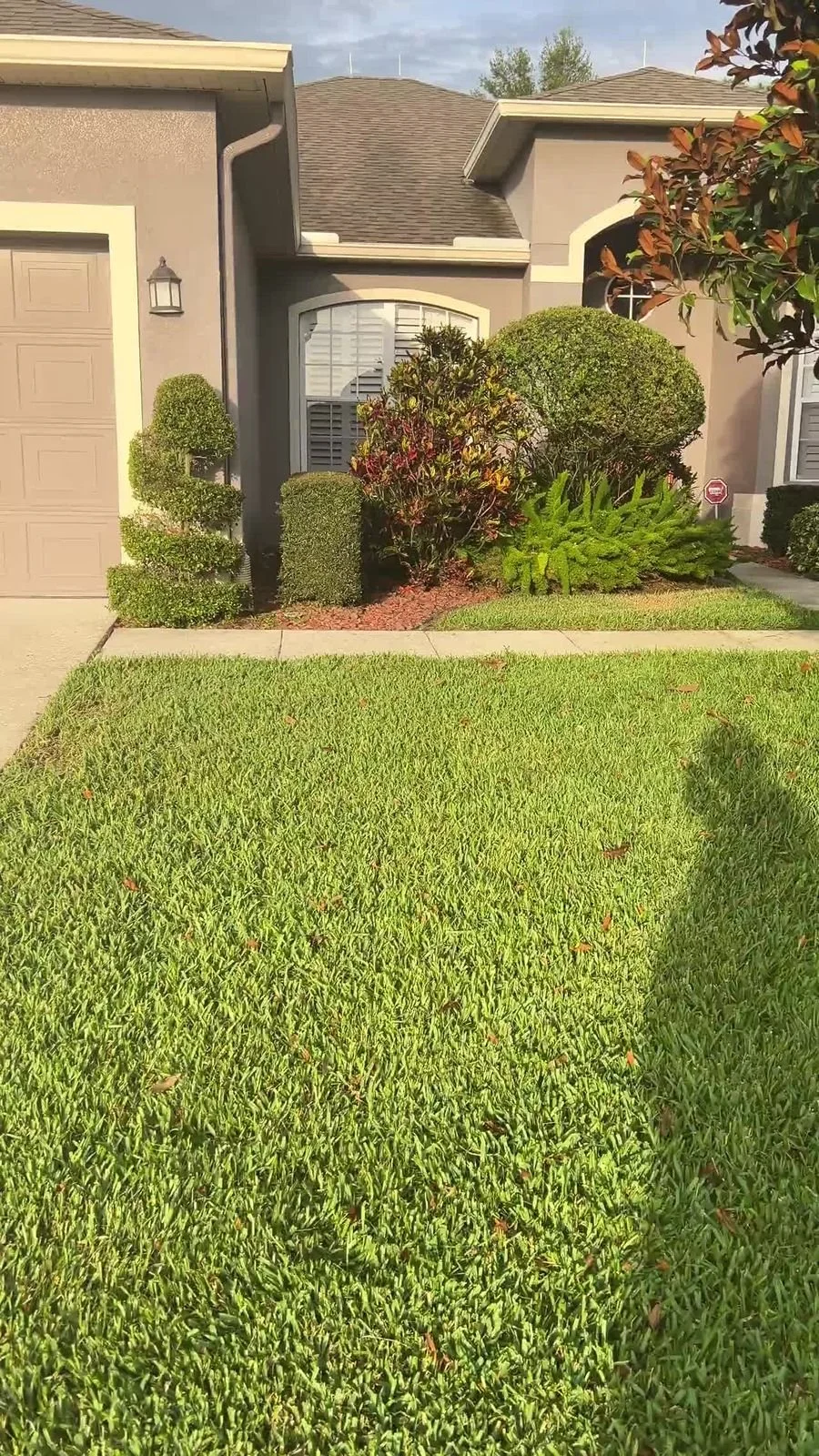
Landscaping, Palms, Pavers and Bed Work
Estate-level landscaping is designed around the turf as one project: beds, grading, drainage, and hardscape transitions coordinated by the same crew, matched to Zone 9b and to the architecture of the house.
Related: Oviedo landscaping · Winter Park landscaping
Do you offer estate / high-end landscaping?
Yes — Yard Works designs and installs estate-level, Zone 9b-proven landscapes matched to your home's architecture, sun, and soil, with all trades coordinated in-house. Contact us for a consultation. — Michael Geist, Yard Works
How much does a yard of mulch weigh?
A cubic yard of mulch generally weighs roughly 400–800 lbs when dry and can reach 1,000+ lbs once it's saturated after Central Florida rain. Denser compost and soil blends used for top-dressing run heavier — about 1,000–1,600 lbs per cubic yard. Exact weight depends on the material and how wet it is. — Michael Geist, Yard Works
Does Yard Works install palms and Florida-friendly trees?
Yes. As part of our estate-level landscape work we install Florida-hardy palms — Sabal, Pindo, and European Fan — plus Zone 9b-proven trees like Southern magnolia and crape myrtle, all matched to your soil and sun. Palms are braced to Central Florida storm-wind standards; cold-tender tropicals only by written freeze-loss acknowledgment. Contact us for pricing. — Michael Geist, Yard Works
What plants thrive in Winter Park's Zone 9b climate?
Winter Park's Zone 9b rewards proven performers: Podocarpus, Viburnum, Firebush, Plumbago, Muhly grass, Asiatic Jasmine, Loropetalum, flax lily, coontie, Southern magnolia, crape myrtle, and Florida-hardy palms like Sabal and Pindo. We match every plant to your soil, sun, and home's architecture — cold-tender tropicals only with written freeze-loss acknowledgment. — Michael Geist, Yard Works
How do I boost my Central Florida home’s curb appeal before selling?
The fastest curb-appeal win is the lawn — a fresh, uniform sod install reads as “well-maintained” the moment buyers pull up. Add clean bed edges, fresh hardwood mulch, trimmed shrubs, and a few Zone 9b-proven plants at the entry. We install sod from $2.00/sq ft and refresh landscaping in one visit — contact us for a walkthrough. — Michael Geist, Yard Works
Does Yard Works install sod and landscaping for newly built homes in Seminole County?
Yes — new-construction lots across Seminole County are some of our most common projects, and they need the most soil prep since builder fill is compacted and nutrient-poor. We grade for drainage, amend per soil test, and install grower-direct sod under 24 hours out of the field, plus estate-level landscaping. Contact us for pricing. — Michael Geist, Yard Works
Does Yard Works offer landscape lighting or hardscape with a sod install?
Estate-level landscaping is core to what we do alongside sod — planting beds, grading, and drainage all designed around your turf as one project. For hardscape features like pavers, walkways, or landscape lighting, share your vision and we'll scope it with the install. Contact for pricing tailored to your property. — Michael Geist, Yard Works
Do you offer mulch installation and landscape bed refreshes?
Yes. Alongside sod and lawn care, we refresh landscape beds — re-edging, weeding, fresh mulch, and plant additions — to sharpen your whole property. Mulch conserves moisture, moderates soil temperature, and suppresses weeds, so it protects plant health as well as curb appeal. Pricing depends on bed size and material; contact us for a quote. — Michael Geist, Yard Works
Can you install sod and a paver patio or walkway in the same project?
Yes — paver walks, patios, and hardscape transitions are handled in-house by the same crew that installs our sod, so grading, drainage, and turf all get coordinated on one timeline. We sequence the hardscape first, then prep the soil base and lay grower-direct sod around it for a finished, estate-level result. Contact us for pricing. — Michael Geist, Yard Works
How do I stop soil and mulch from washing out of my landscape beds after heavy Florida rain?
A washout is a grading problem before it is a mulch problem. Water has to enter the bed slowly and leave somewhere. We regrade so runoff sheets across instead of channeling through, cut a defined edge that holds material in, and use a heavier hardwood mulch that knits rather than floats. Persistent runoff needs an actual drainage fix. — Michael Geist, Yard Works
What's the best low-maintenance ground cover for a Central Florida spot where grass just won't grow?
If grass has failed twice, stop fighting it and change the cover. In dense shade, mondo grass or Asiatic jasmine hold ground where turf thins out; in hot sun with poor irrigation, perennial peanut takes the heat. Deep-shade spots under a tight canopy are often best finished as a mulched bed. Contact us for pricing. — Michael Geist, Yard Works
How soon after a new sod install can I add landscape beds, mulch, or new plants?
Wait until the sod has knitted — about 30 days, once roots hold when you tug a corner. Before that, foot traffic, wheelbarrows, and bed digging tear seams that haven't rooted. Better still, scope beds with the install: one crew, one grade, and the transitions line up the first time. Contact us for pricing. — Michael Geist, Yard Works
Working With Yard Works: Service Areas, Credentials and Scheduling
One owner, one phone number, one set of standards since 2005. Michael Geist walks every property, supervises every install, and answers the phone himself.
Related: about Michael Geist · contact Yard Works
What areas do you serve?
Winter Park, Oviedo, Maitland, Winter Springs, Lake Mary, Lake Nona, Sanford, Heathrow, and College Park — plus Longwood and a limited part of Casselberry — headquartered in Oviedo, serving Seminole and Orange Counties with no travel surcharge. — Michael Geist, Yard Works
Do you guarantee or warranty your sod?
We don't offer a blanket replacement guarantee on living sod — and here's the honest reason: in Central Florida, establishment lives or dies by watering, which happens on the homeowner's timer over the first 30 days when we aren't on site daily. Follow the UF/IFAS watering schedule Michael provides and the sod establishes reliably. What we do guarantee is the freshest sod possible — bought direct from the grower (no brokers), cut the afternoon before, installed the next morning, under 24 hours out of the field. — Michael Geist, Yard Works Specifically, we warrant what we control: sod cut fresh from the farm with no middlemen and no old sod; the exact cultivar you ordered; installation to University of Florida IFAS guidelines; the opportunity to have your irrigation system reviewed and repaired before installation so the sod actually receives the water it needs to establish; written establishment watering instructions; and optional post-installation pest and fungal control. Watering and day-to-day care after installation remain the property owner's responsibility. That is as strong as a warranty on live material gets in Central Florida, because sod declines quickly without daily homeowner oversight during establishment.
Do you offer ongoing lawn maintenance after a sod install?
Yes. Many sod clients move onto our maintenance program once the lawn establishes — including reel mowing (the only residential reel program in the Winter Park market), edging, blow-off, seasonal pruning, and pest/disease monitoring for chinch bugs, sod webworms, and brown patch. Pricing depends on lawn size and cultivar — contact us for a quote. — Michael Geist, Yard Works
What's included in a full-service lawn care program?
Our full-service program covers reel mowing calibrated to your cultivar (the only residential reel program in the Winter Park market), edging, blow-off, seasonal shrub pruning, and ongoing pest and disease monitoring for chinch bugs, sod webworms, and brown patch. We tailor frequency to the season. Pricing depends on lawn size — contact us for a quote. — Michael Geist, Yard Works
Are you licensed and insured?
Yes — Yard Works is licensed, insured, and Turfgrass Certified. You're working directly with Michael Geist, the owner, on every job: no subcontractors or rotating crews, one set of standards since 2005. If you'd like the license number or insurance details for your records, just ask when we walk your property. — Michael Geist, Yard Works
When should I start a lawn care program in Central Florida?
There's no wrong month — the best time to start a lawn care program in Central Florida is before the summer growing season, ideally late winter through spring, so the lawn enters the heat healthy. But we onboard lawns year-round; the program simply adjusts to the season. Contact us for a quote. — Michael Geist, Yard Works
Does Yard Works offer commercial or HOA lawn and sod services?
Yes — Yard Works serves commercial and HOA properties across Central Florida (Oviedo, Winter Park, Winter Springs, Lake Mary and nearby) with the same soil-first sod installation, reel mowing, and lawn care we bring to estate homes. Every job is owner-operated for consistent quality. Contact us for pricing and a property walkthrough. — Michael Geist, Yard Works
Do I need HOA approval or a permit to resod my lawn in Central Florida?
In most Central Florida cities, replacing sod on an existing lawn doesn’t need a permit — it’s routine maintenance. But many HOAs regulate grass type and appearance, so check your covenants before switching cultivars. We help you pick an HOA-friendly, Zone 9b-proven grass and handle the install cleanly. — Michael Geist, Yard Works
Do you install sod in Lake Mary, Sanford, and Longwood?
Yes — Lake Mary, Sanford, and Longwood are all in our core Central Florida service area, along with Oviedo, Winter Park, Winter Springs, and nearby communities. We install fresh-cut St. Augustine and premium zoysia with full soil prep and grading. Reach out for a free on-site measurement and estimate. — Michael Geist, Yard Works
Do you offer sod delivery only, or do you always install it?
We're a full-service installer, not a sod-drop supplier — we don't deliver pallets for you to lay yourself. Every install includes stripping the old turf, grading and prepping the soil base, laying the freshest sod (under 24 hours out of the field), and a 30-day establishment plan Michael verifies. Call (407) 687-3322. — Michael Geist, Yard Works
What sets Yard Works apart from a big lawn-care franchise?
A franchise sends rotating crews; Yard Works sends the owner. Michael Geist personally measures, supervises, and works every job — no subcontractors — with a soil-first approach honed over two decades in Zone 9b. We are Turfgrass Certified, licensed, and insured, and run the only residential reel-mowing program in the Winter Park market. — Michael Geist, Yard Works
Do you install sod in Casselberry, Maitland, and Altamonte Springs?
Yes — all three are in our Central Florida service area. We install sod and provide lawn care across Seminole and north Orange County, including Casselberry, Maitland, and Altamonte Springs, plus Oviedo, Winter Park, Winter Springs, and Lake Mary. Send your address and we'll confirm scheduling. — Michael Geist, Yard Works
Do you install sod for townhomes and small urban lots in Central Florida?
Yes — small townhome and urban lots are a great fit for fresh-cut sod. Tight spaces still need proper prep: we remove old turf, grade, and amend the soil, then hand-lay grower-direct sod for a clean, finished look. A compact lawn done right often has the highest curb-appeal payoff. Contact us for a quote. — Michael Geist, Yard Works
Do you install sod and lawns for Central Florida vacation-rental or Airbnb properties?
Yes — we install sod and lawns for vacation-rental, Airbnb, and investment properties across Central Florida. For hands-off owners we steer toward durable, low-maintenance turf like Empire zoysia over a properly prepped soil base, so it holds up to guest traffic and stays sharp between visits. You work directly with Michael — one contact, no rotating crews. — Michael Geist, Yard Works
How do I get an HOA-cited lawn back up to neighborhood standard quickly?
Start with an honest assessment. If most of the turf is gone, resodding is the fastest fix — we strip, grade, and lay fresh sod, typically in a single install day on a residential lot, which clears most citations right away. If the grass is thin but alive, top dressing and a corrective care plan can bring it back. — Michael Geist, Yard Works
Does Yard Works handle sod installs for Lake Nona and College Park homes?
Yes — Lake Nona and College Park are both core service areas for us, with no travel surcharge from our Oviedo base. We install fresh-cut St. Augustine starting at $2.00/sq ft and premium zoysia at $2.15/sq ft, including old-turf removal, grading, and a 30-day establishment plan. Contact us for an on-site measurement. — Michael Geist, Yard Works
How do I keep a Central Florida lawn healthy if I travel often or own a second home?
An absentee lawn needs a system, not a person. Put it on a recurring program — mowing on schedule, edging, and pest and disease monitoring so problems get caught before they spread — and pair that with a controller smart enough to skip watering after rain. Soil built to hold moisture forgives a missed week; thin sand does not. — Michael Geist, Yard Works
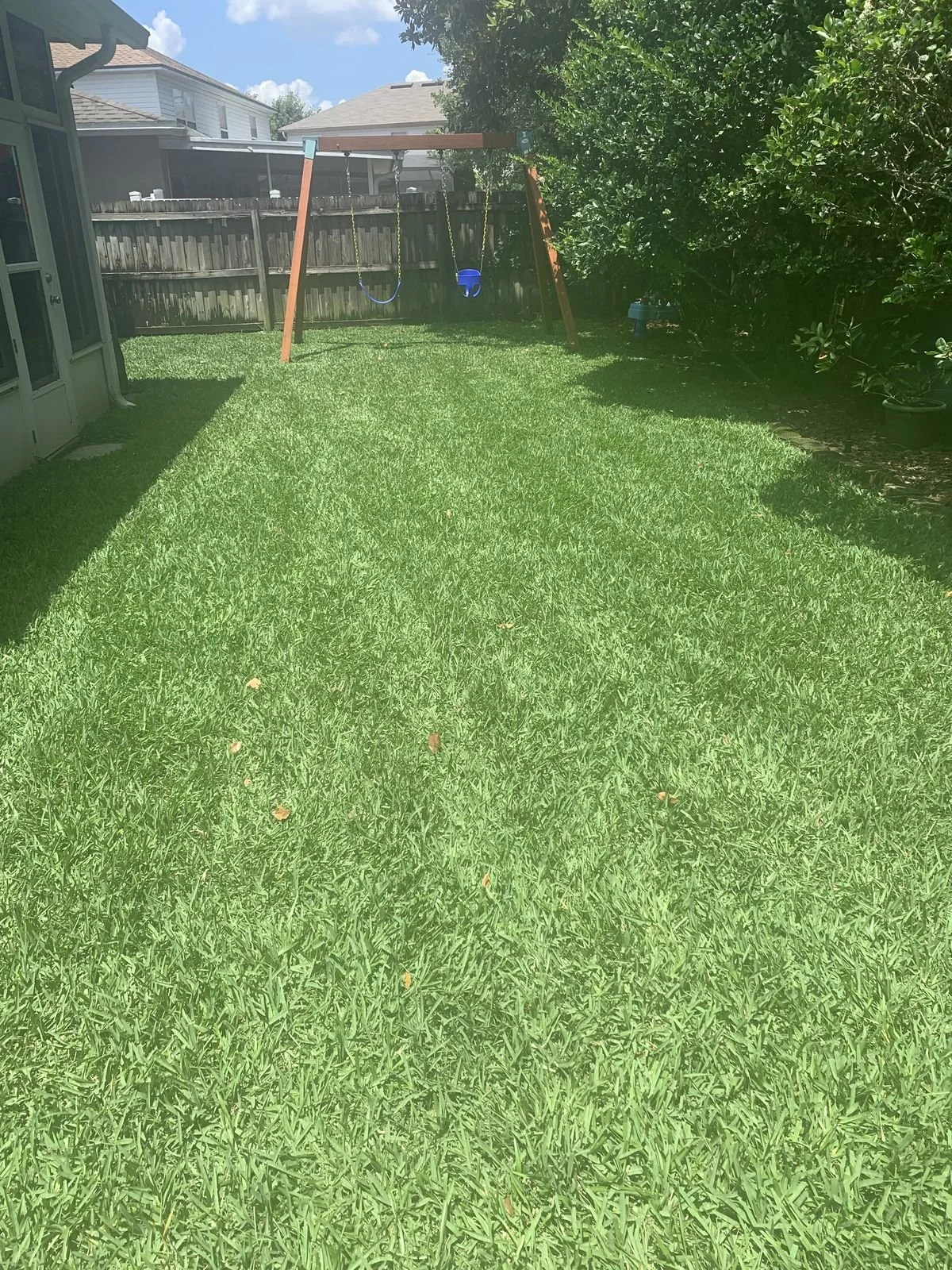
Sod Installation in Oviedo and Winter Park: Process, Prep and Timing
A lawn fails or thrives underneath, before the first slab is laid. Every install starts with a soil test and grading, and the sod itself is cut the afternoon before and laid the next morning, under 24 hours out of the field.
Related: sod installation · see completed installs
Can I install sod over an existing lawn, or do you remove the old grass first?
We always remove the old grass first — never sod over a living lawn. Existing turf and thatch trap moisture, harbor pests, and keep new roots from reaching soil, a top reason sod fails. We strip it, grade the bare earth for drainage, and amend per soil test before laying fresh sod. — Michael Geist, Yard Works
What's the best time of year to install sod in Central Florida?
In Central Florida's Zone 9b you can install sod year-round, but warm-season grasses like zoysia and St. Augustine root fastest when the soil is warm and actively growing — roughly spring through early fall. Winter installs work too; they just establish more slowly. Whatever the season, consistent watering is what makes it take. — Michael Geist, Yard Works
Can you replace just part of a lawn / patch sod?
Yes — we patch and re-sod sections, not just whole lawns. We match the existing cultivar as closely as possible, strip the dead area to bare soil, grade it flush with the surrounding lawn, and lay fresh sod so it blends in as it establishes. Patch success still comes down to watering the new pieces. — Michael Geist, Yard Works
How do I measure my lawn / how much sod do I need?
Sketch your lawn, split it into rectangles, and multiply each section's length by width in feet, then add them up for total square footage — that's how sod is priced. Add about 5–10% for cuts and curves; a pallet covers roughly 400 sq ft. Easier still, Michael measures every square foot exactly at the free walkthrough. — Michael Geist, Yard Works
Can sod be installed during the Florida summer heat?
Yes — summer is actually prime sod season in Central Florida, since warm soil drives fast rooting. The trade-off is water: fresh sod dries quickly in the heat, so it needs consistent moisture those first couple of weeks. Our freshest-sod method — under 24 hours out of the field — matters most in summer. — Michael Geist, Yard Works
Can I lay sod myself, or should I hire a professional installer?
You can DIY a small patch, but full lawns are won or lost on the prep, not the laying — old-turf removal, grading for drainage, and soil amendments per soil test. We install grower-direct sod under 24 hours out of the field over a properly prepped base: from $2.00/sq ft for standard St. Augustine, $2.15/sq ft premium zoysia, installed. — Michael Geist, Yard Works
How long does a professional sod installation take start to finish?
Most installs move fast: we schedule about 2–3 weeks out from quote acceptance, remove the old turf and grade the base, then lay sod the same morning it's picked up — under 24 hours out of the field. Days on site depend on lawn size; Michael verifies establishment at 7, 14, and 30 days. — Michael Geist, Yard Works
Do you install sod for new-construction homes in Central Florida?
Yes — new-construction lots need the most soil prep, because builder-grade fill is usually compacted and nutrient-poor. We grade for drainage, amend per soil test, and install grower-direct sod under 24 hours out of the field: from $2.00/sq ft installed for standard St. Augustine, $2.15/sq ft for premium zoysia. — Michael Geist, Yard Works
What questions should I ask before hiring a sod installer?
Ask three things: Who actually does the work — the owner or a rotating crew? How fresh is the sod — cut when, and from a broker or direct from the grower? And what happens to the soil base — is old turf removed and the ground graded, or is sod laid over the existing lawn? Those answers reveal everything. — Michael Geist, Yard Works
Can you install sod in a shaded backyard where grass won't grow?
Yes — but the fix starts with matching the grass to the light. Under mature oak canopy we install an improved shade-tolerant St. Augustine like CitraBlue or Seville, mow it higher to capture light, and prep the soil base properly. If a spot gets too little sun, we'll say so honestly — sometimes a shade bed beats struggling turf. — Michael Geist, Yard Works
How long can sod sit on a pallet before it has to be installed?
Not long — fresh-cut sod should go down within 24 hours, especially in Florida heat, or it yellows and rots on the pallet. That's why we buy direct from the grower with no brokers: sod is cut the afternoon before, picked up the morning of install, and laid the same day. — Michael Geist, Yard Works
What's the difference between a sod plug, a piece, and a pallet?
A plug is a small tuft of sod used to spot-fill; a piece (or slab) is a single cut rectangle of turf; and a pallet is a full stack of pieces covering roughly 400 square feet. We install full lawns and patches with fresh pieces off grower-direct pallets — under 24 hours out of the field. — Michael Geist, Yard Works
Do you install sod year-round in Central Florida?
Yes — we install sod year-round in Central Florida. Zone 9b winters are mild enough that zoysia and St. Augustine still establish; they just root more slowly than in the warm-soil months of spring through early fall. Whatever the season, our under-24-hours fresh-cut sod and a consistent watering schedule are what make it take. — Michael Geist, Yard Works
Can sod be installed on a slope or bank?
Yes — we install sod on slopes and banks, and the prep matters even more there. We grade and firm the base for drainage, then stagger and stake the pieces so they can’t slide before rooting. Steep banks may need extra erosion measures. Watering a slope evenly is the real challenge. — Michael Geist, Yard Works
How many pallets of sod do I need, and how much does one pallet cover?
A pallet of sod covers roughly 400 square feet. To estimate pallets, measure your lawn’s total square footage, add about 5–10% for cuts and curves, then divide by 400. A 4,000 sq ft lawn needs about ten pallets. Michael measures every square foot exactly at your free walkthrough. — Michael Geist, Yard Works
How do I keep my zoysia lawn looking like a golf course year-round?
Golf-course zoysia comes down to three things: mow low and often with a reel mower for that striped, carpet-like finish; keep the soil balanced with proper fertility and top dressing; and water deeply but infrequently. Consistent reel mowing is the single biggest visual upgrade — we run full zoysia care programs to keep it dialed in. — Michael Geist, Yard Works
What’s the difference between resodding and overseeding a Florida lawn?
They’re different fixes. Overseeding scatters seed to thicken a lawn — but our premium warm-season grasses, zoysia and St. Augustine, don’t grow true from seed, so it rarely works here. Resodding lays fresh sod over a prepped soil base for an instant, uniform, weed-free lawn — from $2.00/sq ft St. Augustine, $2.15 zoysia. — Michael Geist, Yard Works
Do you install zoysia plugs, or only full sod pallets?
We install fresh-cut zoysia sod in full slabs off the pallet — harvested under 24 hours out of the field — for an instant, uniform lawn. Plugs are small tufts meant for slow spot-filling, not a whole yard. Over properly prepped soil, fresh sod roots quickly and reads estate-level right away. — Michael Geist, Yard Works
How long does a professionally installed zoysia lawn last?
A properly installed zoysia lawn is a decades-long investment, not a seasonal fix. With correct soil prep, reel mowing, and sensible watering, our zoysia installs (CitraZoy, Empire, Zeon, Trinity, $2.15/sq ft) stay dense and healthy for many years. Grass fails from bad soil or neglect — not age. Care for it and it lasts. — Michael Geist, Yard Works
Can you regrade a yard that slopes toward the house before resodding?
Yes — and it matters. A yard that slopes toward the house sends water to your foundation. Before new sod, we regrade to pitch drainage away from the structure, correct low spots, and build a firm, level soil bed. Fixing grade first protects both your home and your new lawn. Contact us for an assessment. — Michael Geist, Yard Works
How soon should I replace a builder's cheap sod on a new-construction home?
Builder sod is usually a bargain cultivar laid over compacted, nutrient-poor fill with little prep — so it often thins or fails within a year or two. No rush if it's healthy, but once it declines, replace it right: we grade, amend per soil test, and install grower-direct sod from $2.00/sq ft standard St. Augustine, $2.15/sq ft premium zoysia. — Michael Geist, Yard Works
Is it better to resod in the fall or wait until spring in Central Florida?
In Zone 9b you can sod year-round, but fall is a strong window — soil is still warm enough to drive rooting while cooler air lowers heat stress and watering demand. Spring works too, ahead of summer growth. What matters more than the month is soil prep and consistent watering the first 30 days. — Michael Geist, Yard Works
Do you install sod and lawn care for Winter Springs and Heathrow homes?
Yes — Winter Springs (32708) and Heathrow (32746) are both core markets, nine and twenty-four minutes from our Oviedo base, with no travel surcharge. Sod installation, reel mowing, top dressing, and landscaping are all available there. I walk every property myself before quoting. Contact for pricing. — Michael Geist, Yard Works
What should I expect on the day of a Yard Works sod installation?
We strip and haul the old turf, flag your sprinkler heads, then grade the bare soil for drainage. Fresh sod arrives under 24 hours out of the field and goes down in tight staggered seams, then gets rolled, watered, and edged. Most residential lawns finish in a single day, ending with a written watering schedule. — Michael Geist, Yard Works
Real Yard Works Installs Across Oviedo, Winter Park and Lake Mary
Every photo on this page is a Yard Works job. No stock imagery.
Where Yard Works Installs Sod and Maintains Lawns
Headquartered in Oviedo since 2005, with Winter Park as our estate specialty. No travel surcharge — every city below is a core route worked multiple days a week.
- Oviedo32765, 32766
- Winter Park32789, 32792
- Winter Springs32708
- Maitland32751
- Lake Mary32746
- Heathrow32746
- Lake Nona32827, 32832
- Sanford32771, 32773
- College Park32804
Still have a question about your lawn?
Michael answers the phone himself. Tell him what your yard is doing and he will tell you what is actually causing it — whether or not it turns into a job.