Soil
Soil Test & pH
Every program starts with a soil test — pH, nutrients, and what is actually missing — so the fertility is corrected to the soil, not guessed off a route schedule.
Color, density, and disease resistance all start in the soil. Yard Works runs Oviedo lawn care as a soil-first fertility and pest-management program — soil-tested, fed at the right nitrogen rate inside Florida's fertilizer rule and Seminole County's summer blackout, and scouted for chinch bugs, disease, and weeds before they spread. No blanket spraying, no high-phosphorus shortcuts, no forced flush of soft growth. One owner-operated program built to keep the lawn dense and green the right way. Free, on-site walk and written estimate.
Most Oviedo homeowners who are unhappy with their lawn care are not unhappy with the company that shows up — they are unhappy with the model. The dominant model in Central Florida is a national franchise that runs a fixed product down every lawn on the route at the same rate on the same day, whether the soil needs it or not, and treats for pests on a calendar rather than because a pest is actually present. The lawn gets a flush of green for a week, then thins, gets thatchy, and starts catching the chinch bugs and fungus that the soft, over-fertilized growth invited in. The homeowner is told it needs more product. It almost never does.
Yard Works runs Oviedo lawn care the other way around, soil-first. The foundational belief — healthy lawns and landscapes do not exist without healthy living soil — means the program starts with a soil test, sets the fertility rate to the cultivar and what the soil actually shows, and keeps every application inside Florida's urban turf fertilizer rule and Seminole County's summer nutrient blackout. Pests are scouted and treated by cause, not blanket-sprayed. Color is built with iron and balanced nutrition rather than forced with excess nitrogen. It is the lawn care half of the larger Oviedo lawn and landscape program, owner-operated by Michael Geist, and it pairs with weekly lawn maintenance and irrigation so the whole property is managed as one system.
The most damaging thing done to Central Florida lawns by the spray-and-go model is chronic over-fertilization, and it is counterintuitive because the lawn looks good for the first week after every visit. Excess nitrogen forces fast, soft top growth that the plant cannot support below ground — the roots stay shallow, the canopy thickens into thatch, and the tender new tissue is exactly what chinch bugs feed on and what brown patch and gray leaf spot colonize. Each round of too much nitrogen makes the lawn more dependent on the next round, and weaker between them. In Oviedo's long Zone 9b season, a lawn pushed this way slowly degrades into a thatchy, pest-prone, shallow-rooted stand that the homeowner eventually replaces — a problem the right fertility rate would have prevented.
Soil-first lawn care reverses every part of that. A soil test reads the pH and the nutrient levels, so the fertility is corrected to what is actually missing instead of guessed — Central Florida soils are usually adequate or high in phosphorus, which is why Florida's rule restricts it and why Yard Works does not apply high-phosphorus blends like 18-24-6. Nitrogen is delivered at 2 to 4 pounds per 1,000 square feet per year from a mostly slow-release source, split across the calendar so the plant feeds steadily and roots deeply instead of flushing. Iron and potassium build color and stress tolerance without forcing growth. And through Seminole County's June-through-September nutrient blackout, the program shifts to iron and micronutrients for color while nitrogen and phosphorus are held back, keeping the lawn green and the program compliant. None of this is exotic — it is just matched to the soil and the season instead of a route schedule.
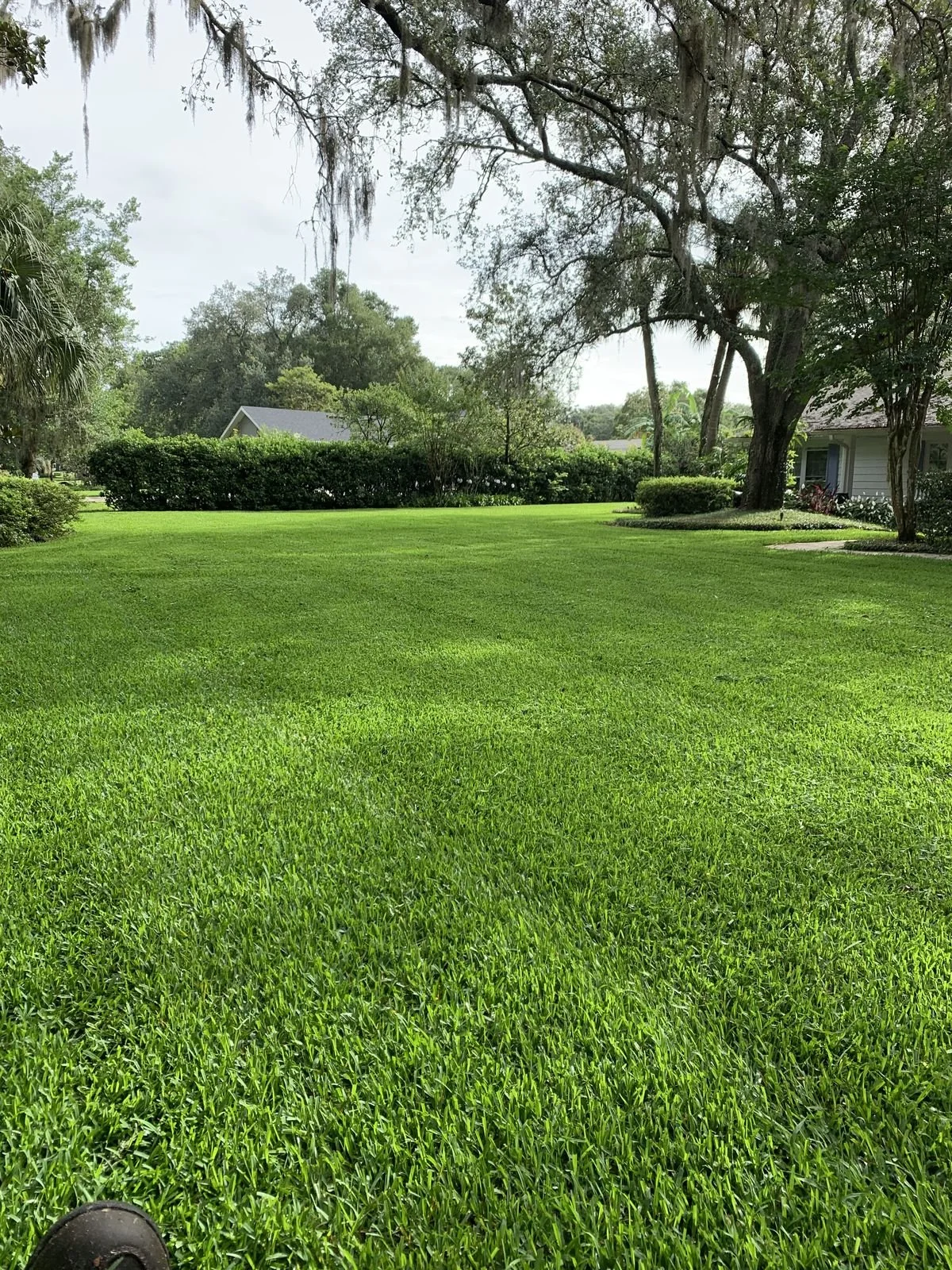
A Yard Works lawn care program is a managed plan, not a fixed package of identical sprays. Here is what the program covers across the Oviedo growing year.
Every program starts with a soil test — pH, nutrients, and what is actually missing — so the fertility is corrected to the soil, not guessed off a route schedule.
Slow-release nitrogen at 2–4 lb N/1,000 sqft/yr, split across the season, kept inside the state rule and Seminole County's summer blackout. No high-phosphorus blends.
Chinch bugs and sod webworms — the two pests that take St. Augustine in Oviedo — scouted and treated by presence, not blanket-sprayed on a calendar.
Brown patch and gray leaf spot read early and managed at the cause — wet-blade timing, fertility, and irrigation — not just masked with a curative spray.
Broadleaf weeds, sedges, and grassy invaders controlled with the right product for the cultivar and season — because a dense, well-fed lawn is the best weed control there is.
Deep color built with chelated iron and potassium rather than forced with excess nitrogen — the green without the soft, pest-prone flush.
The same operator on a schedule reads the lawn each round — catching pest, disease, and irrigation trouble early, when it is a spot treatment and not a renovation.
Lawn care coordinated with mow height and irrigation timing, because fertility, cutting, and water only work as one system.
Lawn care in Oviedo is governed by Florida's urban turf fertilizer rule and Seminole County's local ordinance, both written to keep nitrogen and phosphorus out of the waterways. Yard Works builds every Oviedo fertility calendar to stay inside them, drawing on UF/IFAS Extension guidance. Here is the working framework.
| Rule | What It Means | How Yard Works Handles It |
|---|---|---|
| Summer N + P blackout | No nitrogen or phosphorus, ~June 1 – Sept 30 | Front-load fertility in spring; shift to iron & potassium for color in summer |
| Nitrogen rate cap | 2 – 4 lb N/1,000 sqft/yr, split applications | Rate set to cultivar & soil test; mostly slow-release; never dumped at once |
| Phosphorus restriction | No P unless a soil test proves deficiency | Low/no-P blends standard; no 18-24-6 or high-P product |
| Water-body buffer | Keep fertilizer back from lakes, ponds, drains | Buffer maintained; deflector shields on spreaders near water |
The takeaway for an Oviedo homeowner is simple: a compliant program is also a better program. The summer blackout forces exactly the soil-first discipline good agronomy wants anyway — feed deliberately in the growing shoulders, build color with iron through the heat, and let a deep-rooted, properly fed lawn carry itself instead of leaning on a monthly nitrogen push. A company still pushing high-nitrogen or high-phosphorus product through the Oviedo summer is out of compliance and damaging the lawn at the same time.
Oviedo Sod Installation → · Oviedo Top Dressing → · Oviedo Lawn Maintenance →
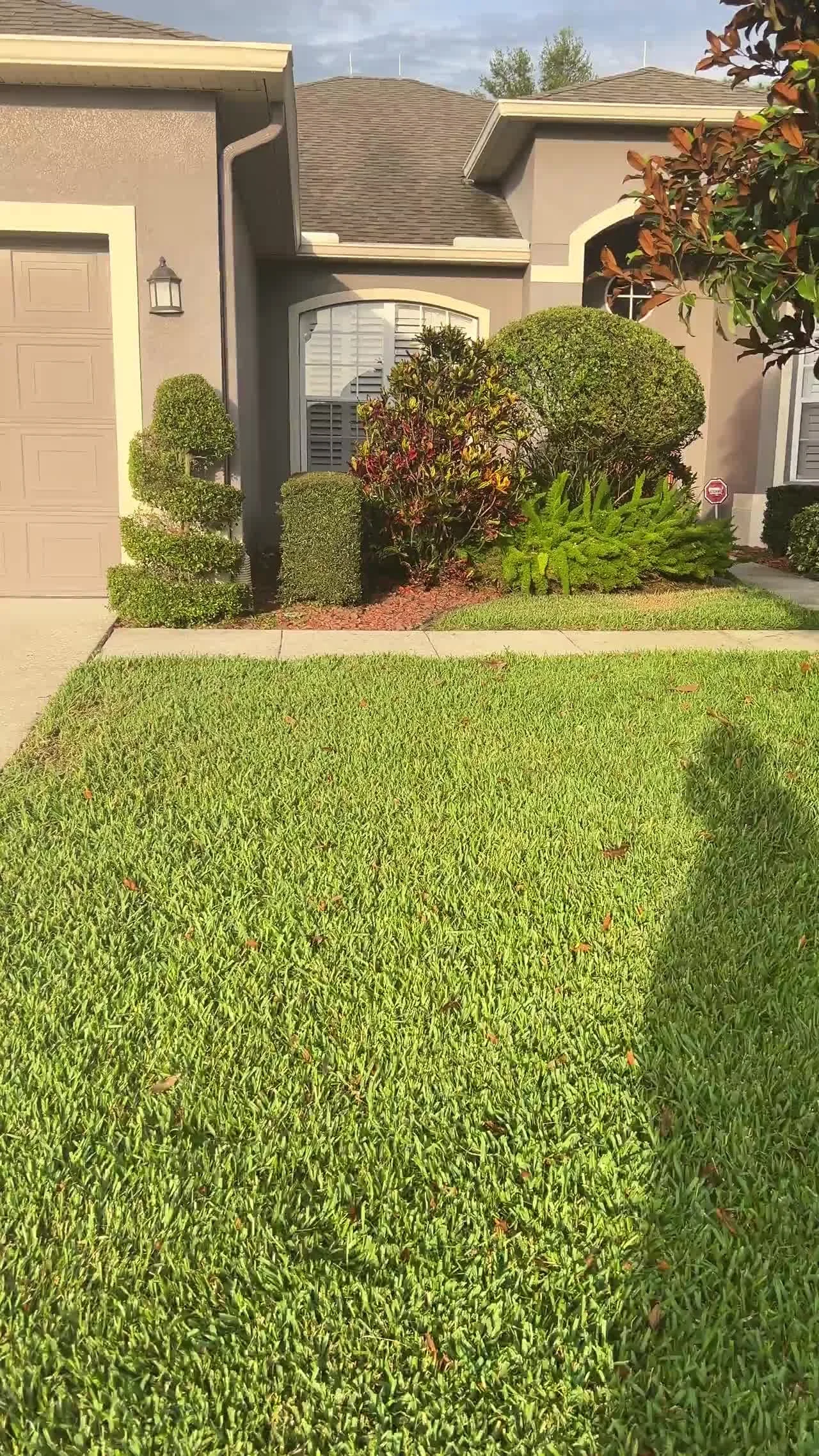
From the first soil test to a lawn that holds color and density across the season, the program runs the same way. Four steps, one owner, no handoffs.
Michael walks the property, identifies the cultivar, pulls a soil test for pH and nutrients, reads the pest and disease pressure, and checks the irrigation and mow height that drive lawn health.
A written program against the actual lawn — fertility rate, rounds, and the season calendar built around Seminole County's blackout. No fixed package sold sight-unseen, no call-center pricing.
Each round pairs the season-correct fertility or micronutrient application with scouting — chinch, webworm, disease, weeds — treated by cause. Color built with iron, not forced with nitrogen.
The calendar flexes with the Zone 9b season and the rule, and any pest or disease is caught early and looped with irrigation and mowing before it spreads.
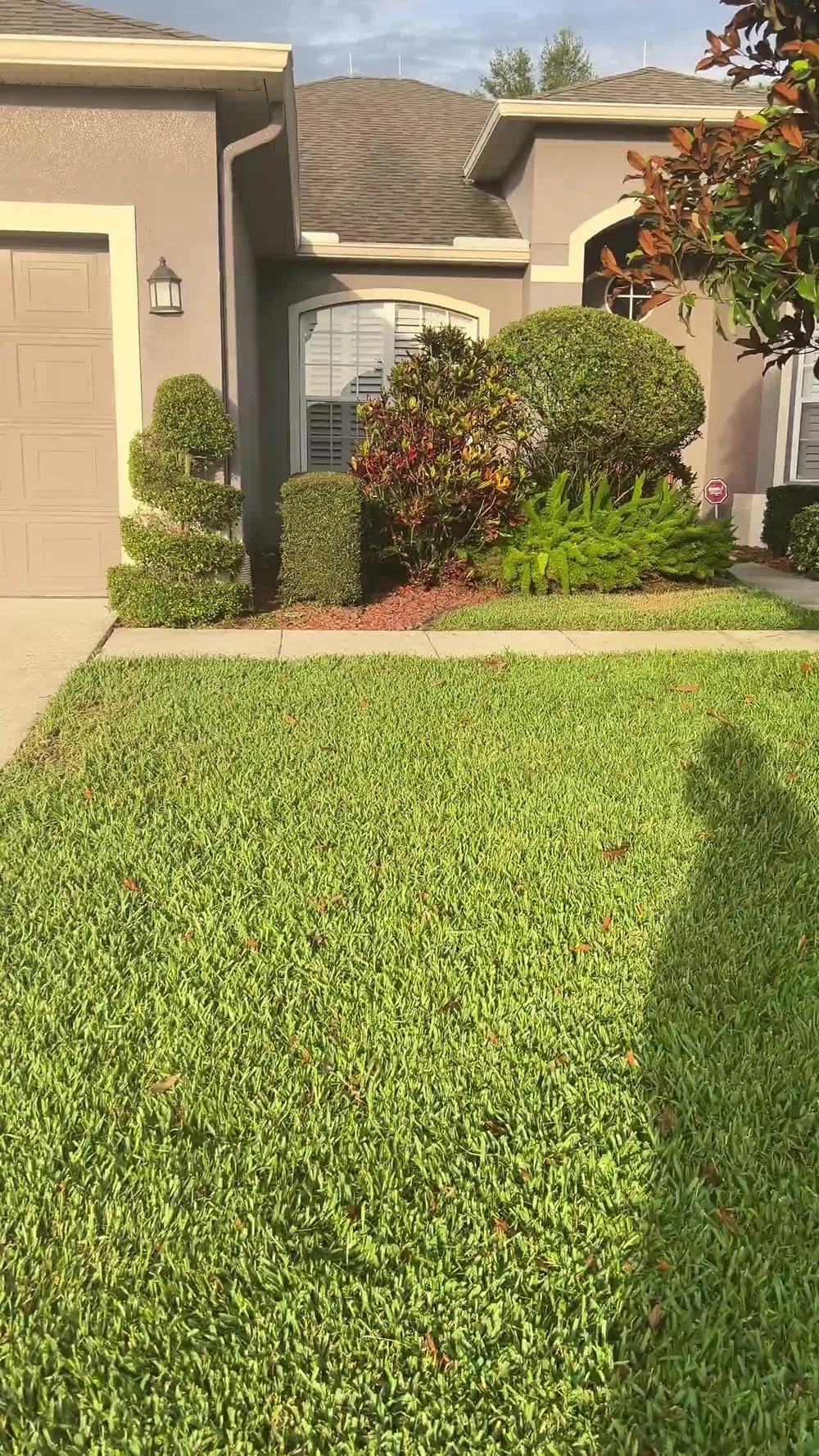
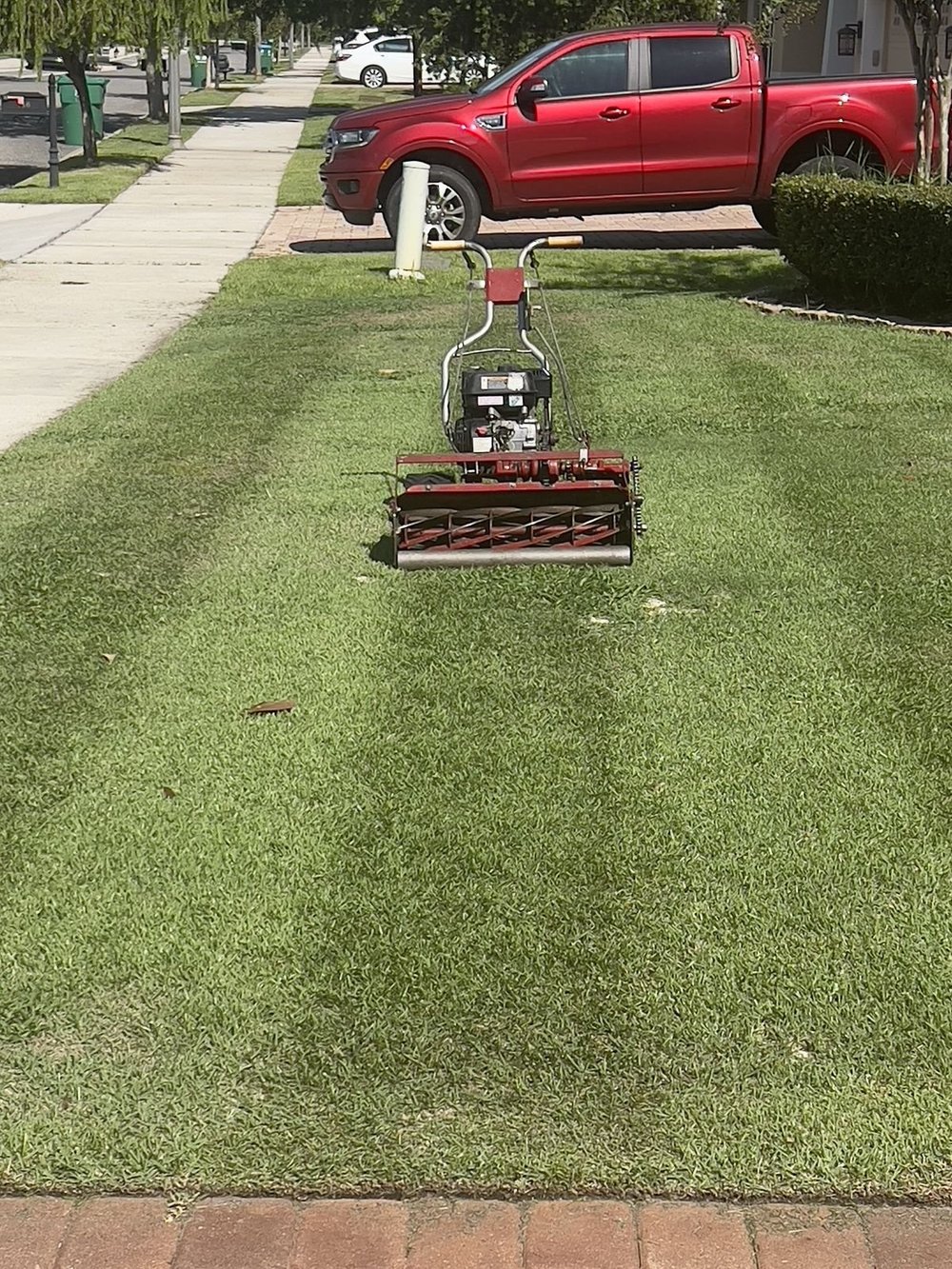
A selection of Oviedo turf under soil-first care — front-lawn density, deep uniform color, clean edges, and the kind of stand that carries itself through the Zone 9b summer instead of leaning on a monthly nitrogen push.
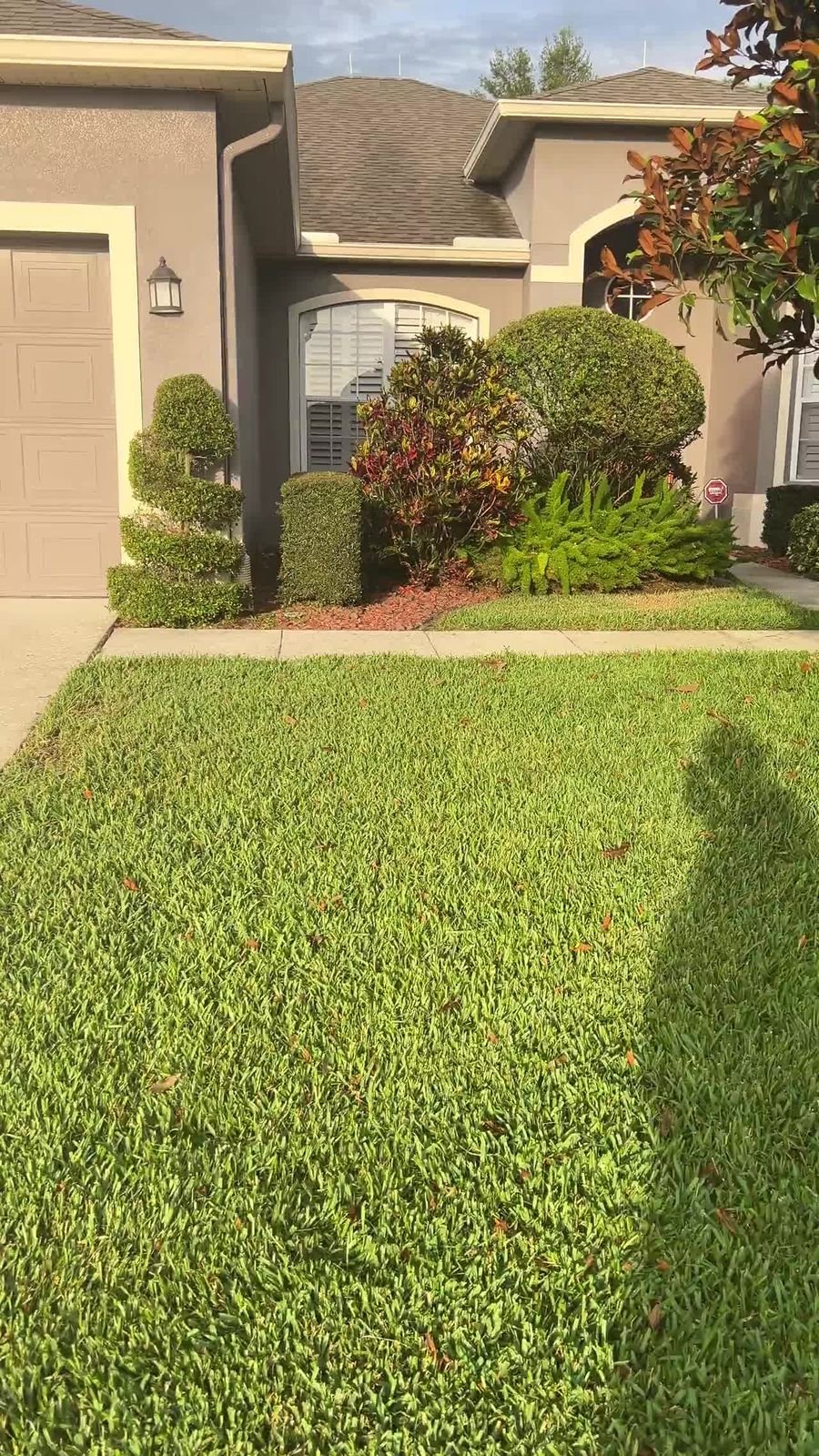
Oviedo is the Yard Works home base, and the same soil-first, Florida-rule-compliant lawn care program runs across the adjacent cities. Explore the program by city, and the other Oviedo services that pair with lawn care.
Home base — soil-first fertility, chinch and disease scouting, and iron green-up across Alafaya Woods, Live Oak Reserve, Twin Rivers, and the Black Hammock.
Next door to Oviedo — the same soil-tested, rule-compliant fertility and pest program on Tuscawilla lots.
Canopy-load disease pressure and shade fertility under the live oaks — soil-first care tuned to the 32789 microclimate.
The neighboring canopy market — same scouted, soil-tested fertility and pest standard.
Other Oviedo services that pair with lawn care: Sod · Lawn Maintenance · Irrigation · Top Dressing · Reel Mowing · Landscaping. Or see the full Oviedo lawn & landscape program.
A Yard Works lawn care program in Oviedo is a soil-first fertility and pest-management plan, not a spray-and-go service. It starts with a soil test to read pH and nutrient levels, then builds a balanced slow-release fertility schedule at 2 to 4 pounds of nitrogen per 1,000 square feet per year, kept inside Florida's fertilizer rule and Seminole County's summer blackout. On top of fertility, the program covers chinch bug and sod webworm control, brown patch and gray leaf spot disease management, broadleaf and sedge weed control, and iron-based green-up that deepens color without forcing the flush of growth that excess nitrogen causes. The whole thing is owner-operated by Michael Geist and scouted on a schedule, because the foundational belief is that healthy lawns do not exist without healthy living soil.
Yes. Seminole County, which includes Oviedo, restricts the application of nitrogen and phosphorus fertilizer during the summer rainy season, generally June 1 through September 30, to keep nutrients from washing into the waterways during the heaviest rain months. Outside that blackout window, fertilizer must still stay inside the state's urban turf rule — no more than the labeled nitrogen rate, no phosphorus unless a soil test shows a deficiency, and a buffer kept back from water bodies. Yard Works builds the Oviedo fertility calendar around that ordinance, front-loading the nutrition the lawn needs before the blackout and shifting to iron and micronutrients for color through the restricted window, so the lawn stays dense and green and the program stays compliant.
In Oviedo, brown patches in St. Augustine are most often one of three things: chinch bugs, fungal disease, or improper irrigation, and they look different up close. Chinch bug damage shows as expanding yellow-to-brown patches in the hottest, sunniest part of the lawn through summer, and the insects are visible at the green margin if you part the grass. Brown patch and gray leaf spot are fungal, driven by the wet-morning canopy and over-watering, and show as roughly circular patches or lesioned blades. Over- or under-watering scorches in its own pattern. The reason a Yard Works program catches these early is scouting — the same operator on a schedule reads which of the three it is before it spreads, instead of blanket-spraying and hoping. The fix is matched to the actual cause, and where irrigation is the culprit, the timing is corrected rather than over-treated.
Under UF/IFAS guidance for Central Florida, St. Augustine and Zoysia lawns want roughly 2 to 4 pounds of nitrogen per 1,000 square feet per year, delivered in split applications across the growing season rather than dumped at once. Standard St. Augustine sits near the higher end of that range and slow-growing Zoysia near the lower. The nitrogen should come mostly from a slow-release source so it feeds steadily instead of forcing a soft flush of top growth that chinch bugs and fungus exploit. More nitrogen is not better — over-fertilizing is one of the most common reasons an Oviedo lawn gets thatchy, disease-prone, and weak-rooted. Yard Works sets the rate to the cultivar and the soil test, keeps it inside the state rule, and splits it across the calendar.
No. Yard Works does not apply 18-24-6 or any high-phosphorus blend on Oviedo lawns. Florida's urban turf fertilizer rule prohibits applying phosphorus unless a soil test demonstrates an actual deficiency, because most Central Florida soils already carry enough phosphorus and the excess washes into lakes and springs where it feeds algae. The middle number on a fertilizer bag is phosphorus, and a high middle number is exactly what the rule restricts. Yard Works uses low- or no-phosphorus, slow-release nitrogen blends with the potassium and micronutrients the soil test calls for, which is both compliant and better agronomy for established turf. If a soil test ever shows a real phosphorus deficiency, that is corrected specifically and documented.
A typical Oviedo lawn care program runs on a roughly six- to eight-week round through the growing season, with the calendar built around Seminole County's summer fertilizer blackout and the Zone 9b growth curve. Each visit pairs the season-appropriate fertility or micronutrient application with scouting — checking for chinch bugs, sod webworms, disease pressure, and weed breakthrough — so problems are caught and treated on the same schedule. Through the restricted summer window the rounds shift to iron, potassium, and pest scouting rather than nitrogen. The exact number of rounds is set on the on-site walk based on the lawn's cultivar, condition, and history. It is a managed program, not a fixed package sold sight-unseen.
Yes, and it is common. Many Oviedo lawns that look tired or patchy have been on a generic blanket-spray program that over-fertilized, ignored the soil, and blanket-treated for pests that were not there while missing the ones that were. The Yard Works takeover starts with a soil test and an honest assessment of the cultivar, the irrigation, the mow height, and the actual pest and disease pressure. In many cases the lawn does not need more product — it needs the right fertility rate, corrected pH, proper irrigation timing, and pests treated by cause. The program rebuilds the soil and the stand over a season rather than masking symptoms. Where the turf is genuinely too far gone, the walk will say so and lay out the sod option honestly.
Every Oviedo lawn care program starts with a direct conversation with Michael Geist — the turfgrass-certified owner who will walk the property, identify the cultivar, pull a soil test, read the pest and disease pressure, check the irrigation and mow height, build the rule-compliant fertility calendar, and stand behind the program every round after. No call centers, no blanket spraying, no high-phosphorus shortcuts. Because Oviedo is home base, the walk is usually within a day or two. Free on-site estimates for lawn care, fertilization, and pest control across Oviedo.