Trinity Zoysia Sod Installation | Yard Works Oviedo
LIC · INSURED · TURFGRASS CERTIFIED · EST. 2005 Serving Oviedo · Winter Park · Maitland · Lake Mary · Winter Springs CALL (407) 687-3322
Trinity Zoysia · Bladerunner Farms Fine-Blade Matrella for Partial-Shade Estates

Trinity Zoysia Sod Installation for Partially Shaded Central Florida Estates.

Trinity is the Bladerunner Farms Zoysia matrella selected for fine-blade density, moderate shade tolerance, and clean reel-cut finish on the partially shaded estate lots that thin Zeon and read too broad on Empire. Sister cultivar to Zeon in the David Doguet breeding program. Reel-cut at 0.5–1 inch. $2.15 per square foot installed across Oviedo, Winter Park, Maitland, Lake Mary, Winter Springs, and the rest of Central Florida. Free, on-site partial-shade walk and quote.

Google Rating
4.9 ★
Trinity Installed
$2.15/sf
USDA Zone Specialist
9B
Bladerunner Farms Selection Moderate Shade Tolerance Reel-Cut at 0.5–1 in 30-Day Establishment Walk
Est. 2005 · 15+ Years Turfgrass Certified Certified Trinity Grower Licensed & Insured Zone 9B Specialist
Home Sod Installation Zoysia Cultivars Trinity Zoysia
Owner-Operated · Turfgrass Certified · Est. 2005

Trinity Zoysia: The Moderate-Shade Matrella That Holds Fine-Blade Density Where Zeon Thins.

Central Florida estates rarely give the cultivar conversation the full-sun premise Zeon was bred for. Mature live oak canopy, building shadows along the south- and west-facing elevations, hardscape that limits direct exposure across part of the day — most large lots in Winter Park's Windsong and Olde Winter Park, Maitland's Dommerich Hills, and the wider Lake Mary Markham Woods corridor read somewhere between 4 and 6 hours of direct light per zone. That window is where Zeon starts to thin and Empire's broader blade starts to read out of place against the fine-blade aesthetic the property was designed around. Trinity Zoysia exists for exactly this window. Selected by David Doguet at Bladerunner Farms in Poteet, Texas — the same breeding program that produced Zeon — Trinity carries the matrella-family fine blade and clean reel-cut posture without the full-sun-only requirement that excludes Zeon from most canopy-influenced estate lots.

In the Yard Works lineup Trinity is the cultivar Michael recommends when the property profile demands fine-blade density, the homeowner values the reel-cut option, and the lot has at least one zone running below the 6-hour direct-light threshold Zeon needs. Trinity holds at 4 to 5 hours direct light per day with no measurable density loss across the install record, making it the second-most shade-tolerant Zoysia in the program behind CitraBlue Zoysia (which takes the 3-to-5-hour deep-canopy zone). Installed line item is $2.15 per square foot, same as Zeon, Empire, Palisades, CitraZoy, and CitraBlue Zoysia, with the cultivar premium built into a single Zoysia tier. The agronomic framework is drawn from UF/IFAS Extension turfgrass guidance, the Bladerunner Farms breeding program documentation, and the Yard Works install record across Winter Park, Maitland, and Lake Mary canopy zones.

01 — Foundation

Why a Bladerunner Matrella Holds Density in the Light Window That Thins Zeon.

The Zoysia matrella family was bred and selected against a different agronomic objective than the Zoysia japonica family Empire and Palisades come from. Matrella selections push the fine-blade density and salt tolerance that made Zeon a fixture on golf tee boxes across the Sun Belt, and the trade-off historically was a narrower light window — most older matrella selections thinned below 6 to 7 hours of direct exposure per day. David Doguet's Bladerunner Farms program in Poteet, Texas, set out in the late 1990s and early 2000s to widen that light window without losing the matrella blade architecture. Trinity is one of the cultivars that came out of that program — fine blade preserved, salt tolerance preserved, reel-cut window preserved, with the moderate shade tolerance that lets the cultivar deliver matrella finish on the partial-canopy lots that punished prior matrella selections.

The agronomic edge shows up clearly on the Central Florida install record. Trinity installed in 2023 on a 6,800-square-foot Windsong front yard — high mature oak canopy filtering the morning and afternoon light, three direct-light zones measuring between 4.2 and 5.8 hours per day across the install footprint — read as a uniform fine-blade stand at the twelve-month mark, held the reel-cut finish through the 2024 spring stress window, and showed no thinning in the canopy zones where Zeon would have lost density. Same property on Zeon would have shown gap-fill thinning in the high-canopy zones by month nine and demanded an overseeding pass that defeats the matrella premise. Same property on Empire would have delivered the density without the fine-blade aesthetic the architecture and landscape design were specified for. Trinity is the cultivar that solves the canopy-influenced fine-blade estate brief — and that brief covers a substantial portion of the Winter Park, Maitland, and Lake Mary estate market.

All Six Zoysia Cultivars → · Compare with Zeon →

Reel-cut Zoysia lawn in Oviedo with alternating fairway stripes — the fine-blade reel finish Trinity Zoysia carries on partial-shade Central Florida estates

Matrella Blade. Bladerunner Genetics. Engineered for the Canopy Window.

02 — Science

Trinity Zoysia by the Numbers — What the Cultivar Actually Holds.

Per UF/IFAS Extension turfgrass guidance, the Bladerunner Farms cultivar documentation, and the Yard Works install record across Winter Park, Maitland, and Lake Mary canopy-influenced lots, the table below captures the agronomic specifications that drive a Trinity install. Mow heights, light windows, fertility, and pricing are presented in the same form Yard Works uses on the on-site walk.

SpecTrinity ValueNotes
SpeciesZoysia matrellaBladerunner Farms selection from David Doguet's program in Poteet, TX
Blade textureFineMatrella-family fine blade — comparable to Zeon, finer than Empire/Palisades
Sun requirement4+ hours direct lightModerate shade tolerance; second-most shade-tolerant Zoysia behind CitraBlue Zoysia
Rotary mow height1.0–2.0 inVisual best at 1.0–1.5 in; lower than the Empire/Palisades window
Reel mow height0.5–1.0 inHolds the cleanest reel cut at the low end of the Yard Works window
Vertical growth rateSlower than Zoysia japonicaMatrella signature — extends mow interval slightly vs. Empire/Palisades
Drought toleranceHighStrong root depth once established; not at the Palisades extreme but well above St. Augustine
Salt toleranceHighMatrella-family salt posture — performs on brackish-irrigation properties
Cold hardinessStrong for Zone 9bHolds through Central Florida cold snaps reliably
Establishment window10–18 day knit · 28–40 day visual fill · 90–120 day uniform standSlower than Empire/Palisades — matrella spreads more conservatively
Nitrogen demand2–3 lb N / 1,000 sqft / yrMatrella range; split 4–5 applications; no high-phosphorus blends
Installed price$2.15 / sqftPallet = 400 sqft · standard 5% overage on cut waste · fully installed

A 5,000-square-foot Trinity install runs $10,000–$11,000 depending on access, removal scope, and irrigation reconfiguration. A 7,500-square-foot install runs $16,000–$17,500. A 10,000-square-foot install — most common on the Windsong, Olde Winter Park, and Lake Mary Markham Woods canopy lots where Trinity is most frequently the cultivar — runs $21,000–$23,500. Site-specific variables (sod-cut removal of existing turf, irrigation reconfiguration for the lower-runtime matrella program, root navigation around mature oak canopy, hardscape edge work) are itemized on the written quote.

Zone 9b · Trinity Use Cases

Eight Properties Where Trinity Beats Zeon on the Cultivar Decision.

Trinity wins the cultivar decision wherever the property combines fine-blade aesthetic goals with a light window Zeon won't sit comfortably in. The grid below covers the eight use cases where Yard Works recommends Trinity on the on-site walk.

Mature Canopy

High Live Oak · Filtered Light

Windsong, Olde Winter Park, Maitland Dommerich Hills, and Lake Mary Markham Woods lots with mature canopy filtering direct exposure to 4–5 hours per zone.

Architectural Shade

Building or Wall Shadow Zones

South- or west-facing elevations where the structure throws shade across part of the lawn for half the day. Trinity holds density Zeon would lose.

Fine-Blade Spec

Designed Around Matrella Finish

Estates where the architect or landscape designer specified fine-blade Zoysia as the visual signature and Empire's broader blade would read out of place.

Reel Program Interest

Wants the Stripe at 0.5–1 in

Homeowner wants the championship-grade reel-cut finish but the lot can't meet Zeon's 6+ hour light requirement across every zone.

Salt / Brackish

Coastal or Brackish Irrigation

Properties with salt-influenced irrigation source or coastal exposure. Trinity's matrella-family salt tolerance carries through where Empire struggles.

Lower Mow Cadence

Slower Vertical Growth

Owner running the program toward fewer mow visits per month. Trinity's matrella growth rate extends the mow interval slightly versus Empire or Palisades.

Front Yard Showcase

Curb-Distance Fine-Blade Read

Front-yard install where the cultivar has to read fine-blade at curb distance and Zeon is excluded by morning shadow across the south elevation.

Mixed-Light Lot

Variable Zones Across the Footprint

Lot where some zones run full sun and others run 4–5 hours. Trinity handles the variance without a cultivar split or a thinned shade-zone result.

Toro reel mower striping a fine-blade Zoysia lawn in Winter Park — the championship-grade reel finish Trinity Zoysia delivers in moderate-shade zones

Reel-Cut Matrella. Canopy-Forgiving. The Fine-Blade Estate Default.

The Yard Works Trinity Install Program

How We Install Trinity Zoysia on a Canopy-Influenced Central Florida Estate.

The eight-step install runs the same playbook across every Yard Works Zoysia cultivar. The differences live in step 01 (the cultivar decision and light measurement) and step 06 (irrigation calibration for the matrella growth rate). The cultivar choice is the first step, and the on-site walk is where the choice actually happens.

01

Property Walk & Light Measurement

Michael walks the property, measures square footage, takes direct-light readings across every zone, audits the irrigation system, and confirms Trinity is the right cultivar (vs. Zeon for full-sun showcase, Empire for visual density, CitraBlue Zoysia for deep-canopy shade) based on the measured light window.

02

Written Quote & Schedule

Square footage, pallet count, Trinity line items at $2.15/sqft, soil amendment scope, irrigation reconfiguration scope, install date — all documented and emailed before sod leaves the grower.

03

Grade Prep & Soil Amendment

Existing turf killed and removed. Subgrade leveled. Compost or sand-compost blend tilled into the top 2–4 inches per the soil test result. Compacted areas worked harder. Final grade verified before any sod arrives.

04

Pallet Delivery from Certified Grower

Trinity pallets delivered the morning of install from the certified Central Florida grower. Pallets staged for the laying pattern, kept shaded and watered. Same-day install — never overnight on a pallet in Florida summer.

05

Cut & Lay (Brick Pattern)

Trinity laid in a brick-pattern offset starting from the longest straight edge of the property. Cut seams kept tight, joints staggered, edges trimmed clean to bed lines, hardscape edges, irrigation heads, and any obstructions.

06

Roll & First-Week Irrigation

Lawn rolled to maximize soil-to-sod contact. Irrigation set to the first-week schedule — typically 15–20 min per zone, 2–3x daily for 14 days — verified head-by-head by Michael. Post-establishment cadence pre-planned for Trinity's slower matrella growth rate and the canopy-zone evapotranspiration profile.

07

30-Day Establishment Walk

Michael returns at 30 days for an on-site walk — tug-test for root knit-down (Trinity establishes a few days slower than Empire — accounted for), cut-seam check, fertility assessment, irrigation re-calibration, first-mow timing confirmation.

08

Handoff to Maintenance

Trinity lawn handed to the year-round Yard Works maintenance program — cultivar logged, mow height set (typically 1.0–1.5 in rotary, 0.5–1 in reel), cadence set, matrella-tuned fertility plan documented, reel eligibility confirmed.

03 — Refinement

Why Trinity Pairs With Canopy-Tuned Irrigation, Topdressing, and the Reel Program.

A Trinity install commits the property to a matrella-family maintenance posture — slower vertical growth, fine-blade mow height, lower-runtime irrigation tuned to the partial-canopy evapotranspiration profile, and the reel-cut option that pulls the cultivar's visual best out of the install. The post-install programs determine whether Trinity delivers the matrella finish it was selected for. The first pairing is a canopy-tuned irrigation audit. Properties converting from St. Augustine or Empire to Trinity almost always carry an irrigation program tuned for a cultivar with different water demand and a different transpiration profile. The post-establishment Trinity program typically runs the canopy zones 10 to 15 percent shorter than the prior cultivar — without recalibration, Trinity will be overwatered in the canopy zones for its entire life, which produces fungal pressure and gives back the matrella density benefit the cultivar was selected for.

The second pairing is topdressing — annual sand-and-compost topdressing on a Trinity program levels the surface variance that lets the reel cut hold cleanly down to 0.5 inch, dilutes thatch (matrella's slower vertical growth helps here but doesn't eliminate the need), and raises organic matter in the partial-canopy root zone where decomposition runs slower. The third pairing is reel mowing — Trinity is the matrella cultivar most often paired with the Yard Works reel program because the lots Trinity goes on are the same lots that bought the property partly for the option to run a championship-grade reel finish without the full-sun-only constraint of Zeon. The fourth pairing is a matrella-tuned fertility program — 2 to 3 lb of nitrogen per 1,000 sqft per year, split across 4 to 5 applications timed to Trinity's growth cycle, no high-phosphorus blends per the Florida fertilizer rule. Standard year-round maintenance ties everything together with predictable cadence and the quarterly agronomic review.

All Six Zoysia Cultivars → · Compare with Zeon → · Compare with CitraBlue Zoysia →

Trinity & Sister Zoysia Installs

Real Central Florida Estates. Real Yard Works Matrella.

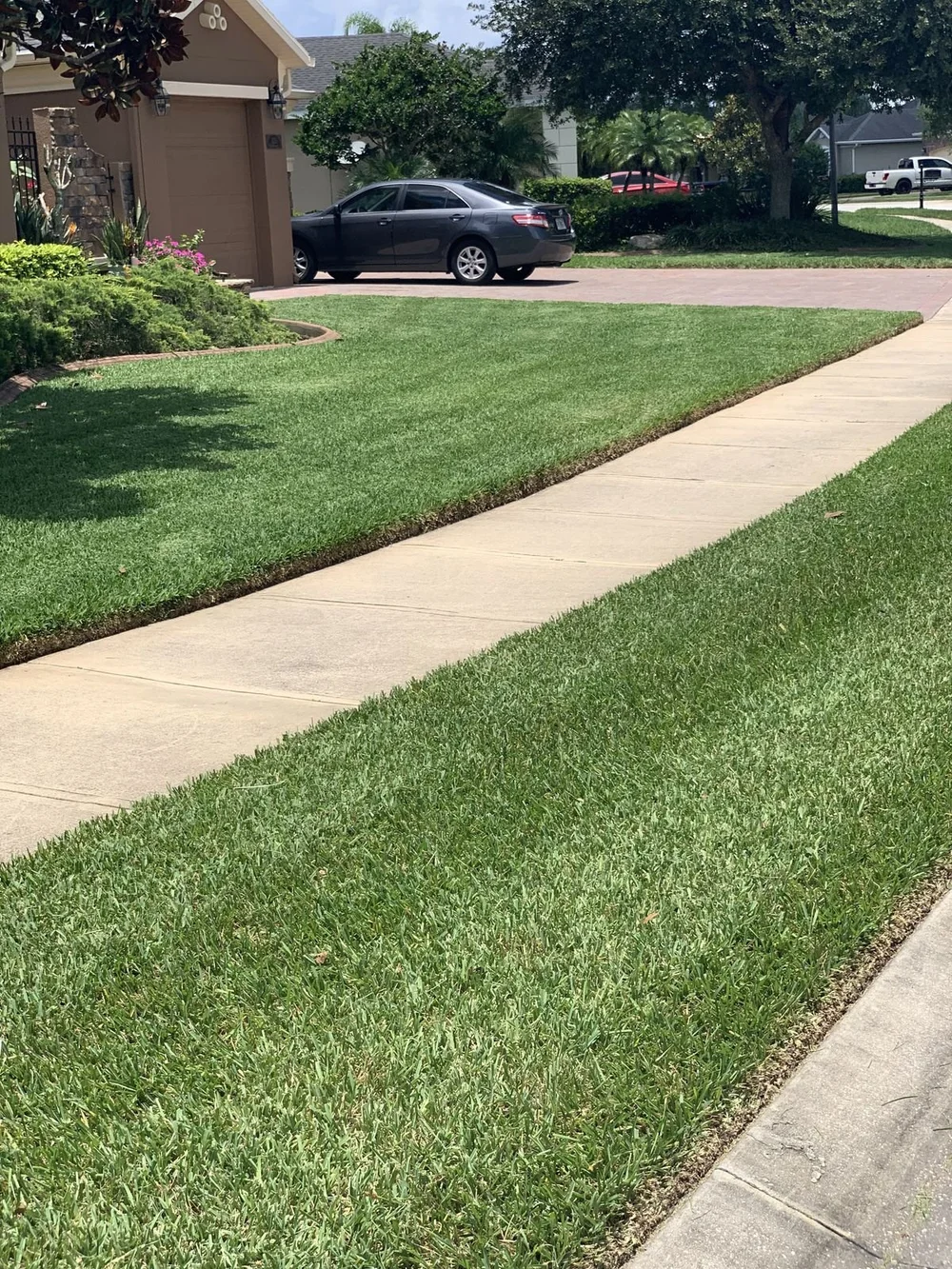
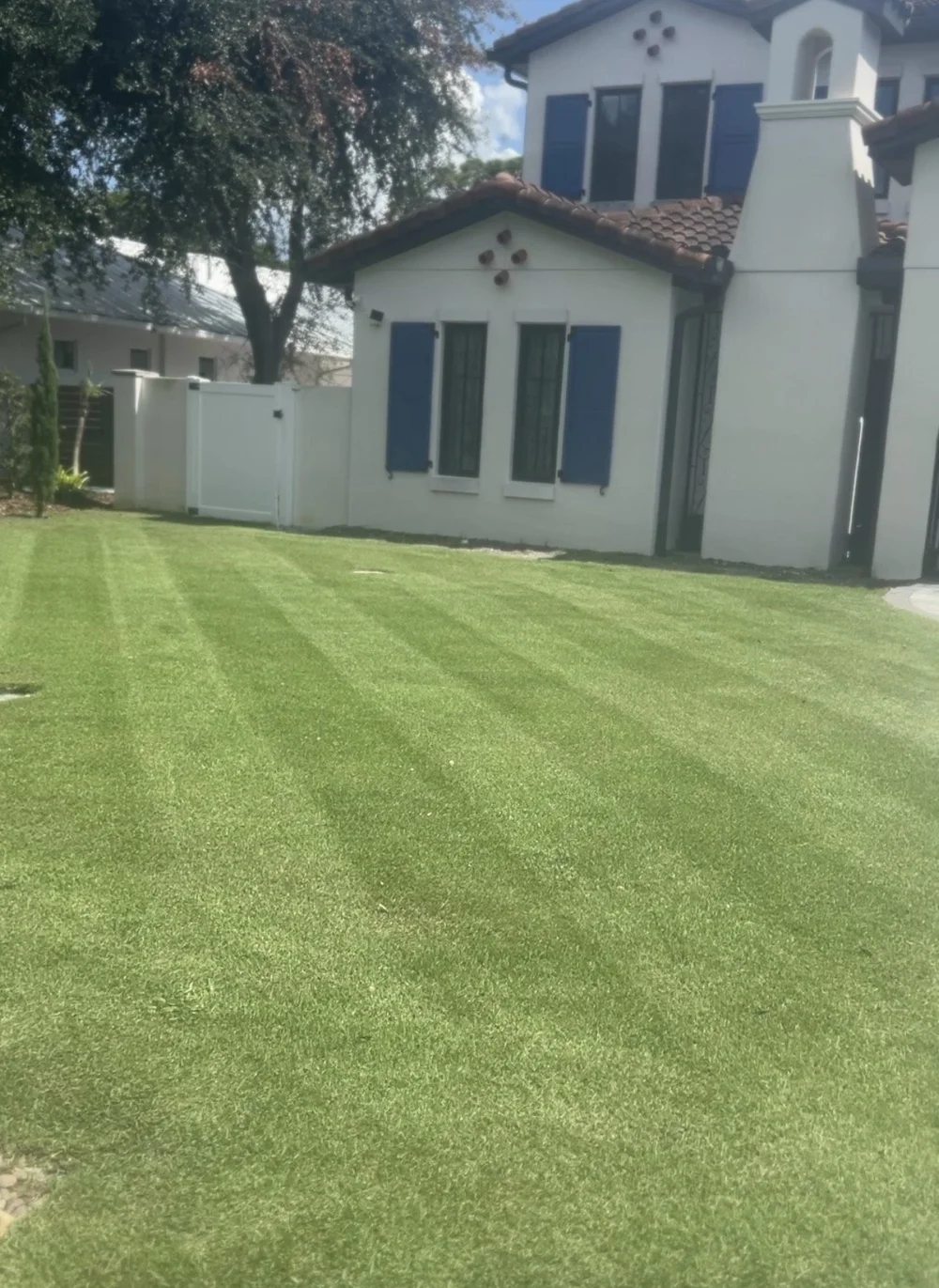
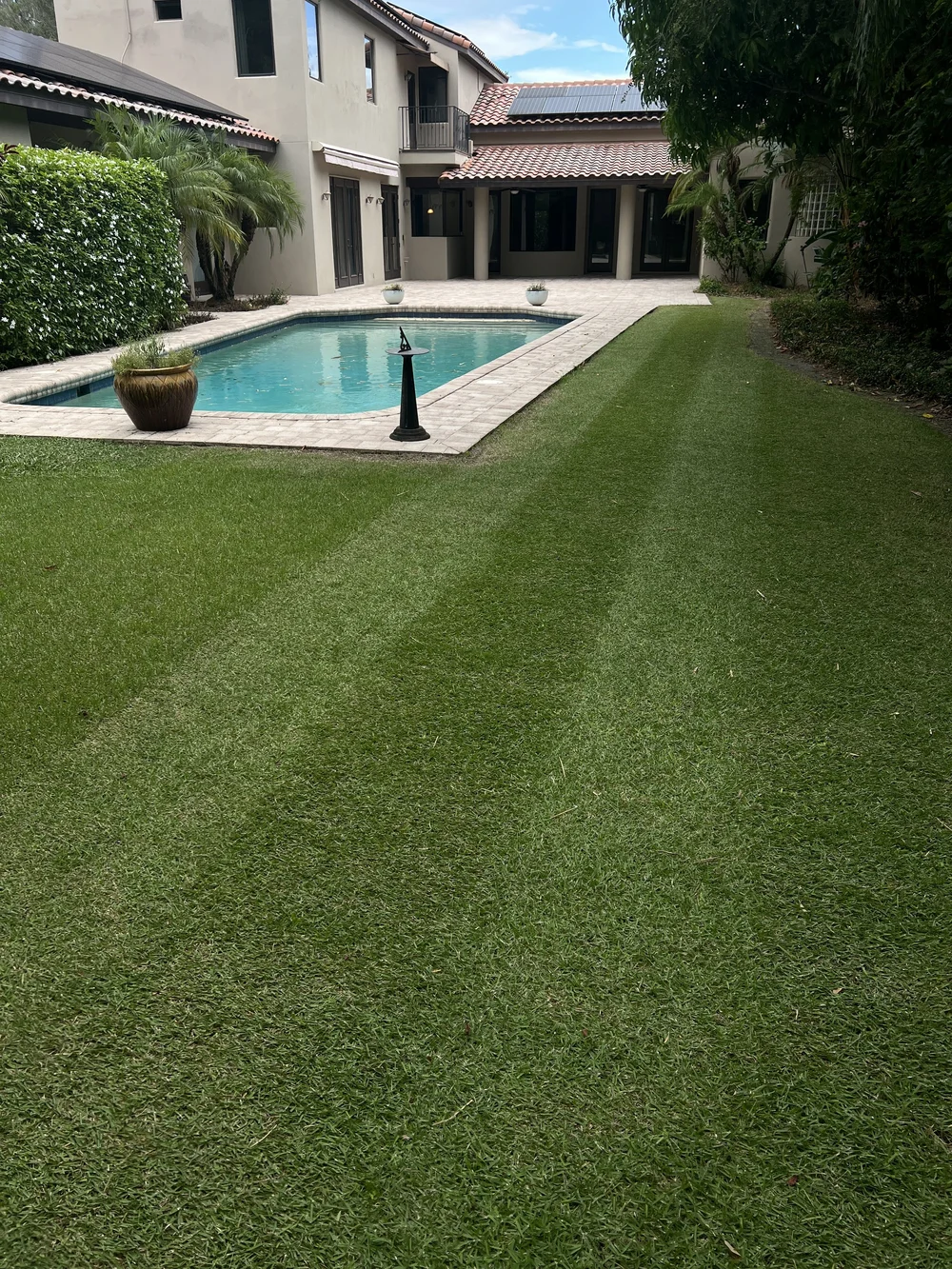
Trinity Zoysia portfolio photography is in active capture on the next Trinity install (a Windsong canopy job is on the spring book). The four images below are sister Zoysia installs from the Yard Works portfolio that show the canopy density, blade texture, and reel-cut finish Trinity carries on partial-shade estate properties. Cultivar-specific imagery will be tagged in to replace stand-ins as installs complete.

Reel-cut Zoysia lawn in Oviedo with alternating fairway stripes — the fine-blade reel finish Trinity Zoysia carries on partial-shade Central Florida estates
Zoysia · Reel Program

Oviedo Fairway Finish

Toro reel mower striping a fine-blade Zoysia lawn in Winter Park — the championship-grade reel finish Trinity Zoysia delivers in moderate-shade zones
Zoysia · Reel Stripe

Winter Park Toro Cut

Zoysia checkerboard mow pattern on a Central Florida lawn — the canopy density Trinity Zoysia holds at 4-5 hours direct light
Zoysia · Advanced Pattern

Oviedo Checker Cut

Striped Zoysia lawn meeting paver walkway in Winter Park — hardscape integration on the cultivar finish Trinity Zoysia delivers
Zoysia · Hardscape Edge

Winter Park Paver Walk

Answers You'd Ask on the Walk

Trinity Zoysia Sod Installation — Common Questions.

What is Trinity Zoysia and where does it fit in the Yard Works lineup?

Trinity Zoysia is a Zoysia matrella cultivar selected by David Doguet at Bladerunner Farms in Poteet, Texas — the same breeding program that produced Zeon. Trinity carries a fine blade, moderate shade tolerance (holds at 4 to 5 hours direct light, better than most matrella selections), slower vertical growth than Zoysia japonica cultivars like Empire or Palisades, and a clean reel-cut window down to 0.5 inch. In the Yard Works residential program, Trinity is the matrella cultivar selected when the property profile asks for fine-blade Zoysia density on a partially shaded lot where Zeon would thin and a Zoysia japonica selection would read too broad. Trinity is the moderate-shade fine-blade Zoysia in the lineup — sister cultivar to Zeon in breeding origin, sibling to Empire and Palisades on the price line.

How much does Trinity Zoysia sod cost installed in Oviedo or Winter Park?

Yard Works installs Trinity Zoysia at $2.15 per square foot, fully installed — the same line item as Empire, Zeon, Palisades, CitraZoy, CitraBlue Zoysia, and the other premium Zoysia cultivars in the program. The price covers grade prep, soil amendment per the on-site assessment, pallet purchase from the certified grower, cut and lay, rolling, first-week irrigation schedule, and the 30-day establishment walk. Pallets are 400 square feet plus a standard 5% overage on cut waste. A 5,000-square-foot Trinity install runs $10,000 to $11,000; a 7,500-square-foot install runs $16,000 to $17,500; a 10,000-square-foot install runs $21,000 to $23,500. Every estimate is on-site and written — Trinity is most often quoted on partially shaded estate lots in Winter Park, Maitland, and Lake Mary canopy zones.

Can Trinity Zoysia be reel-mowed?

Yes — Trinity holds the cleanest reel cut at the low end of the Yard Works reel-mow window, typically 0.5 to 1 inch on a twice-weekly cadence. The cultivar is a Zoysia matrella with the fine blade architecture matrella was bred for; on the reel program, Trinity reads as close to championship-grade finish as Zeon does, with the additional benefit of holding density through the partial-shade zones that thin Zeon. Trinity is one of the four Zoysia cultivars Yard Works runs on the reel program alongside CitraZoy, Empire, and Zeon. The reel program is the right pairing when the homeowner wants fine-blade fairway stripe finish on a lot that won't support Zeon's full-sun-only requirement. See the reel mowing program page for equipment and cadence detail.

How shade-tolerant is Trinity Zoysia compared with Zeon and Empire?

Trinity carries moderate shade tolerance — better than Zeon, better than Empire, better than Palisades, and the second-most shade-tolerant cultivar in the Yard Works Zoysia lineup behind CitraBlue Zoysia. Trinity holds density at 4 to 5 hours direct light per day, where Zeon and Empire need 6+ hours to avoid thinning. The shade tolerance comes from the matrella-family root architecture and Trinity's selection criteria at Bladerunner Farms — David Doguet's program explicitly bred for cultivars that could deliver fine-blade density on the partially shaded Texas residential lots that punished earlier matrella selections. On a Winter Park Windsong lot under high canopy at 4 to 5 hours direct light, Trinity is the cultivar Michael recommends; below 4 hours, CitraBlue Zoysia is the call.

How does Trinity compare to Zeon Zoysia?

Trinity and Zeon are both Bladerunner Farms Zoysia matrella selections from the David Doguet breeding program. They share the fine-blade architecture, salt tolerance, slower vertical growth, and clean low-end reel-cut window matrella is known for. The difference is shade tolerance. Zeon is the championship-grade Zoysia matrella for full-sun lots — denser, slightly tighter canopy, the cultivar selected for golf tee boxes and showcase residential properties with 6+ hours direct light. Trinity is the moderate-shade matrella for lots where partial canopy or building shade drops direct light to 4 to 5 hours per day. On a full-sun front yard meant to read as showcase, Zeon. On the Windsong, Olde Winter Park, or Maitland Dommerich Hills lot with a high oak canopy filtering the south-facing exposure, Trinity holds density Zeon would lose.

How long does Trinity Zoysia take to establish after installation?

A properly installed Trinity Zoysia lawn knits down to the soil in 10 to 18 days under the first-week irrigation schedule, fills the cut seams visually in 28 to 40 days, and reads as a single uniform stand at the 90-to-120-day mark. Trinity establishes slightly slower than Empire or Palisades because Zoysia matrella selections push lateral spread more conservatively than Zoysia japonica selections — the trade-off for the fine-blade density and partial-shade tolerance. First mow is at day 14 to 18 once the lawn passes the tug-test. Foot traffic should stay light through day 28. The 30-day establishment walk catches any cut-seam separation, irrigation gap, or fertility deficiency before the lawn enters the year-round maintenance program.

What's the right mow height and fertility program for Trinity?

Per UF/IFAS turfgrass guidance and the Yard Works install record, Trinity holds at 1.0 to 2.0 inches on a sharp rotary cut and 0.5 to 1.0 inches on a reel program. The cultivar accepts the lower end of the Zoysia mow window — Trinity reaches its visual best at 1.0 to 1.5 inches on rotary, lower than Empire or Palisades. Fertility runs in the matrella range of 2 to 3 lb of nitrogen per 1,000 sqft per year, split across 4 to 5 applications timed to the cultivar's growth cycle. No high-phosphorus blends per the Florida fertilizer rule. The one-third rule on cut height applies — never remove more than one-third of the standing blade per cut, which on Trinity at 1.25-inch target means a cut by 1.5 inches at the latest.

Where in Central Florida does Yard Works install Trinity Zoysia?

Yard Works installs Trinity Zoysia across the full service area — Oviedo, Winter Park, Winter Springs, Maitland, College Park, Lake Mary, Sanford, and Lake Nona. The cultivar runs most frequently on canopy-affected estate properties — Windsong, Olde Winter Park, The Vias, Maitland Dommerich Hills, and the broader Lake Mary Markham Woods corridor — where the combination of partial shade, fine-blade aesthetic goals, and reel-cut interest makes Trinity the right cultivar over Zeon (too sun-dependent) or CitraBlue Zoysia (too shade-tuned for moderately lit zones). The cultivar is delivered from the certified grower the morning of install and staged on the property for same-day cut and lay. Install schedule books two to four weeks out depending on season — spring and fall windows fill fastest.

Next step

Get a Free Trinity Zoysia Sod Estimate. Call Michael directly.

Every Central Florida Trinity install starts with a direct conversation with Michael Geist — the turfgrass-certified owner who will walk the property, take direct-light readings across every zone, measure square footage, audit the irrigation system, confirm Trinity against Zeon, CitraBlue Zoysia, and the other Zoysia options, write the quote, and be on your driveway the day the crew installs. No call centers, no handoffs, no surprises. Free on-site estimates for full-property Trinity installs, partial-shade cultivar swaps from Zeon, and canopy-zone matrella conversions from St. Augustine.