CitraZoy Zoysia: The Estate Cultivar for Central Florida Lawns
CitraZoy zoysia is a certified hybrid of Zoysia matrella and Zoysia japonica, developed by the University of Florida and released in 2019, installed and maintained for lawns in Winter Park, Oviedo, Winter Springs and Maitland.
★★★★★
Call (407) 687-3322
Speak with us directly — we answer and schedule your free estimate.
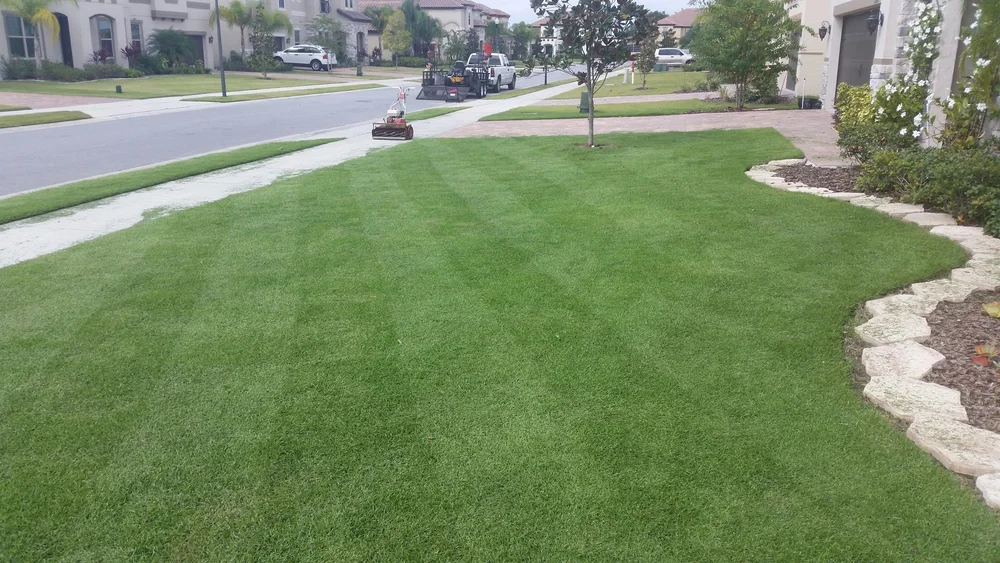
“Older zoysias drift over the years — you plant the same cultivar on two lawns and they behave differently. CitraZoy was bred and certified to fix exactly that. It holds its color when the cold comes, shrugs off large patch, and looks the same on every estate we install it on. For a Winter Park lawn, it's the one I plant.”
— Michael Geist, Yard Works · UGA-certified turfgrass professional
CitraZoy is a hybrid of Zoysia matrella and Zoysia japonica that the University of Florida developed and released in 2019. UF/IFAS says it has “the best winter color retention of any zoysiagrass on the market” and reports that it has never observed large patch on it. Across the lawns we have installed and maintained in Central Florida it has been the most consistent estate-grade zoysia we have put down, and we install it at $2.15 per square foot (old-turf removal included) across Winter Park, Oviedo, and Winter Springs.
How Was CitraZoy Bred?
CitraZoy didn't happen by accident. Researchers evaluated hundreds of zoysia accessions from Japan, China, Southeast Asia, and existing U.S. cultivars, then cross-pollinated the strongest parents under controlled conditions — classic plant breeding, not genetic modification.
Thousands of hybrid seedlings were stress-tested across South Florida, Central Florida, Texas, and freeze-cycle transition states — deliberately hit with cold nights, low fertility, shade, drought, scalping, heavy traffic, and disease inoculation. Only the individuals that survived every category advanced. After multi-year culling, one elite plant remained, and every piece of CitraZoy sold today is a certified clone of it.
Our Zoysia & Sod GuideHow Does CitraZoy Perform on Central Florida Lawns?
Genetics on paper only matter if they hold up on a real lawn. This past winter, on a Winter Park CitraZoy lawn we maintain, we watched it through a week of nights in the 30s and 40s with 60–70°F days. The CitraZoy kept excellent color, showed no bronzing, and the canopy stayed uniform — and a section of replacement sod matched the established turf cleanly. That is delayed dormancy behaving exactly the way the breeding trials predicted.
We also see faster establishment and stronger lateral fill than we get from Empire or Geo zoysia. UF/IFAS reports that it has never observed large patch on CitraZoy, though it can get leaf spot. Healthy lawns don't exist without healthy living soil — but starting with clean, certified genetics is what makes the rest of the program pay off.
Winter Park Reel MowingCitraZoy vs. Empire vs. Zeon: Which Zoysia Fits Your Lawn?
All three are excellent zoysias — here's how they differ on the traits that decide a Central Florida lawn. We help you match the cultivar to your site.
| CitraZoy | Empire | Zeon | |
|---|---|---|---|
| Type | Z. matrella × Z. japonica hybrid | Zoysia japonica | Zoysia matrella (fine) |
| Texture | Medium-fine, refined | Medium-coarse | Very fine |
| Winter color | Delayed dormancy — holds color longest | Standard dormancy | Standard dormancy |
| Large patch (UF/IFAS) | CitraZoy: never observed | Empire: susceptible | Zeon: listed among its disease problems |
| Consistency lawn-to-lawn | High — new, tightly certified | Varies (genetic drift, off-types) | Good |
| Mowing height | 1–1.5″ reel-cut (no published UF/IFAS height) | 1.75–2.5″ (UF/IFAS) | 0.5–2.0″ (UF/IFAS); we reel-cut 1–1.5″ |
| Installed price | $2.15/sq ft | $2.15/sq ft | Quoted on site |
Not sure if CitraZoy, Empire or Zeon fits your yard? Call (407) 687-3322 and Michael will look at your sun, soil and mowing.
Call (407) 687-332211+ yrsBreeding & trials behind CitraZoy
1–1.5″Reel-mow height we maintain
$2.15Per sq ft, installed
5.0Google rating
Comparing cultivars? See how CitraZoy measures up against Empire, Zeon, Trinity, Geo and Palisades in our full Types of Zoysia Grass — the estate-lawn guide to every zoysia we install across Winter Park, Oviedo and Central Florida.
Why Does the Same Zoysia Cultivar Look Different on Two Lawns?
Empire, Palisades, Zeon, and Geo are 15 to 25-plus years old. Over that time, even clonal sod accumulates somatic mutations, and when farms expand mother fields from drifted sections, those changes enter the production stock. Add off-type infiltration — volunteer Bermuda, mutated zoysia, creeping cultivars — and lax early quality control, and you get multiple "versions" of the same cultivar in the ground.
That is why two Empire lawns planted the same year can behave completely differently. CitraZoy sidesteps all of it: young, clean foundation stock, audited production fields, minimal drift, and tight quality control across growers. The payoff is a lawn that looks and performs the same whether it's in Winter Park or Oviedo.
See Our Sod InstallationWant a CitraZoy lawn like this in Winter Park? Call (407) 687-3322 for a free sod estimate. CitraZoy is $2.15 per sq ft installed.
Call (407) 687-3322Why Pair CitraZoy With a Yearly Renovation?
CitraZoy is still zoysia, and zoysia builds thatch. Here is the research behind the four steps we take once a year.
Thatch is a mat of living and dead stems and roots between the leaf and the soil. University of Florida research plots of zoysia left alone at Citra carried 0.54 to 1.21 inches of it after five years. I have not seen thatch numbers published for CitraZoy by name, so I manage it like the zoysias that were measured.
A lawn reel-cut at 1 to 1.5 inches rides on that surface. Once it turns soft, the mower sinks and scalps. So once a year we take four steps, in this order.
| Step | The job it does | What the research says |
|---|---|---|
| 1. Height reset | Lets the machines reach thatch and soil. Clippings come off the lawn. | The thinnest evidence of the four. UF/IFAS warns that a hard scalp can injure zoysia, so this is a controlled reset on growing turf. |
| 2. Verticut | Pulls dead stems out of the mat. | A five-year University of Missouri trial on Meyer zoysia cut thatch depth 12 to 18 percent a year. |
| 3. Core aerate | Opens channels below the mat. | Kansas State measured close to double the shallow root weight on lawn-height Innovation zoysia at a moderate rate. More holes were not better. |
| 4. Light topdressing | Sand and compost work into the mat and level the surface. | In a University of Florida trial on a sand root zone that included CitraZoy, compost gave the largest gains in soil chemistry of the amendments tested and led turf quality in two of the months rated. Details below. |
We do the mechanical work in the warm months, roughly late April or May through August, when zoysia is growing hard and recovers fastest. Winter Park is in Orange County, which restricts nitrogen and phosphorus fertilizer from June 1 through September 30, so we do not count on fertilizer to push recovery in those months.
I have not found a university trial that tested these four steps as one program on a zoysia lawn. The order is my reasoning from the separate studies and from doing the work. For the wider comparison, see our guide to the best grass and sod for Central Florida in 2027. For the last step, see top dressing and lawn leveling in Winter Park.
Does CitraZoy Get Zoysia Patch or Mealybugs?
Answers on the two problems zoysia owners ask about most.
Zoysia patch is another name for large patch, the main disease of zoysia in Florida. UF/IFAS reports that it has never observed large patch on CitraZoy. It lists Empire and Palisades as susceptible. CitraZoy can still get leaf spot.
A renovation is not a disease treatment. A Kansas State trial on fairway-height Meyer zoysia that compared cultivated and uncultivated turf over three seasons found no significant effect on large patch. UF/IFAS says the disease is most likely from November through May.
Tuttle mealybug is a small pink insect that hides between the leaf blade and the stem. I have not found a published ranking of zoysia varieties for it, CitraZoy included.
We verticut to manage thatch and keep the mowing surface firm. Separately, UF/IFAS Extension in Orange County calls thatch buildup one of the biggest factors behind Tuttle mealybug outbreaks and advises verticutting in spring. I have not found a trial showing that a renovation program reduces outbreaks, so I do not promise that it does. Where treatment is needed, we arrange it through a licensed applicator partner.
What Did the University of Florida Find When It Tested Compost on CitraZoy?
The trial used the same compost we topdress with.
I topdress with COMAND compost from Life Soils in Winter Garden and a 70/30 sand-compost blend. A University of Florida trial published in 2026 tested that compost on CitraZoy and CitraBlue St. Augustinegrass in Gainesville from August 2022 to November 2023. The CitraZoy was rotary-mowed at about 2 inches on a sand-based root zone, so it was not a test of a reel-cut lawn or of the 70/30 blend, which is my own practice.
- Compost gave the largest gains in turf quality and soil chemistry of the amendments tested. With both grasses combined, soil organic matter was 0.88 percent under compost and 0.54 percent untreated.
- On CitraZoy, compost had the top turf quality in two of the months rated: September 2022 and July 2023.
- Soil phosphorus under compost was about four times the plots that got fertilizer alone.
- The trial found no statistically significant treatment effect on water-holding.
- The authors concluded that nitrogen rate, not any amendment, drove turf performance.
I buy from that supplier, so weigh my view accordingly. Compost carries nitrogen and phosphorus. We count it in the fertility plan and soil test before repeat applications.
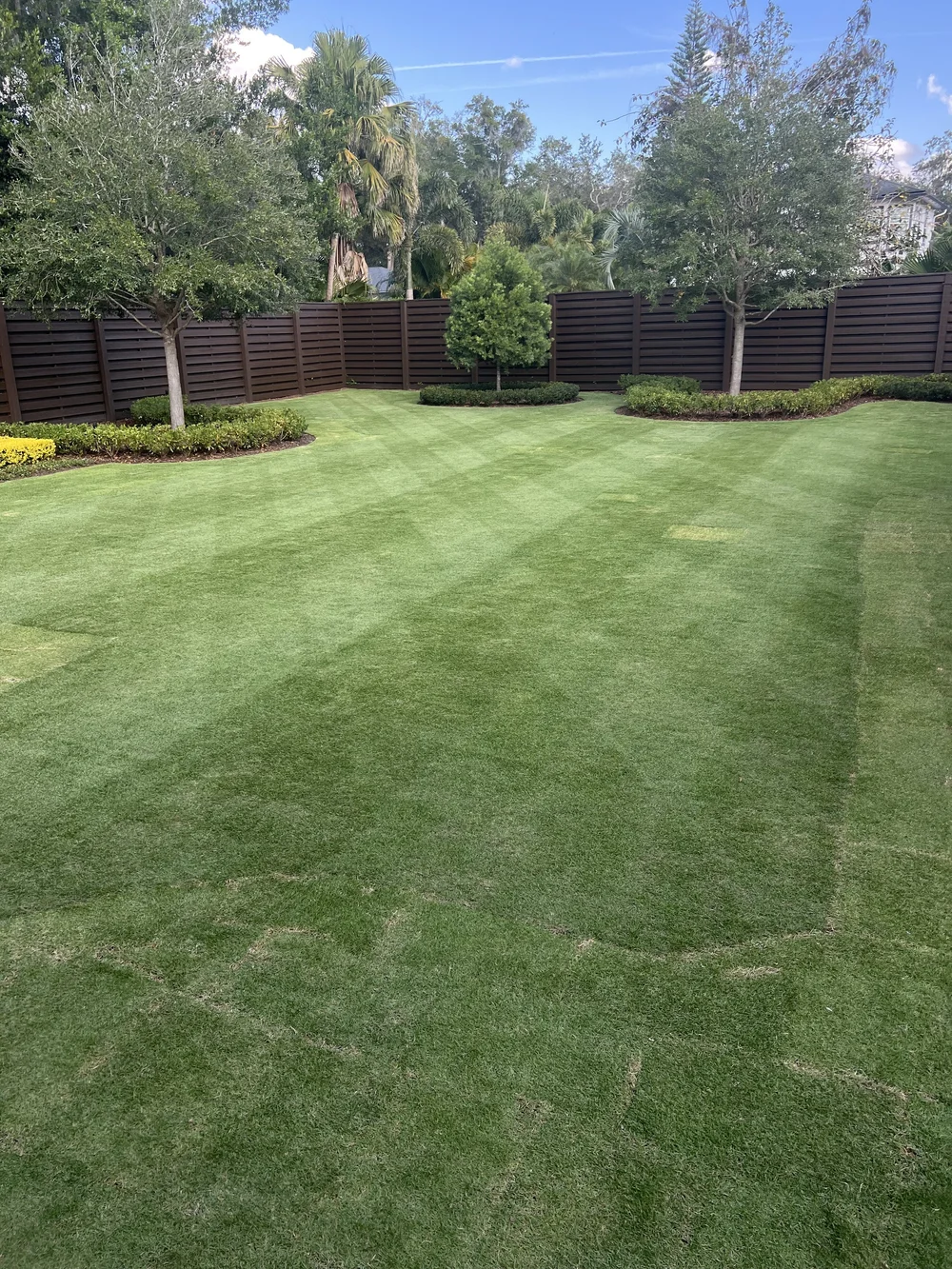
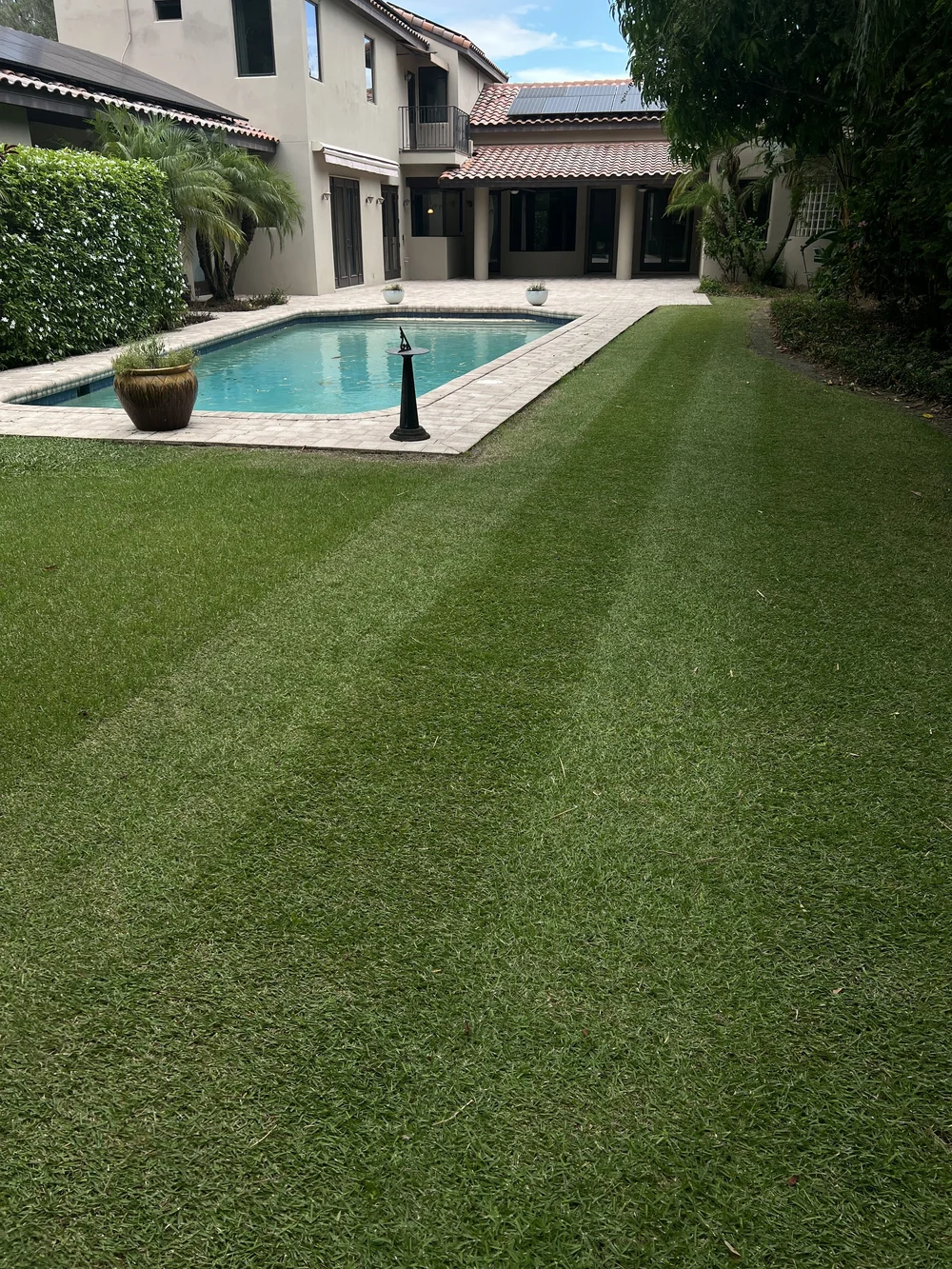
What Does a CitraZoy Lawn Look Like in Central Florida?
Certified zoysia, installed and maintained to an estate standard across our service area.
Where Does Yard Works Install CitraZoy?
Estate zoysia lawns across Central Florida's premier communities.
Winter Park 32789
Oviedo
Winter Springs
Maitland
Casselberry
Lake Mary
Ready to install? See our sod installation in Oviedo and Lake Mary, or view all the Central Florida areas we serve.
Go deeper: how mowing height drives zoysia density (height of cut, auxin and apical dominance).
What Do Homeowners Ask About CitraZoy?
The questions Central Florida homeowners ask us most about CitraZoy zoysia.
What is CitraZoy zoysia?
CitraZoy is a next-generation hybrid of Zoysia matrella and Zoysia japonica developed by the University of Florida (UF/IFAS) over more than 11 years of traditional breeding and stress testing, and released in 2019. UF/IFAS credits it with the best winter color retention of any zoysia on the market and reports that it has never observed large patch on it. On the lawns we have installed across Central Florida it has been the most consistent, best-performing residential zoysia we have put down, which is why we plant it on Winter Park and Oviedo estate lawns.
How much does CitraZoy zoysia sod cost in Winter Park?
We install CitraZoy and Empire zoysia at $2.15 per square foot installed. That price covers the certified sod, professional installation, removal of your old turf and standard grading; major regrading, fill, soil testing and starter fertilizer are quoted separately. Call (407) 687-3322 and we will measure your lawn and give you a clear total.
CitraZoy vs Empire zoysia: which is better?
Empire is a Zoysia japonica; CitraZoy is a matrella-japonica hybrid. UF/IFAS credits CitraZoy with the best winter color retention of any zoysia on the market and reports it has never observed large patch on it, while Empire is a proven, widely available cultivar that is 15-plus years old and shows more lawn-to-lawn variation from genetic drift and off-types. CitraZoy has a finer texture and, in our field experience across Central Florida, keeps its color better through a cold snap. Empire remains an excellent choice for full-sun lawns at the same installed price. We help you pick the right one for your site.
Does CitraZoy stay green in winter in Central Florida?
Better than most zoysias, in our experience. CitraZoy was bred for delayed dormancy and prolonged chlorophyll retention. On a Winter Park lawn we maintain, after a week of nights in the 30s and 40s with days in the 60s and 70s, the CitraZoy held excellent color with no bronzing while the canopy stayed uniform. Every site and winter differs, but this matches CitraZoy's documented trial behavior. That winter color is a big reason we recommend it to seasonal residents who are here November through April, when many other cultivars sit dormant and off-color.
How short should CitraZoy zoysia be mowed?
CitraZoy is a fine-to-medium textured zoysia and looks its best cut low and clean. We keep it between 1 and 1.5 inches with a reel mower on estate lawns, and up to about two inches when a rotary mower is used. UF/IFAS publishes 1.75 to 2.5 inches for medium- to coarse-textured zoysias and lower heights for fine-textured types; it does not publish a CitraZoy-specific height. Reel mowing at the lower end builds the dense, fairway-like canopy CitraZoy is capable of.
What happens after CitraZoy sod is installed?
Every sod installation includes our 30-day establishment program: we set the watering schedule on install day and leave you a written watering and mowing plan for the first 30 days. Return visits by Michael are optional and carry an additional fee. It is a care program, not a replacement warranty. Most CitraZoy lawns knit in within about 30 days and are ready for routine reel mowing about 60 days after install.
When can new CitraZoy sod be fertilized?
Not at installation. New sod needs about 30 days of rooting before its first feeding, and Seminole and Orange County restrict nitrogen and phosphorus fertilizer from June 1 through September 30. If your sod goes in during the summer blackout, the first application waits until October; we schedule it as part of the 30-day program.
Why do two lawns of the same zoysia cultivar look so different?
Older cultivars accumulate genetic drift and off-types over decades. Even though sod is clonal, plants pick up somatic mutations and sod farms expand fields from drifted stock, so two Empire lawns planted the same year can behave differently. CitraZoy avoids this because it is new, grown from clean foundation stock under strict certification with audited fields, so lawns look and behave consistently from property to property.
Does CitraZoy get large patch?
UF/IFAS reports that it has never observed large patch on CitraZoy. It can get leaf spot.
Does CitraZoy need dethatching?
It is a zoysia, and UF/IFAS calls for mechanical thatch removal on zoysia every year or two. We verticut reel-cut CitraZoy lawns once a year in the warm months.
Is CitraZoy the best zoysia for Winter Park lawns?
It is my pick for full-sun lawns kept reel-cut. For the finest leaf, look at Zeon or Geo. For heavy shade, a St. Augustine such as ProVista fits better.
Zoysia cultivar and mowing-height references: UF/IFAS Extension, Zoysiagrass for Florida Lawns (LH011) and Mowing Your Florida Lawn (LH028). CitraZoy origin, winter color and large patch: UF/IFAS LH011. Thatch in Florida zoysia: Ojeokun et al., HortTechnology, 2025. Verticutting: Dunn, Sheffer and Halisky, Agronomy Journal, 1981. Core aeration: McFadden and Fry, Kansas State, 2023. Compost on CitraZoy: Lindsey et al., Agronomy, 2026. Large patch and renovation: Obasa et al., Plant Disease, 2013. Large patch season: UF/IFAS LH044. Tuttle mealybug: UF/IFAS Extension Orange County.
Thinking About a CitraZoy Lawn?
We install and maintain CitraZoy at an estate standard across Central Florida. Let's talk about whether it's the right cultivar for your property.
Call (407) 687-3322
