Winter Park · Oviedo · Winter Springs · Maitland
Types of Zoysia Grass in Florida: Which Cultivar Fits Your Lawn?
Types of zoysia grass in Central Florida: CitraZoy, Empire, Zeon, Trinity, Geo, Palisades — what actually separates them, how each one behaves on a Zone 9b lawn, and how to choose the right one for your property.
★★★★★
Call (407) 687-3322
Not sure which cultivar fits your lawn? We'll walk your property and tell you straight.
There is no single best zoysia for Central Florida — the right cultivar depends on sun exposure, how low you intend to mow, and how much lawn-to-lawn consistency matters. For a full-sun estate lawn we most often plant CitraZoy, a modern certified Zoysia japonica hybrid bred for winter color and large patch resistance. Empire is the proven, more economical full-sun choice. For the finest, lowest-cut fairway look, the Zoysia matrella cultivars — Zeon and Geo — are the ones to consider. We install CitraZoy and Empire zoysia at $2.15 per square foot (old-turf removal included) across Winter Park, Oviedo, and Winter Springs; Zeon, Geo, Trinity and Palisades are quoted per property.
“Most people are sold a grass before anyone looks at the property. That's backwards. Sun hours, mower type, irrigation, soil — those decide the cultivar. Pick right and the lawn is easy for a decade. Pick wrong and you fight it forever.”
— Michael Geist, Yard Works · UGA-certified turfgrass professional
How do we choose the right zoysia cultivar for your lawn?
Sun hours first. Every zoysia sold as “shade tolerant” still wants sun. Under four hours of direct light, no zoysia will hold density long term — that is a St. Augustine conversation, or a landscape-bed conversation. Among the zoysias, UF/IFAS rates the fine matrella types (Trinity, Zeon, Geo) as the more shade-tolerant group, with Trinity the standout; the japonicas want full sun.
Then the mower. If the lawn will be cut with a rotary mower, a japonica like Empire at its UF/IFAS height of 1.75–2.5″ is the honest choice. The fine matrella cultivars only look like the photographs when they are reel-mowed low and fed correctly.
Then consistency. Newer certified cultivars come from clean foundation stock and behave the same from property to property. Long-established cultivars vary more — which is fine, as long as you know it going in.
Our Zoysia & Sod GuideWhat is the difference between japonica and matrella zoysia?
Nearly every zoysia decision in Central Florida comes down to which of two species you are planting.
Zoysia japonica — CitraZoy, Empire, Palisades. Broader leaf, faster establishment, tolerant of a higher cut, more forgiving under a rotary mower. This is the practical default for a residential estate lawn.
Zoysia matrella — Zeon, Geo, Trinity. Much finer texture, denser canopy, takes a lower cut, generally better in filtered light. Slower to establish and far less forgiving of a bad mowing or fertility program. This is the specialist choice, and it rewards a reel mower.
Healthy lawns and landscapes do not exist without healthy living soil — but starting with the right species for the site is what makes the soil program pay off.
Winter Park Reel MowingThe Cultivars, Side by Side
Six zoysia cultivars we install or maintain in Central Florida, compared on the traits that actually decide a lawn. Mowing heights are the UF/IFAS published ranges, with the height we keep where it differs.
| CitraZoy | Empire | Zeon | Trinity | Geo | Palisades | |
|---|---|---|---|---|---|---|
| Species | Z. matrella × Z. japonica | Z. japonica | Z. matrella | Z. matrella | Z. matrella | Z. japonica |
| Texture | Medium-fine | Medium-coarse | Very fine | Very fine | Fine, dark green | Medium-coarse |
| Mowing height | 1–1.5″ reel-cut (no UF/IFAS cultivar height) | 1.75–2.5″ (UF/IFAS); rotary OK | 0.5–2.0″ (UF/IFAS); we reel-cut 1–1.5″ | 0.25–0.5″ (UF/IFAS); reel only | 0.5–2.0″ (UF/IFAS); we reel-cut 1–1.5″ | Our rotary height ~1.5–2″ |
| Best light | Full sun | Full sun | Sun to filtered (UF/IFAS: good shade tolerance) | Sun to filtered (UF/IFAS: extremely shade tolerant) | Sun to filtered | Full sun |
| Establishment | Fast | Fast | Slower | Moderate | Slower | Fast |
| Winter color | Delayed dormancy — holds longest | Standard | Standard | Good | Good | Standard |
| Consistency | High — new, tightly certified | Varies (drift, off-types) | Good | Good | Good | Varies |
| Where it shines | Estate lawn you want right for a decade | Economical full-sun lawn | Lowest-cut fairway look | Finest texture, filtered light, putting-green cut | Dark, fine, filtered-light lawn | Large full-sun areas |
Mowing-height ranges per UF/IFAS Extension (LH011, LH028). Species and cultivar classifications per the releasing turfgrass breeding programs. Establishment, winter-color, and consistency notes reflect our own field observations on Central Florida lawns we install and maintain.
Comparing real Zoysia with synthetic turf? See artificial turf vs. Zoysia sod.
The Library
A cultivar-by-cultivar breakdown, each with its own deep-dive guide.
Our flagship
CitraZoy
Z. matrella × Z. japonica hybrid
A modern hybrid developed jointly by UF/IFAS, Texas A&M AgriLife, and Sod Solutions over 11-plus years of traditional breeding and stress testing. Bred for the Southeast: delayed dormancy, large patch resistance, and tight certification that keeps every lawn consistent.
- Texture — medium-fine
- Mowing height — 1–1.5″ reel-cut
- Light — full sun
- Pick it when — you want the lawn right for the next decade
Empire
Zoysia japonica
The workhorse of Florida zoysia and the cultivar most homeowners have already seen. Widely grown, economical, genuinely tough in full sun and drought. Its age is also its weakness: after well over a decade in production it shows real lawn-to-lawn variation from genetic drift and off-types.
- Texture — medium-coarse
- Mowing height — 1.75–2.5″ (UF/IFAS); rotary OK
- Light — full sun
- Pick it when — budget matters and the lawn is open sun
Zeon
Zoysia matrella
The fine-bladed benchmark — the cultivar chosen for the Rio 2016 Olympic golf course. Very fine texture, dense canopy, and the best low-cut performance of anything we plant. It is also the least forgiving: it wants a reel mower, disciplined fertility, and patience while it establishes.
- Texture — very fine
- Mowing height — 0.5–2.0″ (UF/IFAS); we reel-cut 1–1.5″
- Light — sun to filtered; UF/IFAS rates its shade tolerance good
- Pick it when — you want a true fairway finish and will maintain it
Trinity
Zoysia matrella
A very fine-textured matrella from Bladerunner Farms that UF/IFAS groups with the most shade-tolerant zoysias. It takes the lowest cut of anything we plant and rewards a reel mower and a disciplined program. The specialist choice for a filtered-light estate lawn where texture is the priority.
- Texture — very fine
- Mowing height — 0.25–0.5″ (UF/IFAS); reel only
- Light — sun to filtered; UF/IFAS rates it extremely shade tolerant
- Pick it when — you want the finest texture and will reel-mow it
Geo
Zoysia matrella
Released out of the University of Georgia turfgrass breeding program, Geo is known for unusually dark green color and a fine, dense canopy. Like Zeon it is a matrella — slower to fill in, better in filtered light than the japonicas, and at its best under a reel mower.
- Texture — fine, dark green
- Mowing height — 0.5–2.0″ (UF/IFAS); we reel-cut 1–1.5″
- Light — sun to filtered
- Pick it when — color depth is the priority
Palisades
Zoysia japonica
A Texas A&M release built for coverage: coarser blade, fast establishment, strong drought tolerance, and comfortable at a higher cut. Rarely our pick for a refined front lawn, but a genuinely good answer for large full-sun areas where a rotary mower is the reality.
- Texture — medium-coarse
- Mowing height — our rotary height ~1.5–2″
- Light — full sun
- Pick it when — big open acreage, rotary mowing
Not sure which zoysia fits your yard? Michael will look at your sun, soil and mowing and pick the right one.
Call (407) 687-3322When is zoysia the wrong grass for a Florida lawn?
We install St. Augustine too — and on the right property it is the better grass, not the compromise.
ProVista St. Augustine is a Scotts-developed St. Augustine cultivar bred for slow vertical growth and glyphosate tolerance — meaning substantially less mowing and a much cleaner weed-control program than conventional St. Augustine. It establishes fast and handles shade better than any zoysia we plant. If a property is heavily shaded, or the priority is quick, economical, low-mow cover, ProVista is a legitimately better answer than forcing a zoysia into light it will never be happy in. Installed St. Augustine is $2.00 per square foot; CitraZoy and Empire zoysia are $2.15. St. Augustine is never reel-mowed — we rotary-mow it at 3.5–4″.
Leaning toward St. Augustine instead of zoysia? See our ProVista St. Augustine guide — the low-mow, glyphosate-tolerant cultivar we install for shadier, lower-maintenance lawns.
Zoysia by the Numbers
The figures we work from on every Central Florida install.
0.25–2.5″UF/IFAS zoysia mowing range, by cultivar
$2.15Per sq ft, CitraZoy or Empire installed
400Sq ft per pallet of zoysia sod
4+ hrsMinimum direct sun any zoysia needs
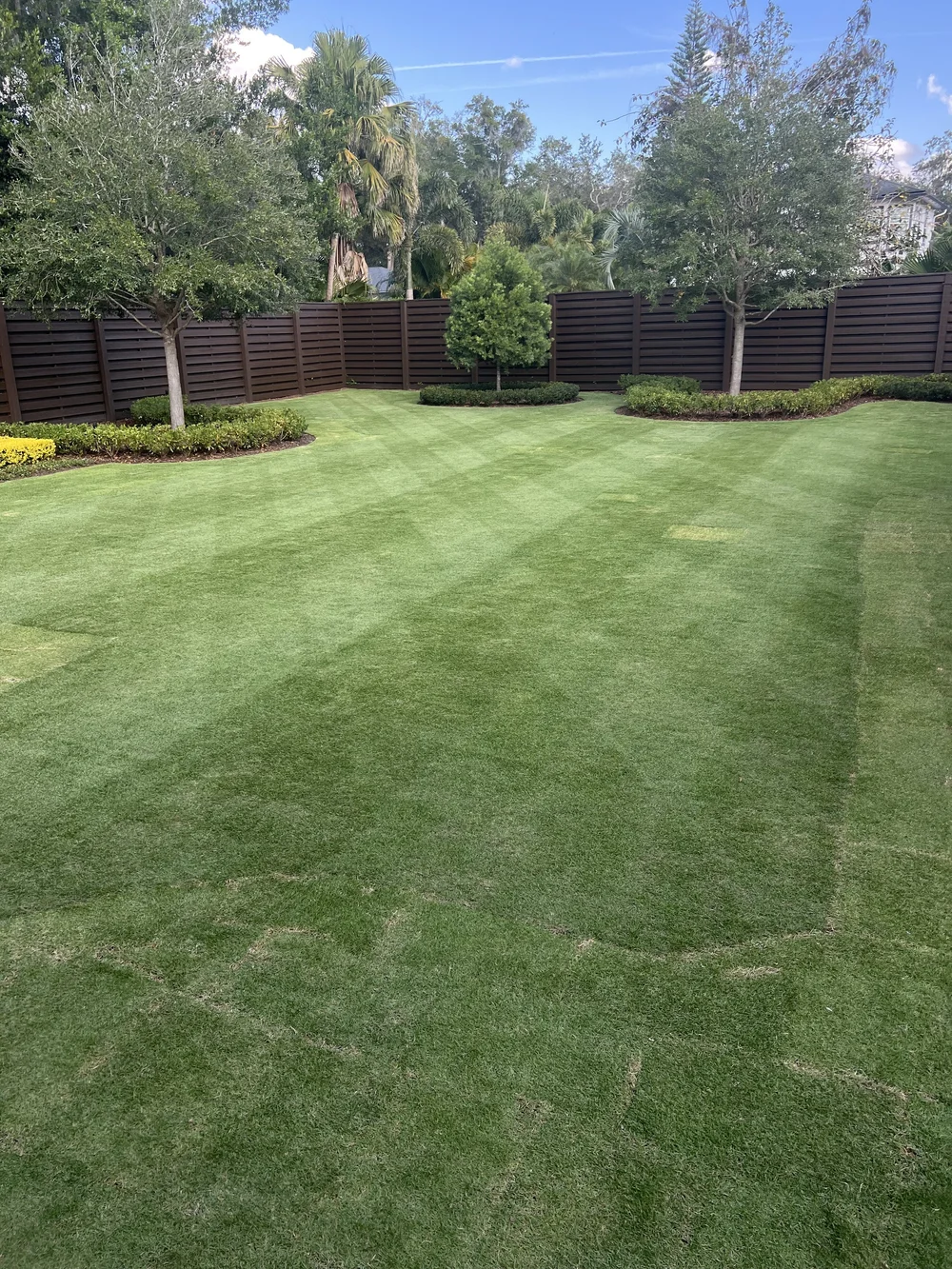
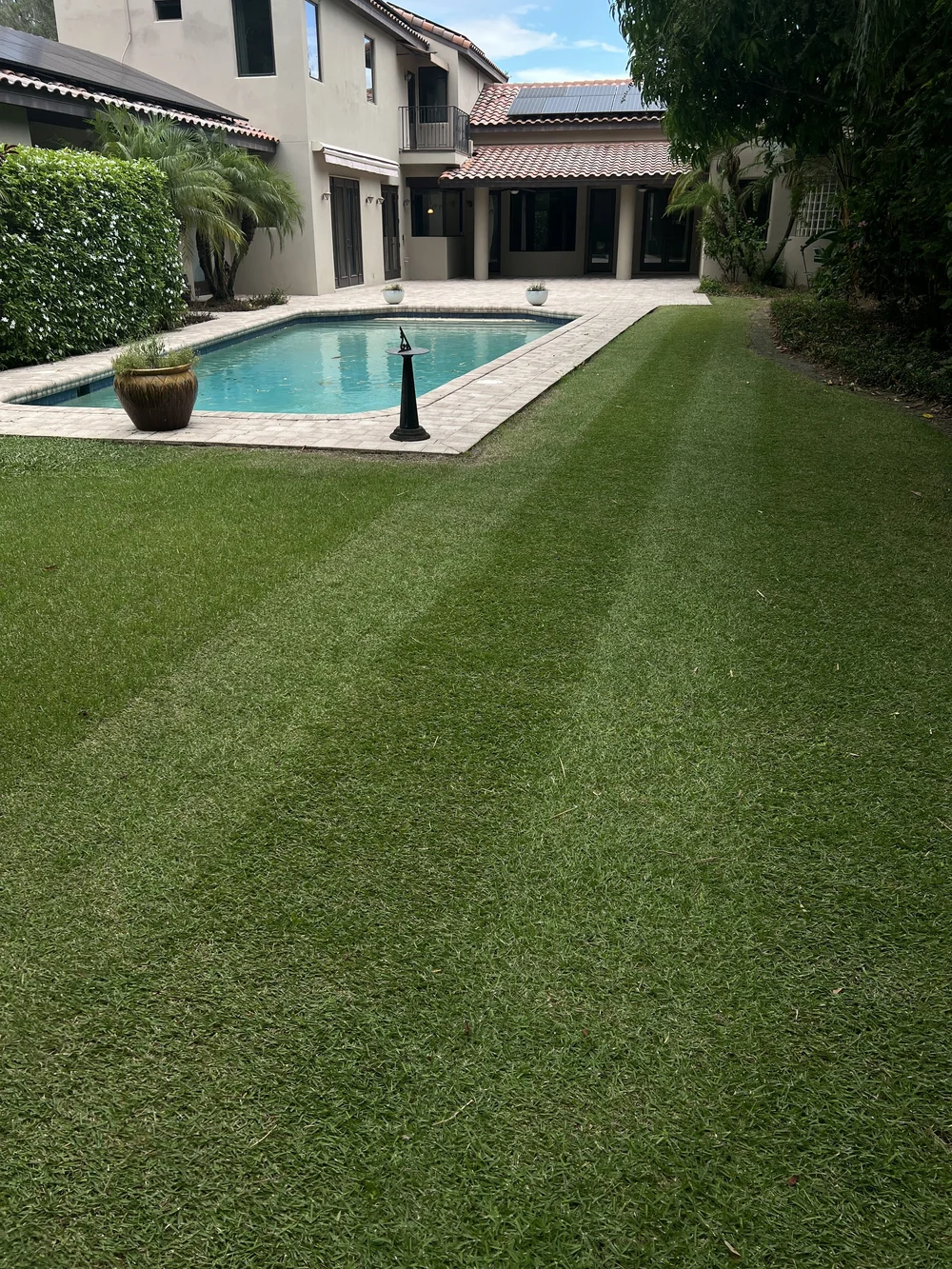
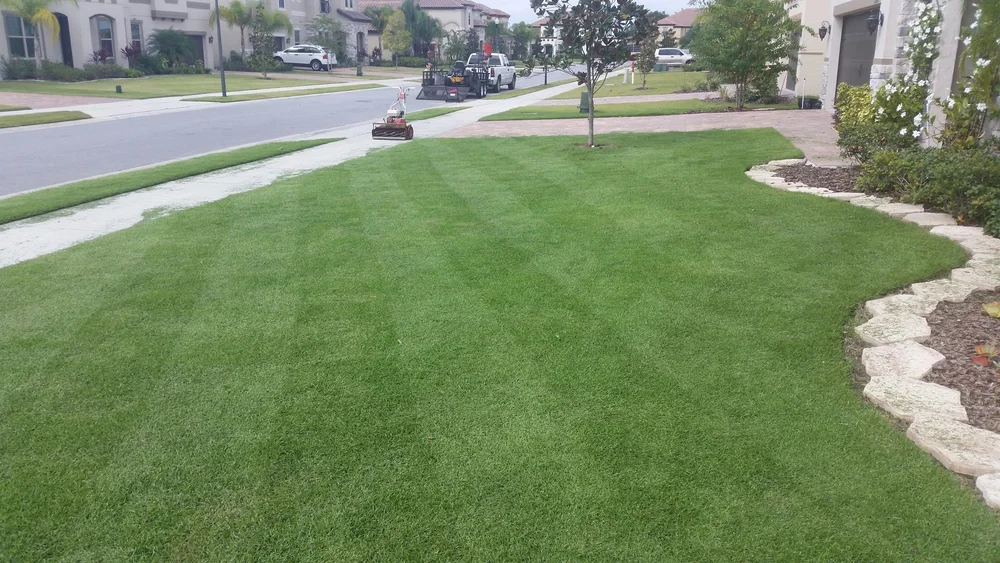
Zoysia on Central Florida Lawns
Our own installs and maintained lawns across Winter Park, Oviedo, and Maitland.
Where We Install Zoysia
Estate zoysia lawns across Central Florida's premier communities.
Winter Park 32789
Oviedo
Winter Springs
Maitland
Casselberry
Lake Mary
Ready to install? See sod installation in Oviedo, Winter Park sod installation, or Lake Mary — or view all the Central Florida areas we serve.
Go deeper: how mowing height drives zoysia density (height of cut, auxin and apical dominance).
Zoysia Cultivar Questions, Answered
What Central Florida homeowners ask us before choosing a grass.
Which zoysia cultivar is best for a Central Florida lawn?
There is no single best zoysia. The right cultivar depends on sun exposure, how low you want it mowed, and how much lawn-to-lawn consistency matters to you. For a full-sun estate lawn in Winter Park or Oviedo we most often plant CitraZoy, a modern certified hybrid of Zoysia matrella and Zoysia japonica bred for winter color and large patch resistance. Empire is the proven, more economical full-sun choice. For the finest, lowest-cut look, the Zoysia matrella cultivars (Trinity, Zeon and Geo) are the ones to consider. We match the cultivar to the site rather than selling one grass for every lawn.
What is the difference between Zoysia japonica and Zoysia matrella?
Zoysia japonica cultivars (CitraZoy, Empire, Palisades) have a broader leaf blade, establish faster, and tolerate a higher mowing height, which makes them more forgiving under a rotary mower. Zoysia matrella cultivars (Trinity, Zeon, Geo) are much finer textured, form a denser canopy, take lower mowing, and UF/IFAS rates them the more shade-tolerant group, but they are slower to establish and reward a reel mower and a disciplined maintenance program. On Central Florida estate lawns japonica types are the practical default and matrella types are the specialist choice.
How low should zoysia be mowed in Florida?
It depends on the cultivar. UF/IFAS publishes 1.75 to 2.5 inches for Empire and other medium- to coarse-textured zoysias, 0.5 to 2.0 inches for Zeon and Geo, and 0.25 to 0.5 inch for Trinity. UF/IFAS does not publish a CitraZoy height; we reel-cut it at 1 to 1.5 inches. We reel-mow Zeon at 1 to 1.5 inches and Geo at 1 to 1.5 inches, and we raise the height when a rotary mower is used. St. Augustine is never reel-mowed; it is rotary-mowed at 3.5 to 4 inches (dwarf types about 2.5 inches). The lower you cut, the more the lawn depends on a reel mower, correct fertility and healthy soil.
How much does zoysia sod cost installed in Winter Park?
We install CitraZoy and Empire zoysia at $2.15 per square foot installed, and St. Augustine cultivars (ProVista, Floratam, Seville, Palmetto) at $2.00 per square foot installed. That covers certified sod, professional installation, removal of your old turf and standard grading; major regrading, fill, soil testing and starter fertilizer are quoted separately. Zeon, Geo, Trinity and Palisades are quoted per property. Call (407) 687-3322 and we will measure the lawn and give you a clear total.
Is zoysia better than St. Augustine for a Florida lawn?
They are different tools. Zoysia gives a denser, finer, more traffic-tolerant canopy that can be mowed low for a fairway look, and it is what we plant on most estate lawns. St. Augustine establishes quickly, handles shade well, and cultivars like ProVista are bred for slow vertical growth and less mowing. If your property is heavily shaded or you want the fastest, most economical cover, St. Augustine is often the better answer. If you want the finished estate look and are prepared to maintain it properly, zoysia is worth it.
When can new zoysia sod be fertilized?
Not at installation. New sod needs about 30 days of rooting before its first feeding, and Seminole and Orange County restrict nitrogen and phosphorus fertilizer from June 1 through September 30. If your sod goes in during the summer blackout, the first application waits until October. We schedule it as part of our 30-day establishment program.
Why do two lawns of the same zoysia cultivar look different?
Older cultivars accumulate genetic drift and off-types over decades. Sod is clonal, but plants pick up somatic mutations and sod farms expand fields from drifted stock, so two lawns of a long-established cultivar planted in the same year can behave differently. Newer, tightly certified cultivars grown from clean foundation stock under audited certification are far more consistent property to property, which is one of the main practical reasons we favor them on estate installs.
Zoysia mowing-height and cultural references: UF/IFAS Extension, Zoysiagrass for Florida Lawns (LH011) and Mowing Your Florida Lawn (LH028). Cultivar origin and classification per the releasing breeding programs (UF/IFAS & Texas A&M AgriLife, University of Georgia, Sod Solutions, Scotts). Field-performance notes are our own observations on lawns we install and maintain.
Not Sure Which Zoysia Is Right?
We'll walk the property, read the light and the soil, and tell you which cultivar will actually thrive there — not just which one we happen to have on the truck.
Call (407) 687-3322
